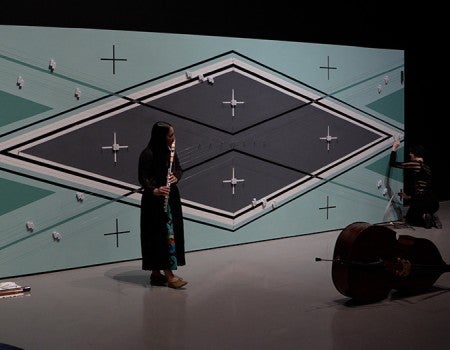
Nameless Sound musicians performed an original score on Nanibah Chacon’s interactive installation following Danza Azteca Macuilxochitl's activation of...
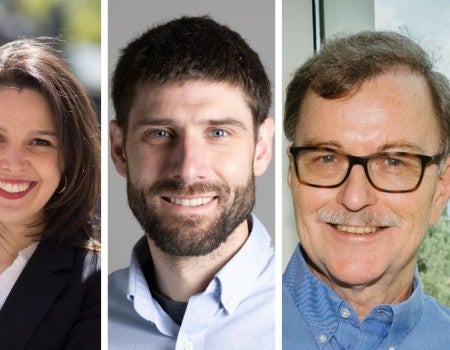
Three Rice faculty members from the Department of Earth, Environmental and Planetary Sciences have recently been honored with career awards, showcasin...
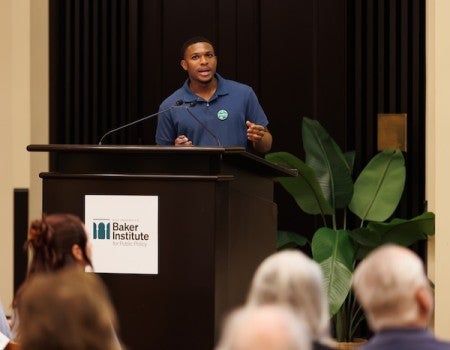
The Science and Technology Policy Program at Rice’s Baker Institute for Public Policy hosted a “science cafe” Oct. 13 to bring research to reality and...
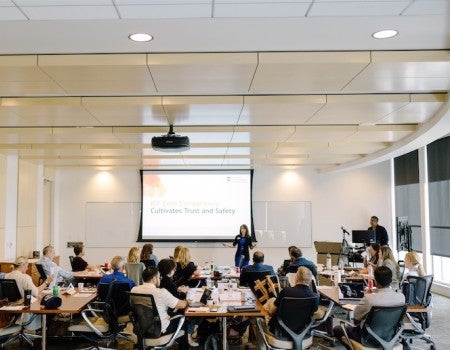
The Doerr Institute for New Leaders at Rice has launched CoachRICE: Team Coaching, a new professional education program designed to help coaches, mana...
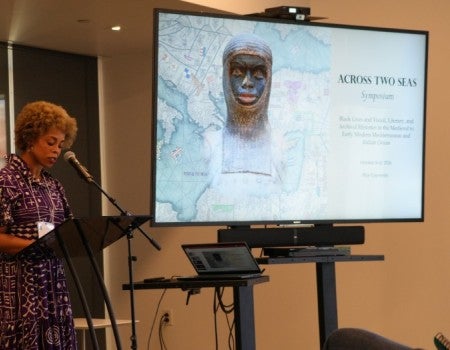
Scholars, curators and filmmaker Daphne Di Cinto gather at Rice to explore Black histories from Renaissance Italy to medieval Africa and Islamic world...
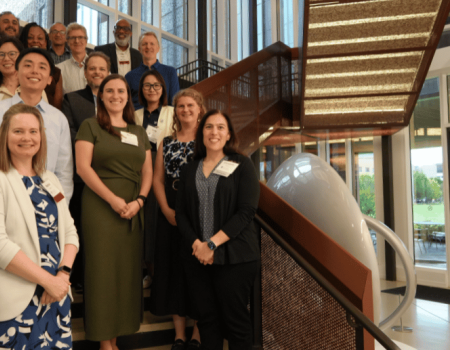
For the sixth fall in a row, Rice welcomed a new group of researchers to STaRT@Rice, giving emerging researchers both the skills and the support to gr...
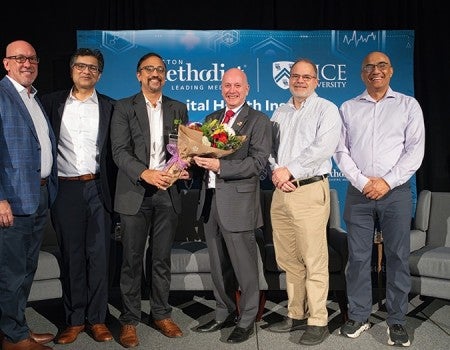
Rice and the Houston Methodist Research Institute have signed a memorandum of understanding with LSE Health at the London School of Economics and Poli...
David Medina, director of multicultural community relations in the Office of Public Affairs, recently won a Best of District IV Award from the Council for Advancement and Support of Education for an article in the fall 2021 issue of Rice at Large.
Life science innovators, academics and investors – including those specializing in health tech, medical devices and therapeutics – convened at Rice University this week to discuss Houston’s role in the future of health care and give awards to top early-stage life science companies.
Maxim Timchenko, CEO of Ukraine’s largest private energy provider, DTEK, will discuss the company’s efforts to maintain operations during war and continue to provide energy for the Ukrainian people at a webinar presented by Rice University’s Baker Institute for Public Policy.
Melissa Cragin, a veteran of both the San Diego Supercomputer Center and the National Center for Supercomputing Applications at the University of Illinois at Urbana-Champaign, is now leading Rice's Center for Research Computing as Rice's associate vice president of research computing.
Although Thanksgiving is still a few weeks away, the advent of the holiday is on my mind due to a recent personal event that has caused me to reflect on life’s many blessings.
Statisticians use electronic diary entries by more than 1,000 patients with epilepsy to gain a better understanding of how “attractors” are associated with the likelihood of seizures.
Thomas Avalos, a Lovett College senior majoring in sport management at Rice University, is all smiles while working during the World Series at Minute Maid Park in Houston. Avalos is a ticket experience ambassador for the team. The Astros won the World Series in six games over the Philadelphia Phillies.