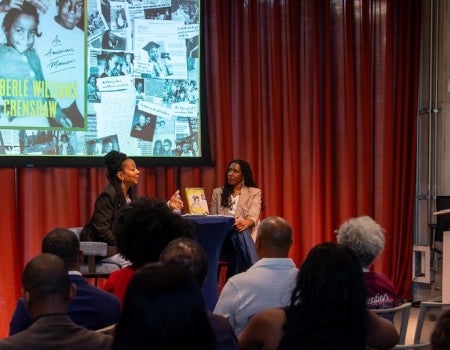
Influential legal scholar, Kimberlé Crenshaw, speaks to a packed Rice audience for a conversation about race, gender, law, education and the experienc...
In a study published in “Physical Review Letters,” a research team co-led by Rice University’s Jun-Jie Zhang and Boris Yakobson demonstrates a new cla...
Rice researchers have developed a theoretical strategy for eliminating an unintended directional bias that can arise when magnetic particles are assem...
The 23rd annual Energy Tech Venture Forum welcomed 97 ventures to connect with investors, exchange ideas and explore opportunities for pilots, investm...
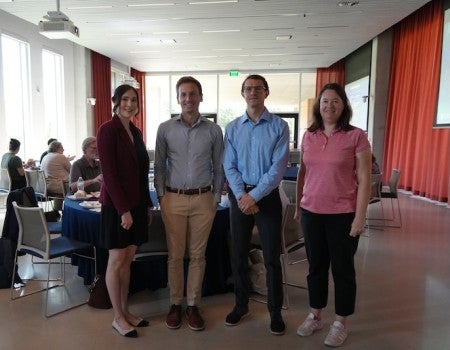
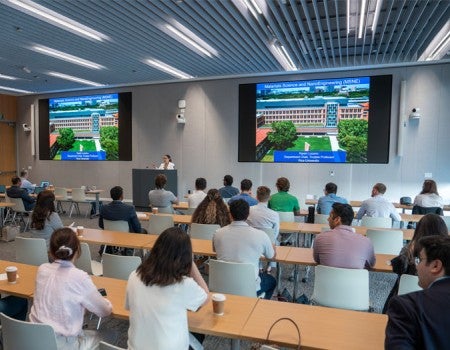
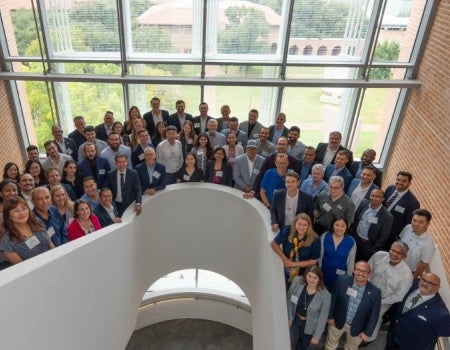
Rice University’s Department of Materials Science and NanoEngineering (MSNE) at the George R. Brown School for Engineering and Computing convened acad...
Rice has climbed one spot to No. 16 in the nation in U.S. News & World Report’s Best Colleges rankings, with the university also earning top 10 recogn...
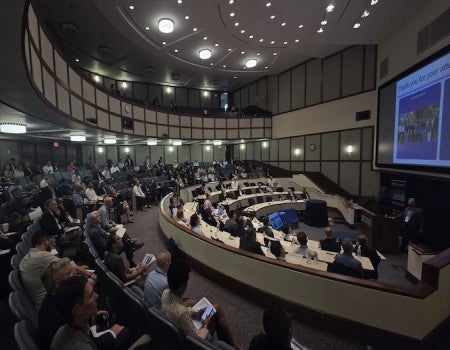
More than 120 utility leaders, researchers, government officials, entrepreneurs, corporate water teams, engineers and investors gathered at Rice for t...
Anne Chao, co-founder and program manager of the Houston Asian American Archive and an adjunct lecturer in Rice's School of Humanities and Arts, share...
Rice University’s Department of Materials Science and NanoEngineering (MSNE) at the George R. Brown School for Engineering and Computing convened academic leaders, department chairs and researchers from across the state for the inaugural Texas Materials Consortium Sept. 18.
Rice has climbed one spot to No. 16 in the nation in U.S. News & World Report’s Best Colleges rankings, with the university also earning top 10 recognition for value, undergraduate teaching and student experience.
More than 120 utility leaders, researchers, government officials, entrepreneurs, corporate water teams, engineers and investors gathered at Rice for the Water Nexus Conference.
Anne Chao, co-founder and program manager of the Houston Asian American Archive and an adjunct lecturer in Rice's School of Humanities and Arts, shared those reflections Sept. 18 as part of the Friends of Fondren Library’s “The Books That Shaped My World” series.
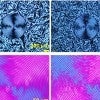
Rice researchers have shown that an organic semiconductor can transform from a liquid crystal into a solid crystal through a rapid, highly coordinated process resembling a Martensitic transformation.
Following a hard-fought home loss to Western Michigan, the Rice football team hits the road for a Sept. 26 matchup with Fresno State that renews a rivalry from the Owls’ days in the Western Athletic Conference.
The Friends of Fondren Library at Rice hosted New York Times bestselling author and Houston native Katherine Center at its annual membership celebration and dinner at Cohen House Sept 15.
Three experts from Rice will attend Brain Week at the United Nations General Assembly Sept. 21-25 to join an international conversation that reaches well beyond neuroscience and medicine.
Twenty-five years after the 9/11 attacks, Rice’s Shepherd School of Music honored the anniversary the way it has every year since 2002: by pausing to sing. The Rice Chorale performed “In Memoriam: 9/11/2001” at the Edythe Bates Old Recital Hall at Alice Pratt Brown Hall.