
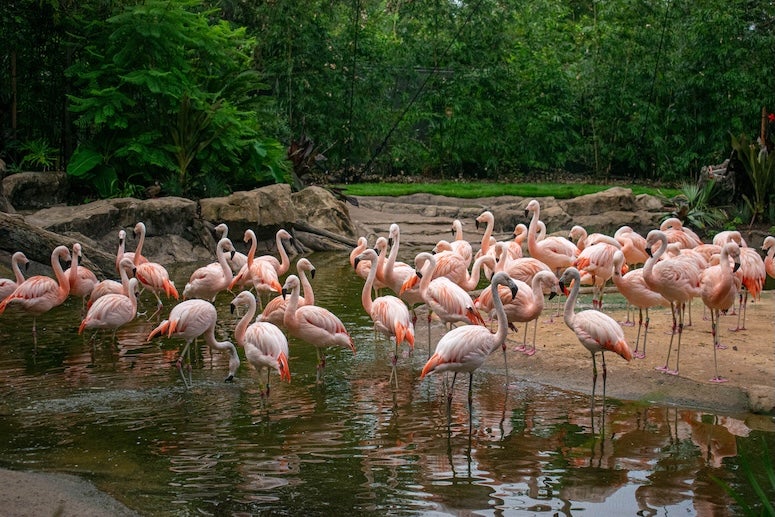
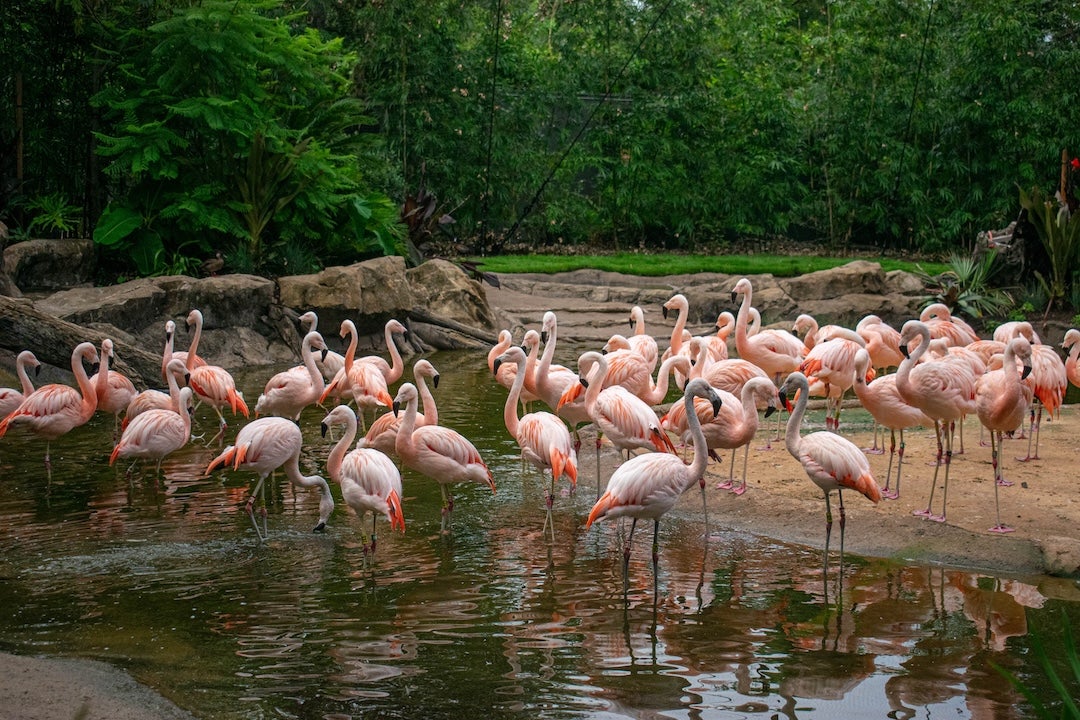
When temperatures drop in Houston, even flamingos feel the chill.
At the Houston Zoo, colder months can leave the tropical birds standing on cold sand, an issue that has traditionally been addressed with electric space heaters. But those systems come with drawbacks: They’re energy-intensive and pose potential fire and electrical hazards in an open habitat filled with animals.
A team of Rice University undergraduates set out to find a better solution.
Through Rice’s Oshman Engineering Design Kitchen (OEDK), students designed and tested a sustainable, nonelectric heated flooring system that warms the ground beneath the flamingos’ feet using circulating warm water, offering a safer and more energy-efficient alternative.
“This project was about solving a real problem the zoo is facing,” said sophomore Amy Wang, who studies cognitive sciences and art. “When it gets cold, the sandy ground in the habitat doesn’t retain heat well, so the flamingos’ feet can get too cold. The zoo wanted a heating solution that aligned with their sustainability goals but also reduced hazards for the animals and zoo personnel.”
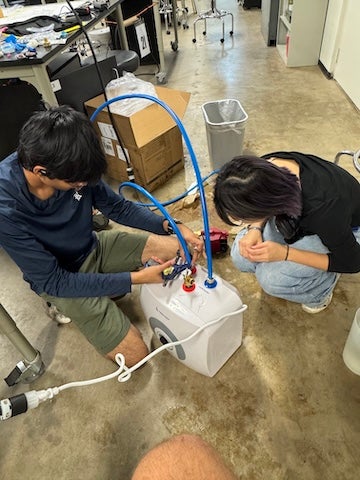
The concept draws on a hydronic heating system, a method commonly used in radiant floor heating in which warm water flows through pipes beneath a surface. In this case, the challenge was adapting that approach to sand rather than solid flooring.
“That was one of the biggest engineering hurdles,” freshman mechanical engineering student Anuj Sinhal said. “Sand is a poor conductor compared to something like concrete, so we had to figure out the right pipe depth and spacing to effectively transfer heat.”
The team built and tested multiple prototypes, experimenting with different configurations before landing on an optimal design using half-inch PEX piping spaced approximately 6 inches apart beneath the sand. Their results showed that the system could successfully deliver heat through several inches of sand — a key proof point for real-world application.
Beyond simply generating heat, the students also designed a control system to regulate temperature. Using sensors embedded in the sand, the system can automatically adjust water flow to maintain consistent warmth.
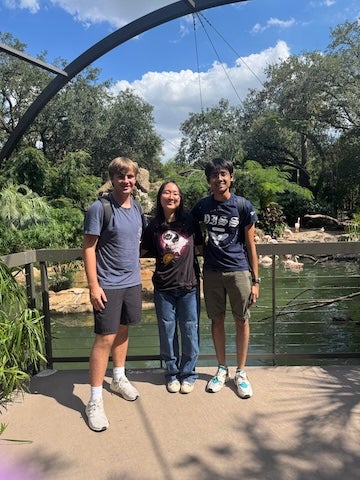
“We included a feedback loop, so the system responds to temperature changes in real time,” Sinhal said. “There’s also a fail-safe mechanism that keeps water circulating if temperatures drop too low, which helps prevent freezing and protects the pipes.”
The project reached the proof-of-concept stage by the end of the fall semester with the team delivering a medium-fidelity prototype and detailed recommendations to zoo staff, including potential next steps for scaling the system to the full habitat.
“Our goal was to answer a fundamental question: Can this work?” Wang said. “And through our testing, we were able to show that it can.”
The project was led by assistant teaching professor Deirdre Hunter and mentored by Lucas Camargo, assistant teaching professor in chemical and biomolecular engineering, with support from the OEDK. It was sponsored by Harrell Huff and developed in collaboration with zoo representatives, including avian curator Ric Urban.
“Each year, we look forward to welcoming Rice OEDK students,” Urban said. “For the past four years, I’ve loved challenging them with real-life experiences that make a difference in wildlife care and well-being.”