
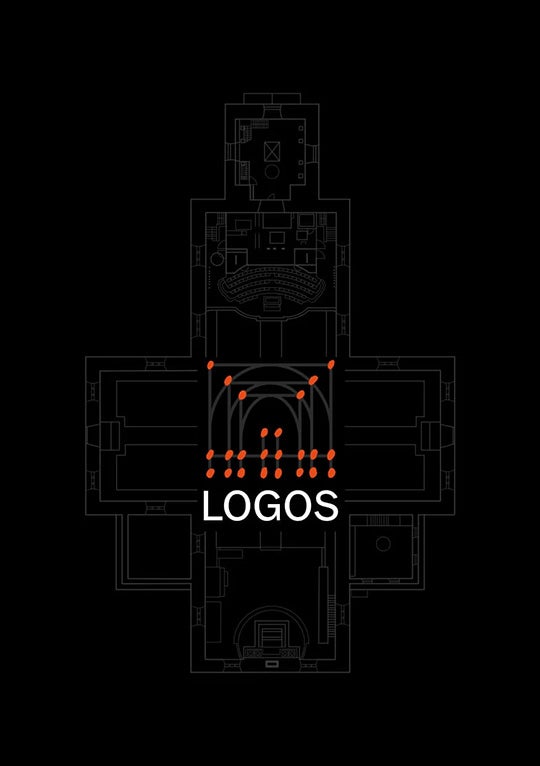
At noon each day inside Oulu Cathedral in Finland, the air will fill with sound unlike anything most visitors have heard before: layered, shifting tones drawn from signals that have traveled billions of years across the universe. The source is “The Logos,” a yearlong immersive installation that opened Easter Sunday and transforms more than 4,000 fast radio bursts into spatial audio. Created by artist and creative technologist Andrew Melchior in collaboration with Massachusetts Institute of Technology astrophysicist Kiyoshi Masui, Rice University’s Timothy Morton and Oulu Cathedral Dean Satu Saarinen, the project turns astrophysical data into a shared listening experience.
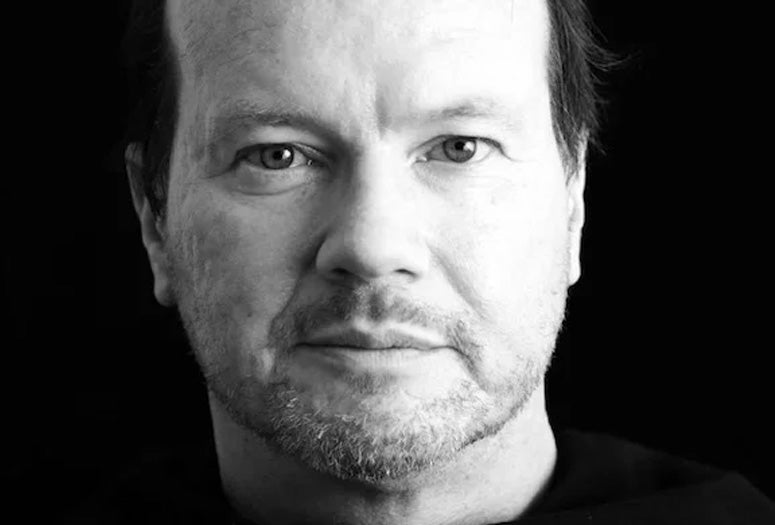
“When it’s said, ‘In the beginning was the logos,’ what it’s actually saying is that in the beginning was relationship — how things hang together, rather than just clashing in chaos,” said Morton, the Rita Shea Guffey Professor of English and Creative Writing.
Morton’s contributions to the installation come not as a traditional explanatory voice but as something more fluid. Morton’s recorded reflections, improvised and layered into the composition, move alongside the cosmic signals rather than attempting to decode them. That approach mirrors the central idea of the project: resisting the urge to reduce the unknown into something fixed or definitive.
“People ask, ‘What’s the meaning of life?’ but that’s not the point,” Morton said. “There are many meanings. What matters is meaningfulness — the possibility for meaning.”
Fast radio bursts, first detected in 2007, are intense flashes of radio energy lasting only milliseconds. Their origins remain one of astrophysics’ enduring mysteries. Detected by the CHIME radio telescope in British Columbia, these signals arrive from distant regions of space, carrying information scientists are still working to understand.
“These signals have travelled billions of years through space before reaching Earth,” Melchior said. “‘The Logos’ brings these extraordinary ancient signals into this inner space — not to explain them but to listen with them.”
In “The Logos,” the signals are translated into sound and projected into the cathedral’s vast interior, where listeners encounter them not as data points but as an experience unfolding in real time.
“The fast flashes will echo as snarelike beats bouncing through the cathedral,” Masui said. “The sweeping dispersion of the signal — where different radio frequencies arrive at slightly different times — creates harmonies between high and low tones. It should feel rich and layered, while also revealing something real about how these signals travel across billions of years of cosmic space before reaching Earth.”
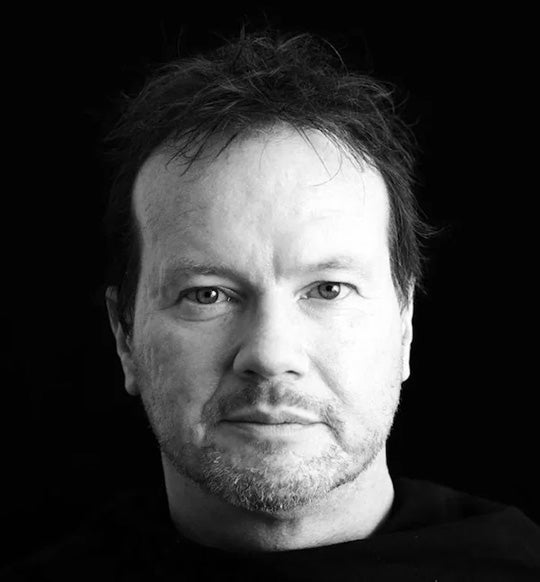
“Are these signals meaningful, or are they just noise?” Morton said. “You don’t know — and that’s exactly why it’s so powerful. You don’t know yet.”
Morton describes the sounds in terms that bridge the scientific and the familiar, pointing to a kind of recognition that does not depend on understanding.
“They’re like birdsong coming from deep space — another being’s world, expressing itself in a way that might have nothing to do with us, and yet we can still appreciate it,” Morton said.
The choice of Oulu Cathedral as the site of the installation underscores that tension between the known and the unknowable. For centuries, the space has gathered people together for shared reflection. “The Logos” extends that tradition, inviting visitors to sit with something vast and unresolved.
“With a work of art, you can feel it — there’s a feeling to logic,” Morton said. “The feel of it is more important than anything that gets said.”
As the sounds move through the cathedral each day, no two listeners are likely to have the same experience. The signals remain distant in origin but immediate in effect, collapsing cosmic time into a moment of shared attention.
“It’s not about explaining the signals,” Morton said. “It’s about creating meaning — or rather, the desire to find meaning, that space where meaning might happen.”