


Nameless Sound musicians performed an original score on Nanibah Chacon’s interactive installation following Danza Azteca Macuilxochitl's activation of...

Rice’s James Tour recently published an improved method to recover antimony from this electronic waste stream. ...

Three Rice faculty members from the Department of Earth, Environmental and Planetary Sciences have recently been honored with career awards, showcasin...

The Adventurous Electric Guitar Festival gathered players, composers and scholars to test the instrument’s next act....

The Science and Technology Policy Program at Rice’s Baker Institute for Public Policy hosted a “science cafe” Oct. 13 to bring research to reality and...

The Doerr Institute for New Leaders at Rice has launched CoachRICE: Team Coaching, a new professional education program designed to help coaches, mana...
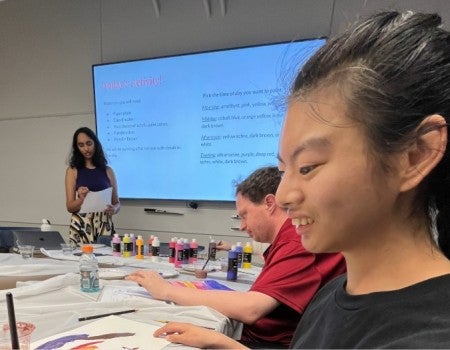
Graduate student Sayuri Jayawardena has started a Rice chapter of Lifelong Learning with Friends. ...

Scholars, curators and filmmaker Daphne Di Cinto gather at Rice to explore Black histories from Renaissance Italy to medieval Africa and Islamic world...
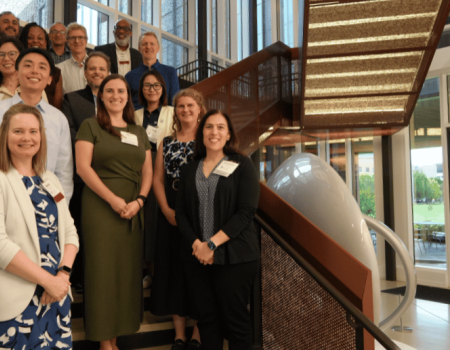
For the sixth fall in a row, Rice welcomed a new group of researchers to STaRT@Rice, giving emerging researchers both the skills and the support to gr...

Rice and the Houston Methodist Research Institute have signed a memorandum of understanding with LSE Health at the London School of Economics and Poli...

As the 2026-27 Aleko Endowed Artist, Julia Bullock curated an evening of song, chamber music and poetry celebrating the Harlem Renaissance....

Rice’s Yonglong Xie is one of 20 early-career scientists, mathematicians and engineers to receive a 2026 Packard Fellowship. ...

Rice chemist, alums named to Forbes 30 Under 30
Rice University chemist Julian West and four alumni have been named to the 10th annual Forbes 30 Under 30.
‘Soft’ nanoparticles give plasmons new potential
Bigger is not always better, but here’s something that starts small and gets better as it gets bigger.

Light flips genetic switch in bacteria inside transparent worms
Researchers from Rice University and Baylor College of Medicine have shown that colored light can both activate and deactivate genes of gut bacteria in the intestines of worms. The research shows how optogenetic technology can be used to investigate the health impacts of gut bacteria.


Ostherr awarded DeBakey Fellowship for computational health research
The award supports research at the world's largest medical library at the National Institutes of Health.


Rice commits to Racial Equity Principles
Rice University President David Leebron has joined leaders of Houston’s business community in committing to the Greater Houston Partnership’s Racial Equity Principles.


