
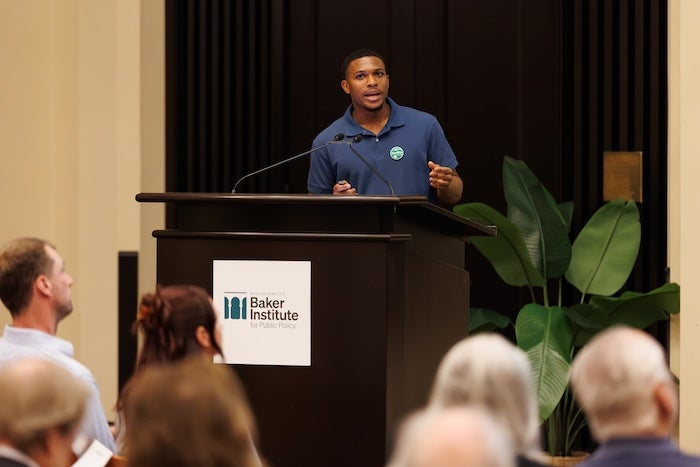
Rice University graduate students are utilizing synthetic biology — a field that combines biology and engineering to develop new ways of solving problems in health, manufacturing and the environment — to answer questions that could improve human life. The Science and Technology Policy Program at Rice’s Baker Institute for Public Policy hosted a “science cafe” Oct. 13 to bring research to reality and answer questions from the public, giving attendees a look at projects underway in university laboratories and an opportunity to ask questions about the science, its potential applications and its implications for society.
The Science and Technology Policy Program provides a space for scientists, engineers and other technicians to engage with policymakers and the public in a sensitive dialog on critical issues facing the U.S.
“We address a broad range of issues that affect how scientists conduct their work, as well as how science considers evidence to guide evidence-based policy decision-making,” said Kirstin Matthews, director of the Science and Technology Policy Program and senior fellow in science policy. “We cover different issues covering things like education, regulation and oversight of scientific research and development, scientific advice to the federal government, and the government support of science and technology. Areas include ethical and regulatory policies that impact AI, research security, immunizations, cell and gene therapies and today’s topic, synthetic biology.”
James Chappell, associate professor of biosciences and deputy director of the Rice Synthetic Biology Institute, explained that synthetic biology is a field focused on thinking about how to engineer with biology to create useful applications. Living organisms already perform remarkable feats, from producing complex chemicals to surviving extreme conditions. Synthetic biologists draw on these natural capabilities by modifying DNA, enhancing existing functions or combining biological processes in new ways.
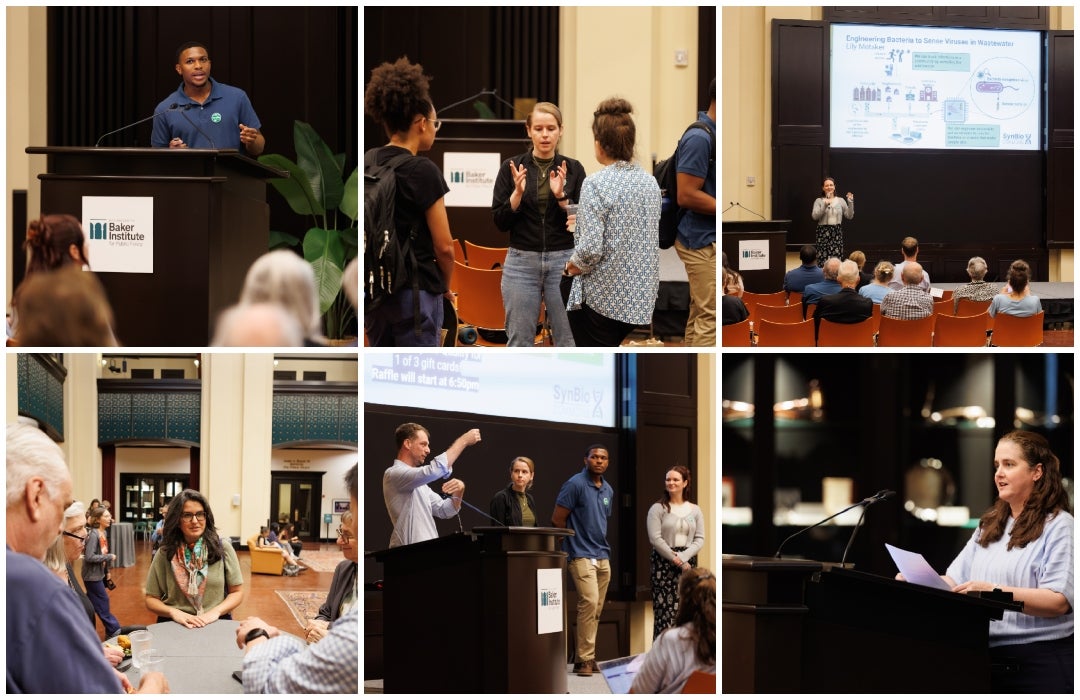
Chappell highlighted applications ranging from microbes that help crops use nitrogen more efficiently to engineered cells used in cancer treatments. The student presentations offered a closer look at how Rice researchers are working to push the field forward.
Hasani Everett, a fourth-year doctoral student in Rice’s Systems, Synthetic and Physical Biology program and the Tabor research group, is working to improve how synthetic DNA is made.
Custom DNA sequences are essential to synthetic biology, enabling researchers to design and test biological systems. But current chemical synthesis methods can be expensive and slow, limiting how quickly scientists can move from an idea to an experiment.
Everett and colleagues are studying the enzymes that naturally build DNA inside cells to develop a more programmable approach. Their research explores how specialized proteins could be controlled with different wavelengths of light to coordinate the addition of DNA’s molecular building blocks.
The goal is to create a faster, more scalable way to produce custom DNA sequences, giving researchers a more accessible starting material for new discoveries.
Robyn Alba, a doctoral student in Caroline Ajo Franklin’s lab in Rice’s biosciences program, is studying bacteria that produce electrical signals as part of their natural metabolism.
These electroactive bacteria transfer electrons outside their cells, including to electrodes. Alba is exploring how that capability could be harnessed to help bacteria communicate with electronic devices. Her research focuses on Lactiplantibacillus plantarum, a bacterium associated with fermented foods such as yogurt. By engineering the organism to recognize specific compounds in the gut, researchers hope to develop biological sensors that could detect signals associated with medications, toxins or inflammation.
The bacteria could potentially do more than detect a target. In the future, engineered systems might also use signals to prompt bacteria to release a treatment or break down a toxin. Rather than generating enough electricity to power a device, the idea is to use electricity as a communication tool between living cells and technology.
Lily Metsker, a graduate student in the Stadler research group in Rice’s civil and environmental engineering department, is working on a different kind of biological sensor — one that could help researchers monitor community health.
Wastewater provides a valuable window into the spread of infectious diseases because people can shed viruses and bacteria whether or not they feel sick or seek medical testing. By analyzing samples from sewer systems and treatment plants, researchers can track changes in the prevalence of pathogens in a community.
But collecting and processing samples takes time and hands-on work. During peak COVID-19 monitoring efforts in Houston, Metsker said, researchers collected more than 100 wastewater samples per week.
Her research explores whether engineered electroactive bacteria could eventually make monitoring more automated. The proposed sensors would recognize specific biological targets and generate electrical signals that researchers could receive remotely. Such a system could allow public health teams to monitor more locations with less manual sampling, potentially helping them detect emerging outbreaks sooner.
After the presentations, audience members asked the students and Chappell about the practical challenges of turning laboratory research into real-world applications.
Questions ranged from the safety and public acceptance of genetically modified foods to the environmental implications of using microbes to break down plastic waste. Metsker also discussed the privacy considerations involved in wastewater surveillance, emphasizing the importance of working with public health partners to ensure that monitoring serves the public good without unnecessarily exposing information about individuals or small populations.
The conversation reflected the event’s broader purpose: to make emerging science accessible while giving community members a chance to engage directly with the researchers developing it.
The science cafe was also part of a National Science Foundation funded research project at the Baker Institute examining public perceptions of synthetic biology. Attendees were invited to share their views through surveys before and after the presentations, helping researchers better understand how people think about the field and the concerns it might raise.
For the graduate students, the event offered an opportunity to explain their work beyond the laboratory and show how research underway at Rice could contribute to advances in biotechnology and health and environmental monitoring.
Their projects address different challenges, but each demonstrates the possibilities of synthetic biology: learning from the natural world, engineering its capabilities and developing new tools that could one day make a difference in people’s lives.