
Rice University students now have the opportunity to volunteer with a new campus club led by graduate student Sayuri Jayawardena. The club is part of Lifelong Learning with Friends, a nonprofit organization dedicated to providing inclusive continuing education programs for adults with intellectual and developmental disabilities. Originally launched at the University of Texas at Austin, the program is now expanding to universities across Texas.
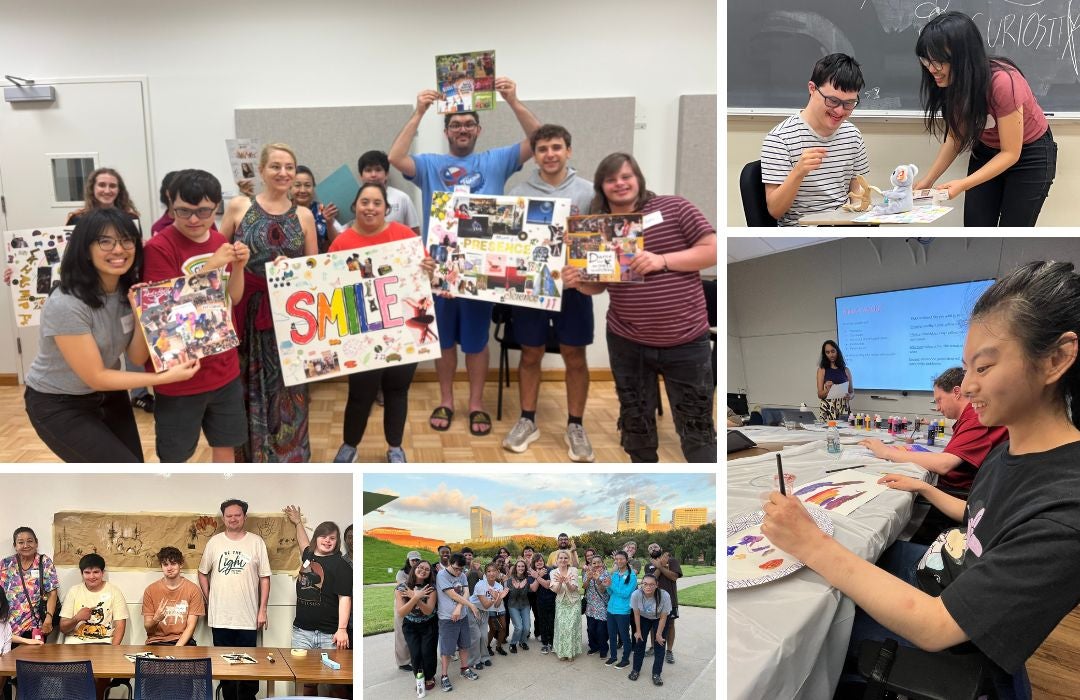
“I volunteered with this program as an undergraduate student at UT,” said Jayawardena, who is studying biochemistry and cell biology. “It was an amazing experience. Many adults with intellectual and developmental disabilities don’t have the opportunity to engage in formal classroom learning, so I’m really excited to create these opportunities here.”
Through this program, professors, graduate students and postdoctoral fellows design and teach six-week continuing education courses. Volunteer undergraduate students attend each session, participating in the lectures, discussions and activities alongside their lifelong learner classmates.
“It’s incredibly meaningful to bring Lifelong to my hometown of Houston,” said Kaelin Rubenzer, the executive director of Lifelong Learning with Friends. “I’m incredibly grateful to Sayuri, who started as a volunteer and instructor at our home base at UT Austin and has spent the past year championing the expansion to Rice behind the scenes.”
The teachers can choose topics within their academic expertise or build off a hobby or other academic interests. Each course is designed to be inclusive while maintaining a formal academic structure. This semester, courses at Rice include classes on drawing Western art and amphibians, among other offerings.
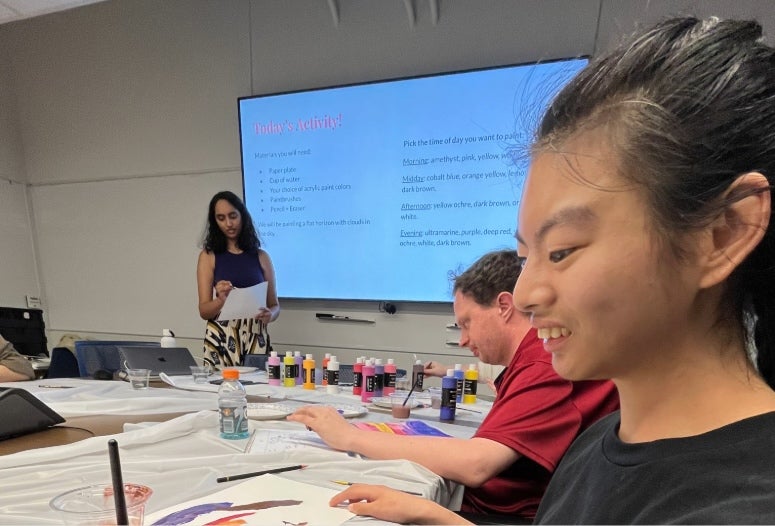
“Art as an extracurricular has always made me happy,” said Deepika Yerva, a biochemistry and cell biology graduate student who is teaching Art Through the Ages: Learn to Paint Western Styles. “I am loving the chance to teach again and share that experience.”
Yerva, who received her teaching certificate as an undergraduate, starts each session with a short icebreaker before spending the majority of the class in lecture and discussion and ending with an art activity. The classroom experience can feel simultaneously familiar and new to her undergraduate volunteers.
“One thing that has stood out to me is the dichotomy between treating students normally and recognizing that treating everyone exactly the same is not always fair or helpful,” said freshman Claire Cao, a volunteer who is studying chemistry. “I’ve learned to ask more questions, listen instead of assuming what someone needs and be more comfortable connecting with people whose experiences are different from mine.”
Students interested in volunteering with the program can contact llwf.rice@gmail.com.