
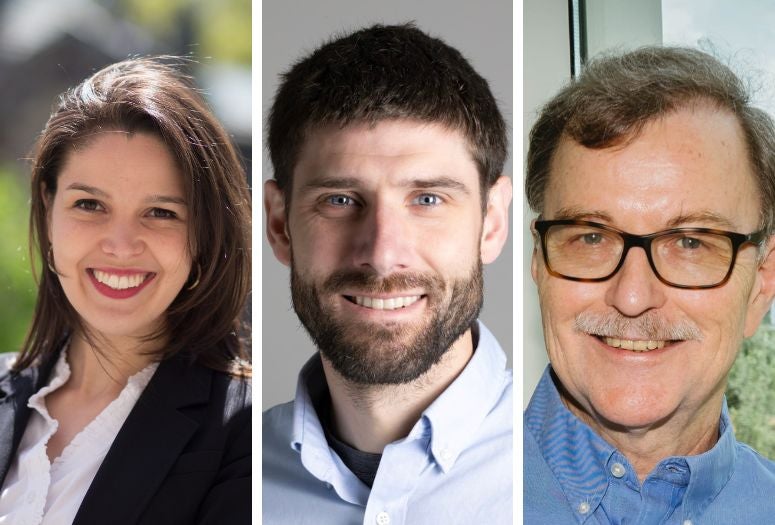
Three Rice University faculty members from the Department of Earth, Environmental and Planetary Sciences have recently been honored with career awards, showcasing excellence at every stage of career.
Vergopolan receives NSF CAREER Award

Noemi Vergopolan, assistant professor of Earth, environmental and planetary sciences, has received a National Science Foundation CAREER Award, which supports early-career faculty who have the potential to serve as academic role models in research and education and to lead advances in the mission of their department or organization. It will fund Vergopolan’s project, “DroughtRx — forecasting drought at decision-relevant scales for agricultural resilience,” with $938,299 over the next five years.
“I’ve been thinking about this very big idea for a long time,” Vergopolan said. “It’s exciting to see that others also see the potential and value in this project. Now we get to work on putting all the pieces together.”
DroughtRx will use satellite data, AI modeling and increased understanding of drought at the microscale to better predict and prepare for drought across the United States, increasing both the strength and resolution of predictions while expanding on ways to include farmer observations with satellite observations and AI models.
Schmandt part of inaugural midcareer GSA 50 under 50 Award class
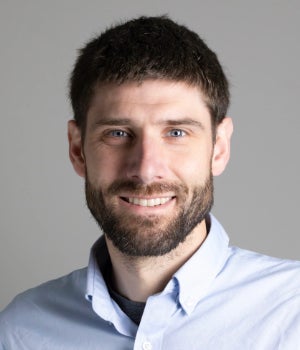
Brandon Schmandt, professor of Earth, environmental and planetary sciences, has been honored by the Geological Society of America as part of its first 50 under 50 Award class, which recognizes midcareer excellence and leadership in geoscience.
Schmandt’s research uses seismology to study geoscience problems. Using data from both repositories and the field, his research team analyzes and models seismic waves, which propagate through the entire Earth, offering a wide range of projects for his lab. Currently, they’re focused on understanding magma organization beneath volcanoes and improving automatic classification of seismic signals.
“It’s great to see the major geological societies of America, Canada and Mexico coordinating to recognize midcareer geoscientists,” said Schmandt, who is a fellow of both the GSA and American Geophysical Union. “The inaugural class is an impressive group, and I sincerely appreciate being included.”
Gordon wins 2026 AGU William Gilbert Award
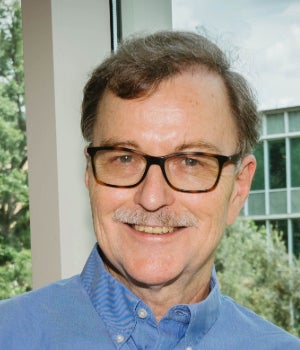
Richard Gordon, the W.M. Keck Foundation Professor in Geophysics, Earth, Environmental and Planetary Sciences, has won the American Geophysical Union’s 2026 William Gilbert Award, which is granted in recognition of outstanding and unselfish work in magnetism of Earth materials and of the Earth and planets.
“Although my research has taken me into adjacent fields of tectonophysics, marine geophysics, space geodesy and plate tectonics, my primary home in geophysics has always been the magnetism of the Earth and Earth materials,” Gordon said. “In these research fields I have had many friends, colleagues, students and mentors, including multiple past recipients of the award. It makes me very happy to be joining these prior awardees, whom I greatly admire.”
Gordon is known for his work in global tectonic motions and paleomagnetism, including developing the NUVEL and MORVEL global plate motion models and the recognition and investigation of diffuse oceanic plate boundaries. His work has led to more accurate descriptions of plate movements and better understanding of the relative motions of hot spots. He is a pioneer in estimating the apparent polar wander of the Pacific plate and its implications for true polar wander. He has previously been awarded the AGU James Macelwane and Walter Bucher Medals and the GSA’s George P. Woollard Award and Arthur Day Medal.