
Hand of kindness makes a child’s day
Rice University students have teamed with a Texas Children’s Hospital doctor to build a prosthetic hand for a 5-year-old boy.
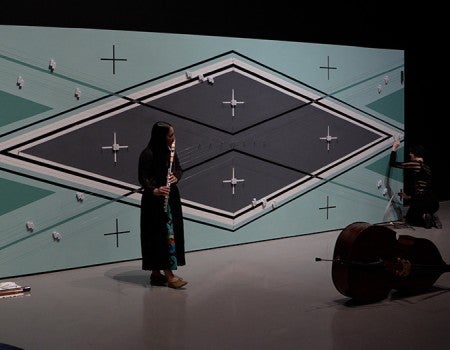
Nameless Sound musicians performed an original score on Nanibah Chacon’s interactive installation following Danza Azteca Macuilxochitl's activation of...
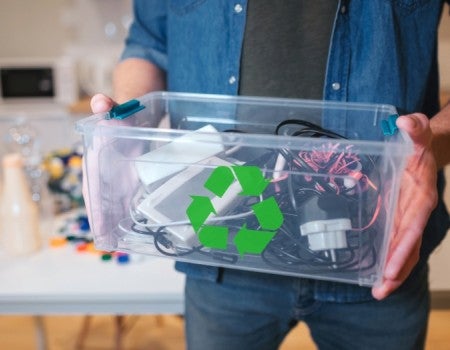
Rice’s James Tour recently published an improved method to recover antimony from this electronic waste stream. ...

Three Rice faculty members from the Department of Earth, Environmental and Planetary Sciences have recently been honored with career awards, showcasin...

The Adventurous Electric Guitar Festival gathered players, composers and scholars to test the instrument’s next act....
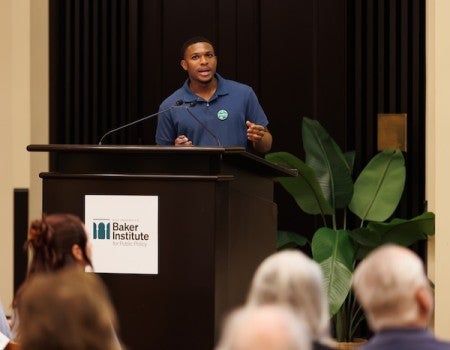
The Science and Technology Policy Program at Rice’s Baker Institute for Public Policy hosted a “science cafe” Oct. 13 to bring research to reality and...
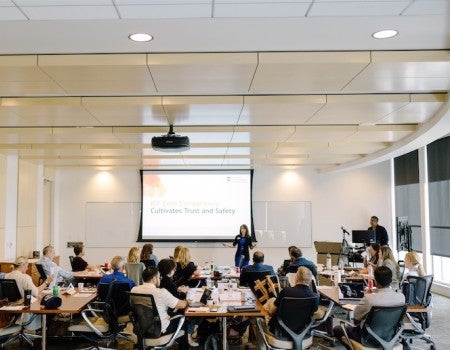
The Doerr Institute for New Leaders at Rice has launched CoachRICE: Team Coaching, a new professional education program designed to help coaches, mana...
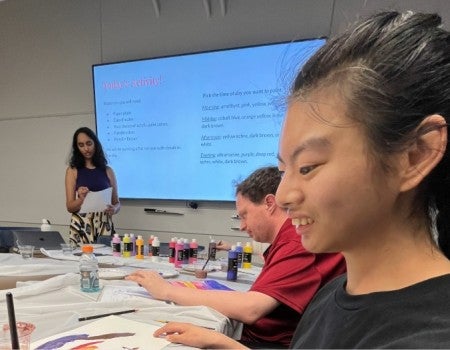
Graduate student Sayuri Jayawardena has started a Rice chapter of Lifelong Learning with Friends. ...
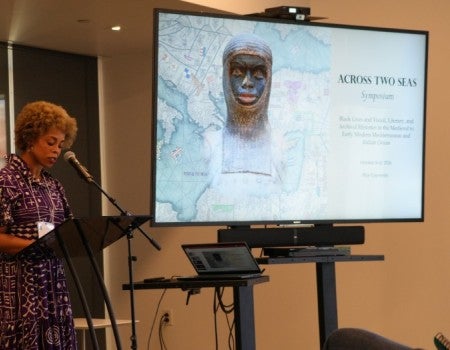
Scholars, curators and filmmaker Daphne Di Cinto gather at Rice to explore Black histories from Renaissance Italy to medieval Africa and Islamic world...
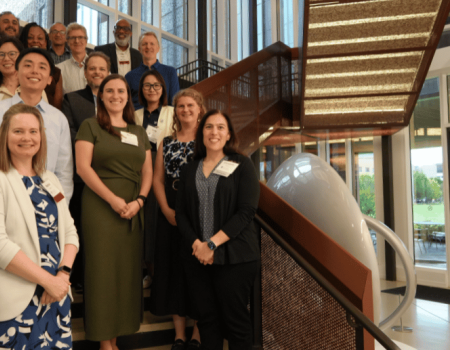
For the sixth fall in a row, Rice welcomed a new group of researchers to STaRT@Rice, giving emerging researchers both the skills and the support to gr...
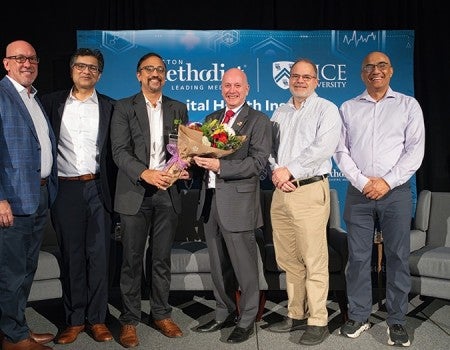
Rice and the Houston Methodist Research Institute have signed a memorandum of understanding with LSE Health at the London School of Economics and Poli...
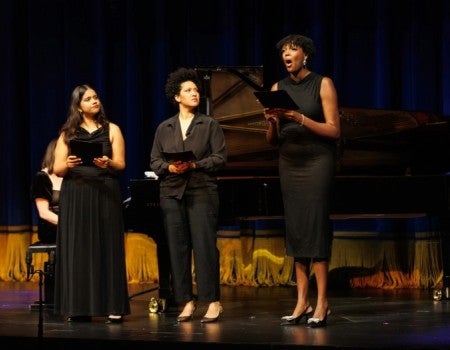
As the 2026-27 Aleko Endowed Artist, Julia Bullock curated an evening of song, chamber music and poetry celebrating the Harlem Renaissance....

Rice’s Yonglong Xie is one of 20 early-career scientists, mathematicians and engineers to receive a 2026 Packard Fellowship. ...
Hand of kindness makes a child’s day
Rice University students have teamed with a Texas Children’s Hospital doctor to build a prosthetic hand for a 5-year-old boy.

OpenStax and collaborators receive $1.13 million to develop free textbooks
OpenStax and its 12 collaborators have received U.S. Department of Education funding to develop three new free, openly licensed textbooks for in-demand computer science courses. The books will be accompanied by comprehensive support, including educational technology and instructor training.

Rice student helps fans make World Series memories
How many part-time college jobs put you smack-dab in the middle of the World Series?


The Owls took a nail-biting game against the University of North Texas into overtime Oct. 30

The Rice University Marching Owl Band (MOB) celebrated its 50th anniversary during the 2021 Owl Together weekend

Alumni from across the years gathered under the shade of historic Rice Stadium for a homecoming tailgate Oct. 30

RUPD creates safe Halloween fun at the Rice Children’s Campus
The Rice University Police Department hosted their annual Child Safety Fair

Rice’s bold future subject of President’s Town Hall
Rice President David Leebron and Association of Rice Alumni President Monique Shankle ’86 examined the university’s bold future Oct. 29.

Leebron outlines progress, challenges in State of the University
President Leebron committed Rice to “doing all we do at the highest level … regardless of the challenges we face” in his State of the University address to faculty.