

Xayvion Davidson, a rising sophomore studying bassoon at Rice University’s Shepherd School of Music, won first place and audience favorite at the inaugural Cynthia Woods Mitchell-Ima Hogg Young Artist Competition June 11.
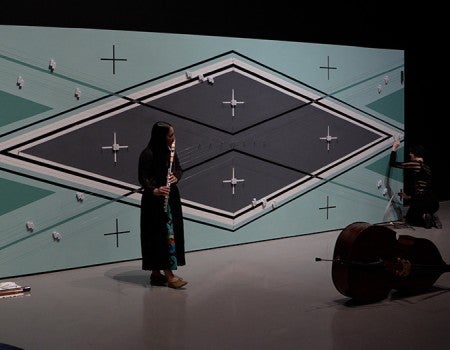
Nameless Sound musicians performed an original score on Nanibah Chacon’s interactive installation following Danza Azteca Macuilxochitl's activation of...

Rice’s James Tour recently published an improved method to recover antimony from this electronic waste stream. ...

Three Rice faculty members from the Department of Earth, Environmental and Planetary Sciences have recently been honored with career awards, showcasin...
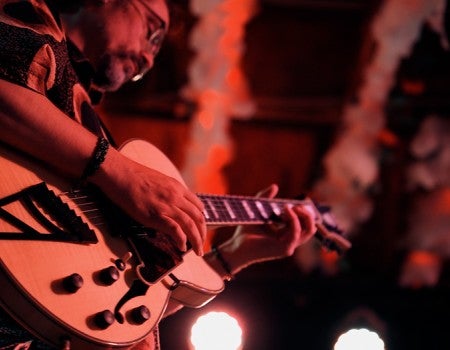
The Adventurous Electric Guitar Festival gathered players, composers and scholars to test the instrument’s next act....
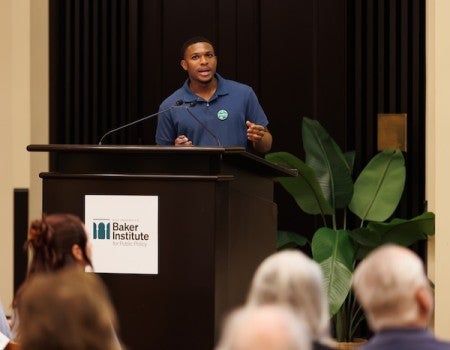
The Science and Technology Policy Program at Rice’s Baker Institute for Public Policy hosted a “science cafe” Oct. 13 to bring research to reality and...
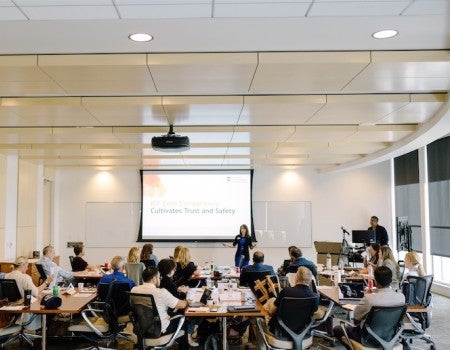
The Doerr Institute for New Leaders at Rice has launched CoachRICE: Team Coaching, a new professional education program designed to help coaches, mana...
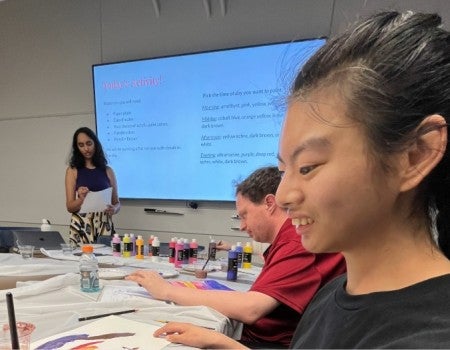
Graduate student Sayuri Jayawardena has started a Rice chapter of Lifelong Learning with Friends. ...
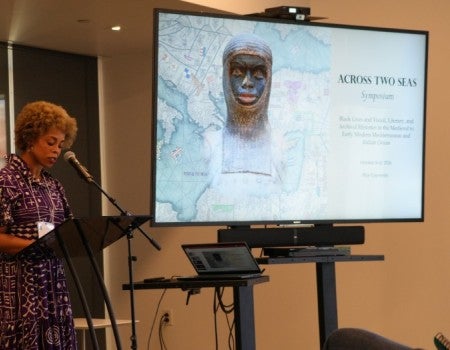
Scholars, curators and filmmaker Daphne Di Cinto gather at Rice to explore Black histories from Renaissance Italy to medieval Africa and Islamic world...
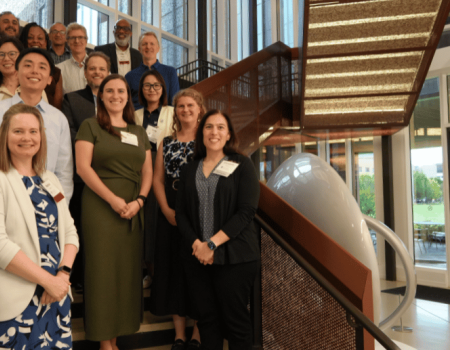
For the sixth fall in a row, Rice welcomed a new group of researchers to STaRT@Rice, giving emerging researchers both the skills and the support to gr...
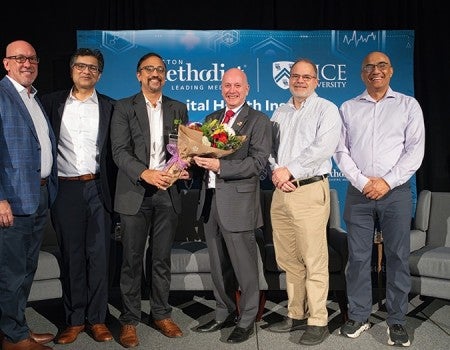
Rice and the Houston Methodist Research Institute have signed a memorandum of understanding with LSE Health at the London School of Economics and Poli...
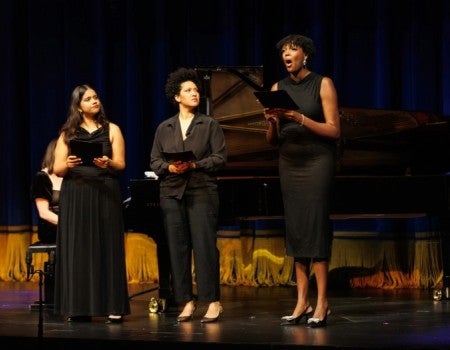
As the 2026-27 Aleko Endowed Artist, Julia Bullock curated an evening of song, chamber music and poetry celebrating the Harlem Renaissance....

Rice’s Yonglong Xie is one of 20 early-career scientists, mathematicians and engineers to receive a 2026 Packard Fellowship. ...
Xayvion Davidson, a rising sophomore studying bassoon at Rice University’s Shepherd School of Music, won first place and audience favorite at the inaugural Cynthia Woods Mitchell-Ima Hogg Young Artist Competition June 11.

Owls volleyball team soaks in Brazil
The Rice Owls volleyball team took a trip to Brazil June 1-11 that included four matches against club and national teams.

Religious calling to a job can motivate employees but might result in mistreatment going unaddressed
Feeling a religious or spiritual calling to a job can be a huge motivator, but it can also potentially result in employee mistreatment and exploitation going unaddressed, according to new research from Rice University’s Boniuk Institute for the Study and Advancement of Religious Tolerance and the Religion and Public Life Program.

Rice's Nai-Hui Chia awarded Google funding to study quantum simulations
Rice computer scientist Nai-Hui Chia has won a prestigious Google Scholar Award, which includes funding to further his research on the use of quantum computers to simulate quantum physical systems.
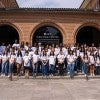
Multicultural Community Relations hosts Texas Diversity Council Summer Youth Program
More than 80 high school students from the Greater Houston area attended the 13th annual Texas Diversity Council Summer Youth Program at Rice, hosted by Multicultural Community Relations in the Office of Public Affairs.

ARPA-E announces $100 million funding initiative at Rice event
Rice welcomed more than 100 energy innovation leaders to campus June 8 for a first-of-its-kind event by the Advanced Research Projects Agency-Energy (ARPA-E) where ARPA-E director Evelyn Wang announced $100 million in new commercialization funding for innovative energy technologies.

Cannady Hall architects also working to build Rice Architecture students’ skills
Jeannette Kuo and Ünal Karamuk are currently working on the construction of the Rice School of Architecture’s new William T. Cannady Hall, and recently taught a studio course as Cullinan Visiting Professors.

A new work of ethnographic fiction edited by Rice University anthropologist Ilana Gershon shares imaginary stories — inspired by real anthropological field work — of how people around the world coexist with monsters.

Immigrants without documentation face mental health trauma even after arriving in US
Immigrants migrating to the U.S. face all kinds of hurdles, but after arriving stateside, the hardships continue, which can result in additional psychological distress, according to new research from Rice University.
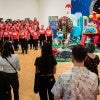
Moody Center kicks off Pride month with live music, open gallery
The Moody Center for the Arts hosted a Pride happy hour on the afternoon of June 8, which featured a cappella renditions of pop favorites by Pride Chorus Houston and tunes from DJ Krazzy Kris.