When geopolitical conflicts disrupt fuel shipments, electricity demand outpaces infrastructure development or critical mineral shortages threaten indu...
The Global Consortium of Entrepreneurship Centers (GCEC), headquartered at the Rice Alliance for Technology and Entrepreneurship, brought leading univ...
As early voting begins, new Rice research sheds light on why some members of one of Houston’s fastest-growing populations say they remain underreprese...
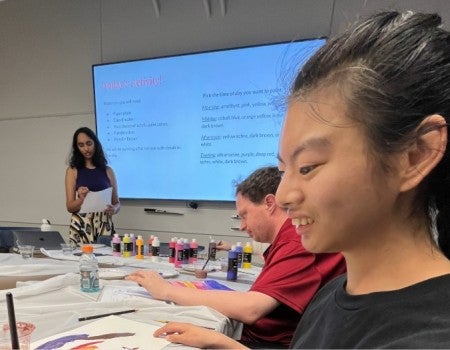
Nameless Sound musicians performed an original score on Nanibah Chacon’s interactive installation following Danza Azteca Macuilxochitl's activation of...
Three Rice faculty members from the Department of Earth, Environmental and Planetary Sciences have recently been honored with career awards, showcasin...
The Science and Technology Policy Program at Rice’s Baker Institute for Public Policy hosted a “science cafe” Oct. 13 to bring research to reality and...
The Doerr Institute for New Leaders at Rice has launched CoachRICE: Team Coaching, a new professional education program designed to help coaches, mana...
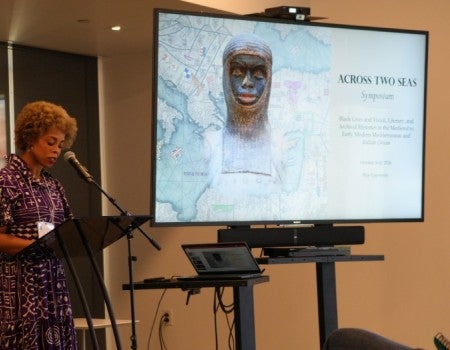
Scholars, curators and filmmaker Daphne Di Cinto gather at Rice to explore Black histories from Renaissance Italy to medieval Africa and Islamic world...
U.S. debt is projected to soon eclipse World War II-era levels, and while that sounds problematic, that much growth in government debt won’t weaken the private sector like it did in the 1940s, according to new research by an expert at Rice University's Baker Institute for Public Policy.
A Rice University geologist is one of 13 scientists recently selected to operate the Mars rover Perseverance and analyze samples for an eventual return to Earth.
Current explanations for migrant and refugee policies in the "global south" mistake the absence of formal policy for neglect. But a migration and immigration expert at Rice's Baker Institute for Public Policy proposes to explain this dynamic as "strategic indifference.”
Researchers from Baylor College of Medicine and Rice University have developed artificial intelligence models that help them better understand the brain computations that underlie thoughts.
Atom-scale models of proteins that incorporate ligands, like drug molecules, show a strong correlation between minimally frustrated binding sites and drug specificity. Such models could lead to better-designed drugs with fewer side effects.
A Rice assistant professor of architecture and his students hope to travel to Seoul, South Korea, next fall to present their work at the city’s Biennale of Architecture and Urbanism.