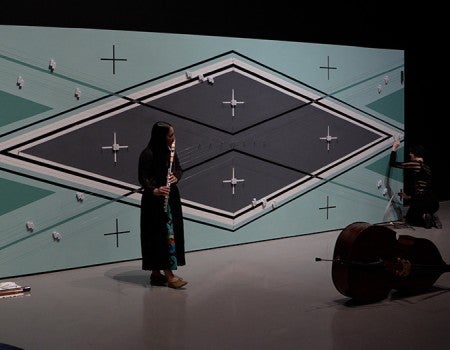
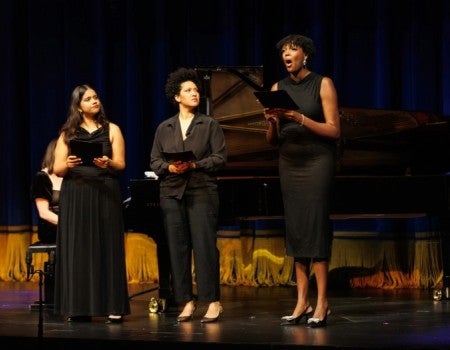
Nameless Sound musicians performed an original score on Nanibah Chacon’s interactive installation following Danza Azteca Macuilxochitl's activation of...
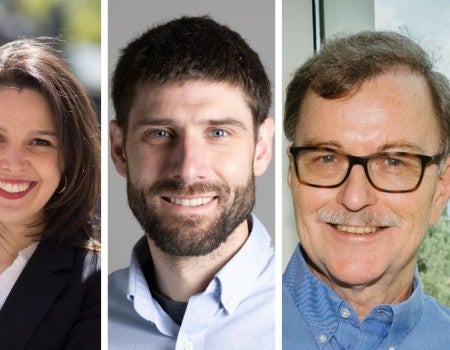
Three Rice faculty members from the Department of Earth, Environmental and Planetary Sciences have recently been honored with career awards, showcasin...
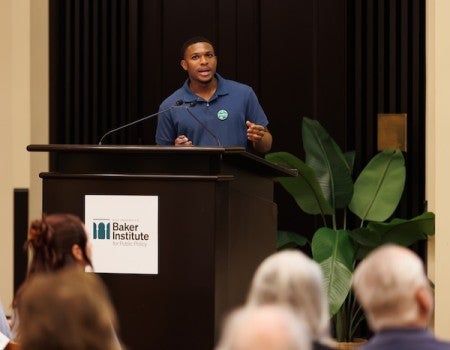
The Science and Technology Policy Program at Rice’s Baker Institute for Public Policy hosted a “science cafe” Oct. 13 to bring research to reality and...
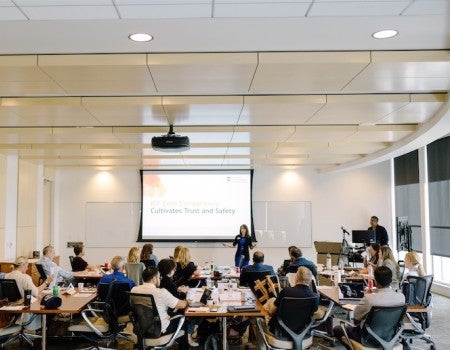
The Doerr Institute for New Leaders at Rice has launched CoachRICE: Team Coaching, a new professional education program designed to help coaches, mana...
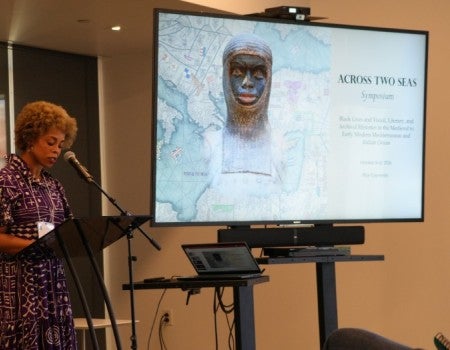
Scholars, curators and filmmaker Daphne Di Cinto gather at Rice to explore Black histories from Renaissance Italy to medieval Africa and Islamic world...
For the sixth fall in a row, Rice welcomed a new group of researchers to STaRT@Rice, giving emerging researchers both the skills and the support to gr...
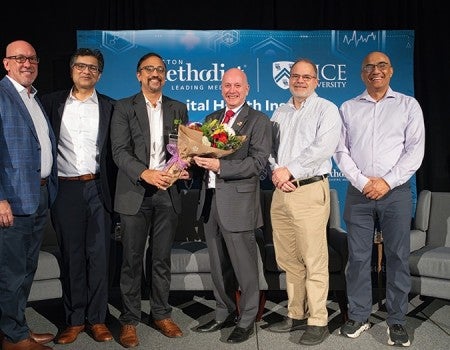
Rice and the Houston Methodist Research Institute have signed a memorandum of understanding with LSE Health at the London School of Economics and Poli...
An area outside Reckling Park was officially named “Helfman Landing” at a dedication April 6. It is named in honor of Alan Helfman and the Helfman family for their support of Rice University.
Parental leave for fathers can decrease sexist attitudes and gender bias, according to new research from Rice University, Washington University in St. Louis, the University of Oxford and ETH Zurich.
Chinese companies may have an extreme advantage in the global market thanks to the country’s impressive logistics data management platform, according to a new report from Rice University’s Baker Institute for Public Policy.
First place honors at Rice360’s annual Global Health Technologies Design Competition went to a team of Washington University in St. Louis undergraduates who created an innovative and discrete urine collection system that would allow mothers to avoid the stigma and embarrassment from incontinence that can result from prolonged, obstructed labor.
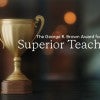
Nine faculty received the 2023 George R. Brown Award for Superior Teaching, which honors top Rice instructors by votes from alumni who graduated within the past two, three and five years.
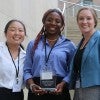
Each year, Rice honors members of the university community who have served students through outstanding teaching, dedication and service. Here are recipients of some of this year's awards.
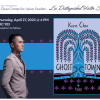
The Chao Center for Asian Studies — along with co-sponsors the Asia Society Texas Center, Inprint and the Taiwan Academy in Houston, an arm of the Taiwan Ministry of Culture — will host Kevin Chen, awarding-winning author of “Ghost Town,” as the latest speaker in its Liu Distinguished Visitor Series April 27 at Rice’s BioScience Research Collaborative.