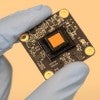
The lensless Bio-FlatScope is a small, inexpensive camera to monitor biological activity that can’t be captured by conventional instruments. The device could eventually be used to look for signs of cancer or sepsis or become a valuable endoscopy tool.
Rice engineers suggest that flaring of natural gas at oil and gas fields in the United States, primarily in North Dakota and Texas, contributed to dozens of premature deaths in 2019.
Houston’s low-income neighborhoods bear the biggest burdens during catastrophic events — from damage to older homes during natural disasters such as Hurricane Harvey and last year’s winter storm to economic hardship caused by the COVID-19 pandemic — according to a Harris County Community Services Department analysis prepared by Rice University's Kinder Institute for Urban Research.
A new analysis of human remains that were buried in African archaeological
sites has produced the earliest DNA from the continent, telling a
fascinating tale of how early humans lived, traveled and even found their
significant others.
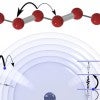
Rice University physicists have learned to manipulate electrons in gigantic Rydberg atoms with such precision they can create “synthetic dimensions” where the system acts as if it had extra spatial dimensions, which are important tools for quantum simulations.
The Provost’s Office and the Liu Idea Lab for Innovation & Entrepreneurship (Lilie) have announced the inaugural class of Rice Innovation Fellows, a program that will provide educational and financial support to the next generation of scientist- and engineer-led spinout ventures.
Rice University bioengineer Gang Bao is developing a three-pronged attack on solid cancer tumors. The research now has the support of the Cancer Prevention and Research Institute of Texas.