
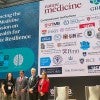
The Brain Health for Economic Resilience Commission, convened in collaboration with Nature Medicine, was announced at the Texas Brain Economy Summit June 9–10.
The Brain Health for Economic Resilience Commission, convened in collaboration with Nature Medicine, was announced at the Texas Brain Economy Summit June 9–10.

Rice’s Tringides wins prestigious Pew Biomedical Scholar award
Christina Tringides is the recipient of the highly prestigious Pew Biomedical Scholar award.
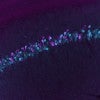
Study is first demonstration of gene transcription measurement in the living brain
Bioengineers at Rice have developed a way to map DNA transcription profiles in living brain tissue with great accuracy based solely on a blood sample.
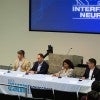
Rice hosts translational brain research conference
InterfaceNeuro 2026 convened participants from academia, medicine, industry and government in order to explore potential collaborations, identify roadblocks and chart areas of convergent action. The event also served as a forum to engage on recent policy and governance developments touching on brain health.

Clinical trial seeks to advance intuitive assistive robotics for people with paralysis
Rice, in collaboration with Baylor College of Medicine, will join BrainGate, a consortium of universities and academic medical centers working on creating brain-computer interface technologies.

Rice students bring health care to rural regions through new app
Three Rice students spent their spring break piloting a mobile health platform designed to support community health workers in underserved regions, including Guatemala, Kenya and Colombia.
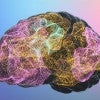
Brain-computer interface based on Rice research wins FDA approval for first clinical trial
Motif Neurotech, a company commercializing technology based on research at Rice, has received approval from the FDA to begin the first clinical trial of its therapeutic brain-computer interface for treatment of treatment-resistant depression.
An internal seed funding initiative will support 12 projects exploring brain health research.

Watch: Provost Dittmar, Project Metis leaders outline vision for brain health, brain economy
Four months after its launch, Project Metis is building momentum — with a new website and video offering a deeper look at the initiative’s vision to position the Houston-Galveston region as a global leader in brain health and the emerging brain economy.

Neuroscience meets public life at Rice’s De Lange Conference XIV: Brains in Society
Rice will host the Scientia/De Lange Conference XIV: Brains in Society from March 12 to 14.

Platform to map living brain noninvasively takes next big step
A technology designed to read gene activity in the brain from a simple blood test has now cleared a major translational hurdle.

Rice Brain Institute awards first seed grants to jump-start collaborative brain health research
The Rice Brain Institute has announced the awardees of its first funding initiative, a seed grant program that is a collaborative effort between the university and four institutional partners in the Texas Medical Center.

Rice partners on Project Metis to advance global leadership in brain health, emerging brain economy
Rice is a key partner on Project Metis, a groundbreaking initiative led by Center for Houston’s Future to position the Houston-Galveston region as the global leader in brain health and the emerging brain economy.
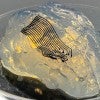
Materials that match the brain: Rice engineer earns Sontag Foundation distinction
Rice materials scientist and neuroengineer Christina Tringides has been named a Distinguished Scientist by the Sontag Foundation, a national recognition for early career researchers advancing transformative projects in brain cancer research.
A molecular ‘reset button’ for reading the brain through a blood test
Rice bioengineers have designed an erasable serum marker that could enable clinicians to detect problems or measure any changes in how a patient responds to treatment with greater precision, using simple, minimally-invasive testing.