
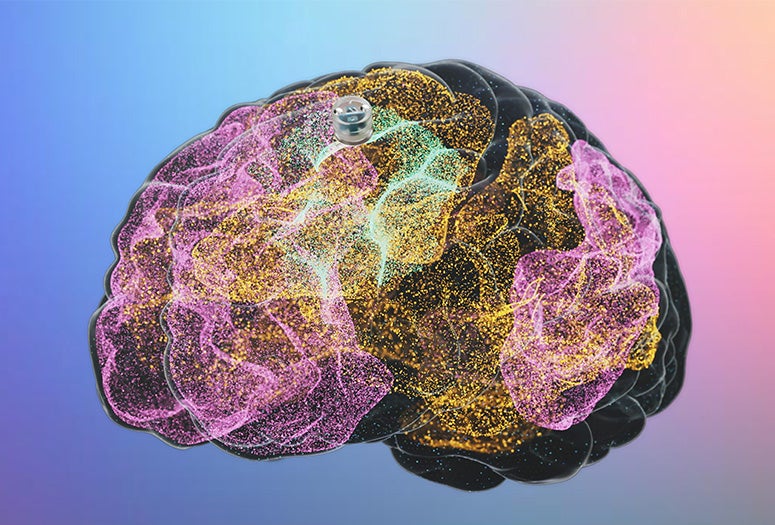
Motif Neurotech, a company commercializing technology based on research at Rice University, has received approval from the U.S. Food and Drug Administration to begin the first clinical trial of its therapeutic brain-computer interface (BCI) for treatment of treatment-resistant depression. The decision is a significant step supporting Motif’s mission to serve the nearly 3 million Americans living with the condition.
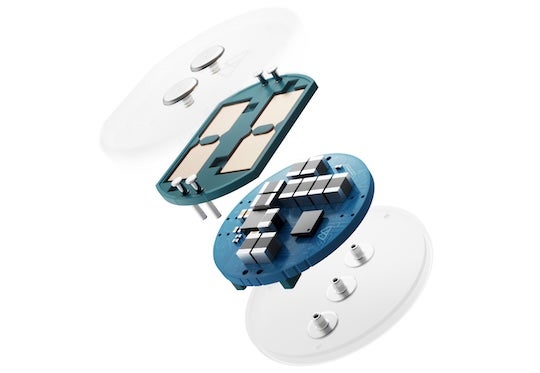
The early feasibility study will test Motif’s BCI technology, a small, wirelessly powered implantable device designed to deliver electrical stimulation to brain circuits linked to depression. Called Digitally programmable Over-brain Therapeutic (DOT), the device is about the size of a blueberry and sits in the skull above the dura without touching the brain.
“The goal for this technology is that it would be the mental health equivalent of a continuous glucose monitor for diabetes,” said Jacob Robinson, professor of electrical computer engineering and bioengineering at Rice and co-founder and CEO of Motif. “What has been really special for me personally on this journey is to be able to work all the way from a concept through the process of research and development funded by the federal government at Rice, and take that into a product that is going to affect people’s lives for the better.”
Motif obtained the investigational device exemption from the FDA just four years after its founding ⎯ a record timeline for a BCI company. The study will enroll eligible adults whose depression has not improved after trying multiple therapies and will be conducted in collaboration with several leading medical institutions, including Baylor College of Medicine, Massachusetts General Brigham, Emory Healthcare, UT Health Houston, University of Iowa, University of Utah Health, New York University and Brain Health Consultants (Houston).
Motif is also among the teams selected for the Evidence-Based Validation & Innovation for Rapid Therapeutics in Behavioral Health, a newly announced initiative from the Advanced Research Projects Agency for Health (ARPA-H) supporting more precise and effective behavioral health treatments. Through EVIDENT, Motif will collect additional data alongside its clinical trial to help identify which patients are most likely to respond to neuromodulation and whether a treatment is working.

“The idea with this funding is to support a number of teams who have rapid-acting interventions for a mental health condition and to collect additional data to help determine with greater precision whether a treatment is working, how it is working and which patients are benefitting most from which course of treatment,” Robinson said.
Motif’s technology builds on more than a decade of research in the Robinson and Yang labs at Rice and work with collaborators and co-founders Dr. Sameer Sheth at Baylor College of Medicine and Dr. Sunil Sheth at the University of Texas Health Science Center at Houston. The foundational research was supported by ARPA-H, the Defense Advanced Research Projects Agency and the National Institutes of Health. The work reflects Rice’s broader push to lead in health innovation by translating advances in engineering and neuroscience into new approaches for care.
People interested in learning more about clinical trial opportunities can join Motif’s patient registry at registry.motifneuro.tech.