

Diseases that disrupt memory, movement and cognition remain among the most difficult challenges in modern medicine, in part because the brain is still one of the least understood organs in the human body.
That challenge is driving new collaborations at Rice University, where the Rice Brain Institute has announced the first research awards issued under its new umbrella. The institute is funding four collaborative projects that unite Rice faculty with clinicians and scientists across the Texas Medical Center.
The Rice and TMC Neuro Collaboration Seed Grant Program marks the institute’s first funding initiative since its launch in October and reflects Rice’s strategic priority to lead innovations in health by accelerating interdisciplinary, translational research in brain science and brain health. The program is a joint effort between Rice and four TMC institutional partners, including The University of Texas Medical Branch (UTMB), Baylor College of Medicine, UTHealth Houston and The University of Texas MD Anderson Cancer Center.
“These awards are meant to help teams test bold ideas and build the collaborations needed to sustain long-term research programs in brain health,” said Behnaam Aazhang, Rice’s J.S. Abercrombie Professor of Electrical and Computer Engineering, Rice Brain Institute director and co-director of the Rice Neuroengineering Initiative.
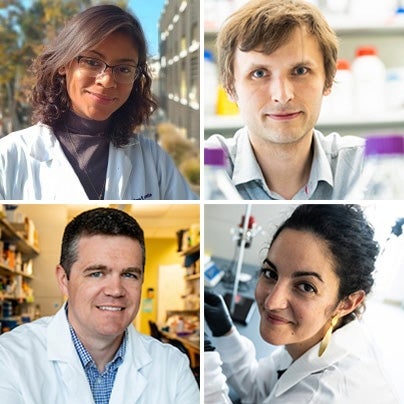
Facilitated by Rice’s Educational and Research Initiatives for Collaborative Health (ENRICH) Office, the program supports pilot projects that address neurological disease, mental health and brain injury, allowing teams to test new approaches and build momentum for continued collaboration. Each award requires collaboration between at least one Rice faculty member and one investigator at a partnering TMC institution, with a unique split-funding model mechanism and proposal evaluation process that could help structure future collaborations. The number of applications for the first iteration of the program indicates a strong interest in research collaborations focused on brain health.
The first round of awards, selected from 40 proposals, supports projects that reflect the breadth of the Rice Brain Institute’s research agenda:
A longer-lasting treatment for abnormal blood vessels in the brain
This project aims to develop an injectable, gel-like material designed to seal off fragile, abnormal blood vessels that can cause life-threatening bleeding in the brain, while also delivering a targeted drug to reduce the risk that the vessels reopen.
Principal investigators: Kevin McHugh, associate professor of bioengineering and chemistry at Rice; and Peter Kan, professor and chair of neurosurgery at the UTMB.
A nonsurgical approach to controlling seizures
Researchers are testing a nonsurgical approach that uses focused ultrasound to deliver gene-based therapies to deep brain regions involved in seizures with the goal of controlling epilepsy without implanted electrodes or invasive procedures.
Principal investigators: Jerzy Szablowski, assistant professor of bioengineering at Rice; and Jochen Meyer, assistant professor of neurology at Baylor.
A blood test to identify high-risk patients after brain hemorrhage
This project aims to create a blood test that can identify patients at high risk for delayed brain injury following aneurysm-related hemorrhage, allowing doctors to intervene earlier and improve recovery outcomes.
Principal investigators: Juliane Sempionatto, assistant professor of electrical and computer engineering at Rice; and Aaron Gusdon, associate professor of neurosurgery at UTHealth Houston.
Protecting speech and language during brain tumor surgery
By combining advanced brain recordings, imaging and noninvasive stimulation, this study seeks to help surgeons better identify and preserve language-critical brain areas during tumor removal, reducing the risk of long-term speech and language impairment.
Principal investigators: Christina Tringides, assistant professor of materials science and nanoengineering at Rice; and Sujit Prabhu, professor of neurosurgery at MD Anderson.
Together, the projects underscore the Rice Brain Institute’s role as a collaborative hub linking engineering, neuroscience and clinical expertise into closer conversation.