
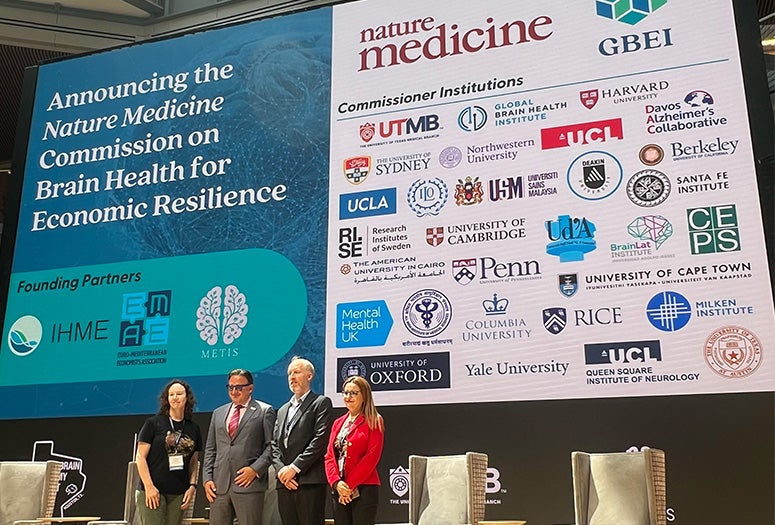
The Texas Brain Economy Summit convened more than 500 leaders from health care, academia, business, government and investment in Houston June 9–10. The summit served as a live launch site for a new, two-year global initiative to integrate brain health and cognitive capacity into economic and policy frameworks that shape national decisions.
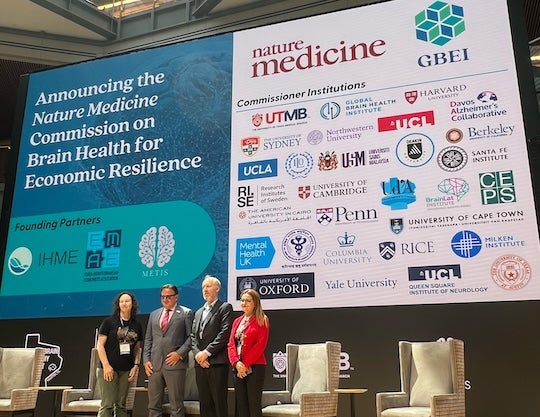
The Brain Health for Economic Resilience Commission, convened in collaboration with Nature Medicine, one of the world’s leading scientific journals, brings together experts in neuroscience, economics, public policy, global health and workforce development from institutions across five continents to establish a scientific foundation for the emerging brain economy. Harris Eyre, Rice’s Harry Z. Yan and Weiman Gao Senior Fellow for Brain Health and Society, and Simon Fischer-Baum, associate professor of psychological sciences at Rice, are among the five international commission co-chairs.
Brain disorders cost the global economy trillions of dollars each year, yet brain health and cognitive capital remain poorly measured and largely absent from economic planning. The commission seeks to address that gap by defining, measuring and operationalizing brain capital — a concept that encompasses both brain health and brain skills such as adaptability, creativity, resilience and social cooperation.
Over the next two years, commission members will synthesize evidence across neuroscience, medicine, economics, public health and policy in pursuit of three main objectives:
- identify cognitive and emotional capacities that are most relevant for economic performance across a range of domains.
- develop a Brain Capital Index that incorporates indicators of brain health, cognitive skills, environmental factors and other conditions that shape human flourishing and economic resilience.
- create tools that governments, investors and institutions can use to benchmark progress and identify interventions that strengthen brain health over time.
The Nature Medicine commission will be supported by a secretariat housed within the Global Brain Economy Initiative, which is hosted by Rice in partnership with the University of Texas Medical Branch, the Davos Alzheimer’s Collaborative, the Euro-Mediterranean Economists Association, the European Brain Council, the McKinsey Health Institute and the Wyss Center for Bio and Neuro Engineering.
The commission builds on Rice’s growing leadership at the intersection of neuroscience, public policy and economic development, which renders manifest two of the key drivers of the university’s strategic plan, i.e., leading innovations in health and building thriving urban communities.
The launch of the commission at the Texas Brain Economy Summit follows a series of efforts to advance the concept of a “brain economy” at Rice and internationally.
Last year, Rice university launched the Rice Brain Institute, an interdisciplinary hub consisting of three pillars ⎯ Neuroscience, Neuroengineering and Brain and Society ⎯ designed to advance brain health research and translate discoveries into real-world impact. Within the institute, Eyre and Fischer-Baum serve as co-leads of the Brain and Society pillar, which advances brain science by designing social, cognitive and affective neuroscience research that informs education, workforce development, public policy, technology and human flourishing.
In January, a World Economic Forum and McKinsey Health Institute report co-authored by Eyre advanced the concept of “brain capital,” which encompasses both brain health and critical cognitive skills, arguing for the need to invest in the brain in a cohesive manner and at scale to unlock $6.2 trillion in economy growth. In March, Rice’s De Lange Conference, “Brains in Society,” convened neuroscientists, educators, artists, business leaders and policymakers to explore how discoveries about the brain are reshaping society.
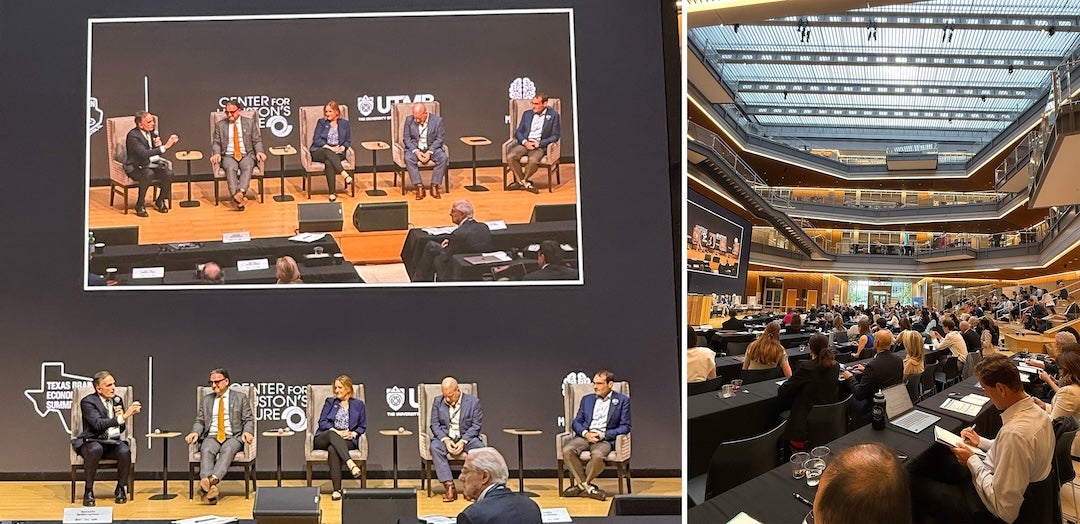
“This movement that you’re part of here today is global,” said Eyre, who serves as GBEI executive director, as he announced the commission on the second day of the Texas Brain Economy Summit. “It’s wonderful that the movement has so much energy, enthusiasm and inspiration, but of course, a movement like that needs to be sustained. This movement needs a foundation of science.”
The conversation spanning across the two days of the summit explored the confluence of factors that make the concept of “brain capital” and the launch of the Brain Health for Economic Resilience Commission timely: Population aging, the growing global burden of neurological and mental health conditions, and the rise of artificial intelligence are forcing a paradigm shift in how societies approach the mandate to strengthen and sustain the cognitive capacities that drive innovation, productivity and well-being.
Speaking on the summit’s opening day, Amy Dittmar, Rice’s Howard R. Hughes Provost and executive vice president for academic affairs, pointed out that “a holistic view of the self and the brain” is a critical part of the paradigmatic reframing of the brain as a socioeconomic resource. She also argued that Houston possesses a rare combination of ingredients needed to advance this holistic approach to brain health, including clinical and academic expertise, industry leadership and a culture of collaboration.
“Houston is the place to do it,” said Dittmar, who is also co-chair of Project Metis, a regional initiative focused on making the Houston-Galveston area a global center for brain health and the emerging brain economy and one of the summit organizers alongside UTMB and the Center for Houston’s Future. “It has all the pieces of the puzzle to take a holistic view of what health and wellness and flourishing really are.”