

Rice University, the University of Texas Medical Branch and Memorial Hermann Health System are proud to announce the formal launch of Project Metis, a groundbreaking initiative led by Center for Houston’s Future to position the Houston-Galveston region as the global leader in brain health and the emerging brain economy.

Project Metis brings together world-class institutions, visionary leaders and strategic partners to drive human flourishing, innovation and economic growth via a holistic focus on lifelong brain health.
Project Metis, a name inspired by the Greek goddess of wisdom and deep thought, reflects a commitment to advancing understanding, prevention and treatment across the full life cycle of the brain — from early development to healthy aging.
The initiative is chaired and supported by three pillars of the region, each with unique expertise and depth in brain health, including Rice’s newly launched Rice Brain Institute, UTMB’s Moody Brain Health Institute and Memorial Hermann’s comprehensive neurology care spanning stroke, neurotrauma, brain health and more.
“Project Metis will make Houston a national and global leader in advancing lifelong brain health,” said project chair Amy Dittmar, Rice’s Howard R. Hughes Provost and executive vice president for academic affairs. “Brain health requires a holistic approach, and that’s exactly what Rice offers with the Rice Brain Institute, with excellent researchers from a breadth of disciplines, spanning engineering and computing, natural sciences, social sciences and public policy. Working together, all of the Project Metis institutions will produce discoveries that benefit people here in Houston, across Texas and around the world.”
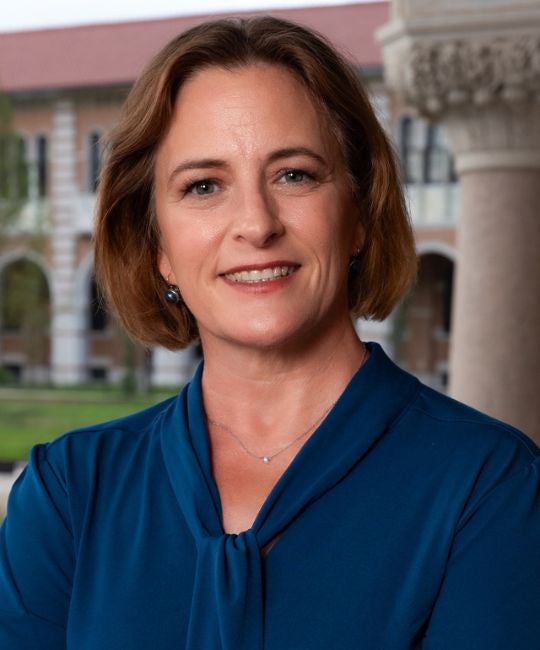
In addition to Dittmar, the project’s steering committee is chaired by Dr. Jochen Reiser, CEO and president of UTMB and CEO of the UTMB Health System, and Dr. David L. Callender, CEO of Memorial Hermann Health System. The committee will work alongside Center for Houston’s Future CEO David Gow and his team to guide the initiative.
“Brain health is the defining frontier of this century, and UTMB is proud to lead it. Through the Moody Brain Health Institute, our scientists are unraveling the mechanisms of neurodegeneration, cognitive functioning and recovery. Our clinicians are part of this initiative to deliver advanced care to patients across the Texas Gulf Coast,” Reiser said. “Project Metis gives us the opportunity to scale this work — uniting research, innovation and clinical excellence across institutions to improve lives and strengthen the emerging brain economy. Together, we can make the Houston–Galveston region the world’s most vibrant hub for brain health discovery and care.”
“Through our work, we see both the immense human toll of brain-related illness and the tremendous potential of early intervention, coordinated care and long-term prevention. That’s why this bold new initiative matters so much and why we at Memorial Hermann are so proud to play a role,” Callender said.
Rice is rapidly emerging as a powerhouse in brain science and neuroengineering. This fall, the university launched the Rice Brain Institute — uniting more than 65 experts across engineering, neuroscience, cognitive science, ethics and policy to accelerate breakthroughs in brain health — and opened the Amyloid Mechanism and Disease Center to advance discoveries in Alzheimer’s, Parkinson’s and related diseases. Rice also signed a landmark partnership with the Paris Brain Institute , linking Houston’s growing innovation ecosystem with Europe’s leading neuroscience hub to co-develop solutions for neurological and psychiatric disorders. This momentum comes as Texas voters overwhelmingly approved Proposition 14, establishing a $3 billion statewide investment to create the Dementia Prevention and Research Institute of Texas, the largest state-funded initiative in the nation focused on dementia research and prevention.
The Center for Houston’s Future, a 25-year-old nonprofit focused on the region’s future, has a long and successful record of bringing parties together to collaborate on visionary strategic planning and action across disciplines from health care to energy to the arts.
“Now is exactly the right time for Project Metis and the Houston-Galveston region is exactly the right place,” Gow said. “Texas voters, by approving the state-funded Dementia Prevention Institute, have shown a strong commitment to brain health as scientific advances continue daily. The initiative aims to harness the Houston region’s unique strengths: its concentration of leading medical and academic institutions, a vibrant innovation ecosystem and a history of entrepreneurial leadership in health and life sciences.”
Other early steering committee members include Lime Rock Resources, bp and the University of Texas MD Anderson Cancer Center. HKS and American Psychiatric Association Foundation are also Project Metis supporters.
Tentative early plans for Project Metis include:
● Launch working teams focused on brain health across all life stages (early years, workplace years and healthy aging), science/medical advances and innovation and commercialization.
● Develop a regional brain health indexto track progress and equity.
● Activating and scalingby implanting pilot projects in areas such as clinical care, education and workplace wellness; building an ecosystem; and sharing Houston’s progress and learnings at major international forums, including the World Economic Forum and the U.N. General Assembly.
● Communicating and inspiringviahigh-visibility events and other thought leadership opportunities.
“Project Metis is more than an initiative — it’s a movement to unlock human potential. By uniting science, innovation and collaboration, we aim to make Houston the epicenter of brain health for generations to come,” Gow said.