
Rice introduces temporary sick leave program for employees
Rice has implemented a temporary sick leave program amid the COVID-19 pandemic, effective July 1.
Lisa Basgall, Rice's Emergency Medical Services director, has earned the Chief EMS Officer designation, a professional credential held by fewer than 3...

When geopolitical conflicts disrupt fuel shipments, electricity demand outpaces infrastructure development or critical mineral shortages threaten indu...

The Global Consortium of Entrepreneurship Centers (GCEC), headquartered at the Rice Alliance for Technology and Entrepreneurship, brought leading univ...

Adeline Thompson spent six weeks with her host family in Toulouse through Rice in France and came home seeing herself differently....

As early voting begins, new Rice research sheds light on why some members of one of Houston’s fastest-growing populations say they remain underreprese...
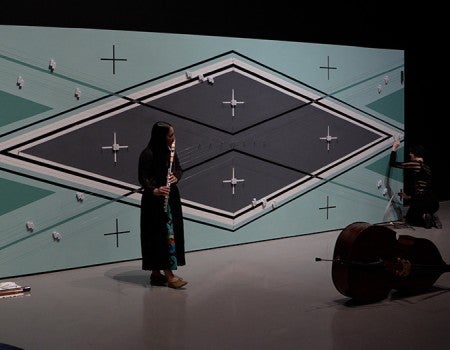
Nameless Sound musicians performed an original score on Nanibah Chacon’s interactive installation following Danza Azteca Macuilxochitl's activation of...
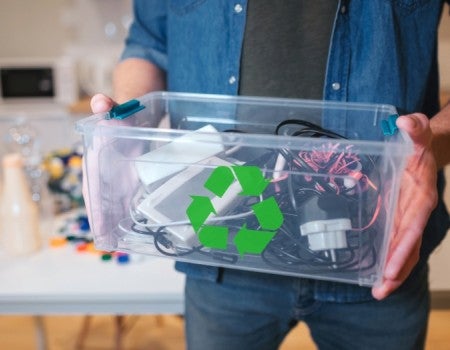
Rice’s James Tour recently published an improved method to recover antimony from this electronic waste stream. ...

Three Rice faculty members from the Department of Earth, Environmental and Planetary Sciences have recently been honored with career awards, showcasin...

The Adventurous Electric Guitar Festival gathered players, composers and scholars to test the instrument’s next act....
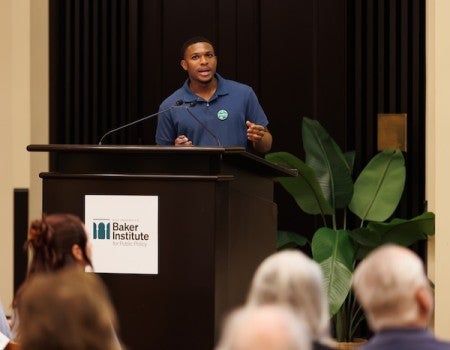
The Science and Technology Policy Program at Rice’s Baker Institute for Public Policy hosted a “science cafe” Oct. 13 to bring research to reality and...
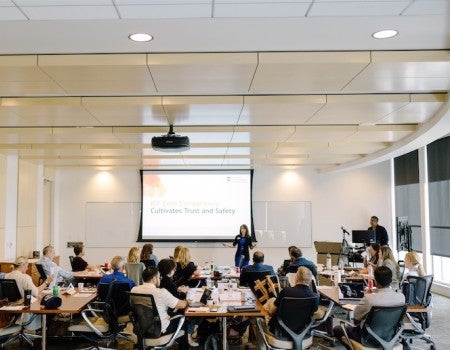
The Doerr Institute for New Leaders at Rice has launched CoachRICE: Team Coaching, a new professional education program designed to help coaches, mana...
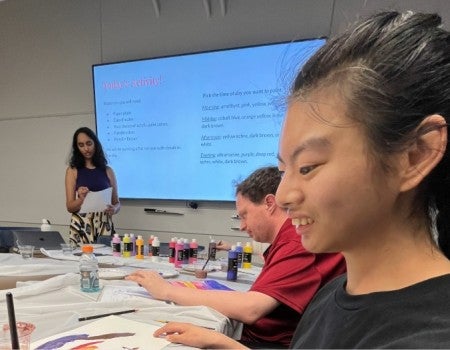
Graduate student Sayuri Jayawardena has started a Rice chapter of Lifelong Learning with Friends. ...
Rice introduces temporary sick leave program for employees
Rice has implemented a temporary sick leave program amid the COVID-19 pandemic, effective July 1.
Laser-welded sugar: Sweet way to 3D-print blood vessels
Bioengineers keep cells alive in lab-grown tissues by creating networks of branching blood vessels from templates of 3D-printed sugar.
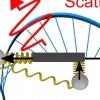
Cartwheeling light reveals new optical phenomenon
Researchers at Rice University have discovered details about a novel type of polarized light-matter interaction with light that literally turns end over end as it propagates from a source.

Study finds new link between Alzheimer’s suspects
Researchers have described for the first time specific genes and pathways in the brain associated with Alzheimer’s disease.

Webinar to address and seek remedies for racism on campuses
Four leading historians will discuss racism on university campuses and how higher education can confront and remedy racial injustice during an upcoming webinar.

Rice lab’s bright idea is pure gold
Physicists discover plasmonic metals can produce “hot carriers” that emit unexpectedly bright light in nanoscale gaps between electrodes.
Back to Work help available to job seekers
HOUSTON – (June 29, 2020) – As unemployed workers struggle to find jobs during the COVID-19 pandemic, Rice University’s Susanne M. Glasscock School of Continuing Studies is offering a series of reduced-tuition virtual workshops as part of its new Back to Work initiative.

People, papers and presentations Jun 29, 2020
Topics to be discussed are agriculture, energy, women’s health and plastics.

Little Free Libraries on campus encourage ‘fun’ reading, lifetime learning habits
Just weeks after their installation, the boxes are bursting with popular titles.

The history professor — and Rice alum — is among the 10 best teachers in Texas.