
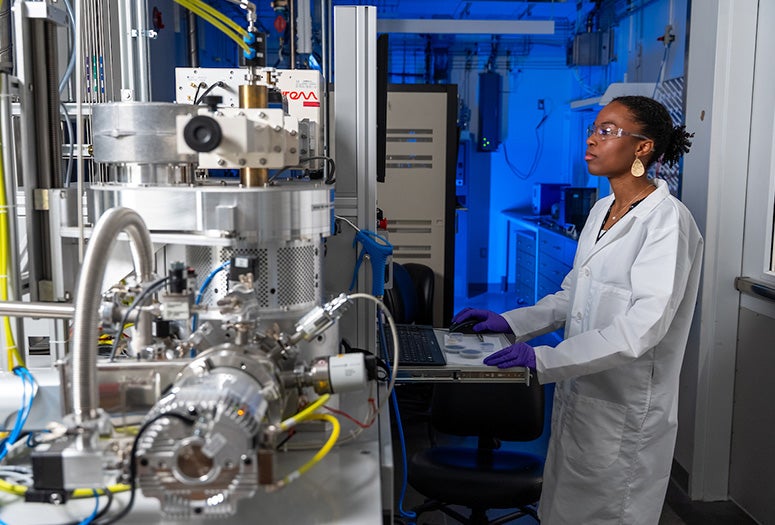
Materials scientists at Rice University have developed a new workflow methodology for measuring microscopic defects in diamond and other advanced semiconductor materials. By making it easier to spot flaws that can undermine performance, the approach could accelerate the development of more reliable electronic and quantum devices.
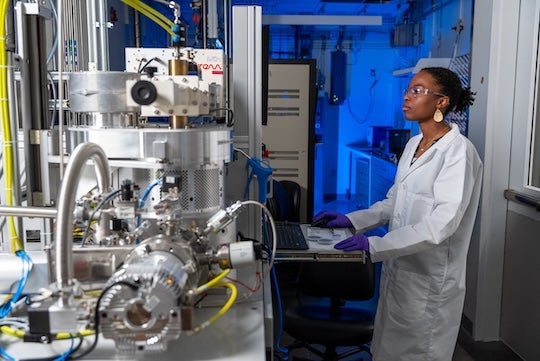
The research team developed a custom Python-based software tool to rapidly analyze data from high-resolution X-ray diffraction, a technique that uses X-rays to probe a material’s internal crystal structure. The software analyzes the resulting diffraction patterns,picks up on dislocations and irregularities in the atomic lattice, and calculates their density in a given material.
“Dislocations can disrupt how charge and heat move through the material, which impacts how efficient and reliable a device is, and how easy it is to manufacture at scale,” said Xiang Zhang, assistant research professor of materials science and nanoengineering at Rice and a corresponding author on the study published in Advanced Materials.
The new framework is especially suited to measuring dislocation density in diamond and other wide-bandgap semiconductors. This family of materials can handle more heat and electrical stress than silicon, making them attractive for applications such as electric vehicle power systems, power-grid infrastructure, advanced communications equipment and quantum technologies.
Diamond is among the most promising wide-bandgap semiconductors. As methods for producing high-quality synthetic diamond have improved, it has increasingly become a prime candidate for use in next-generation technologies.
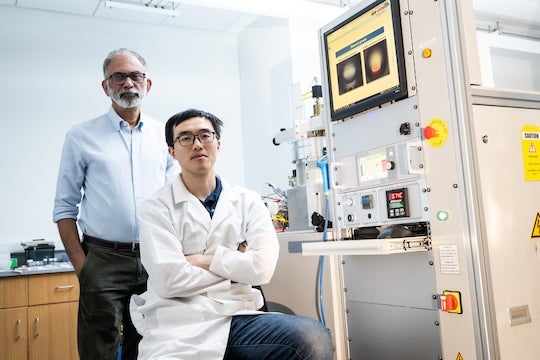
“Diamond is emerging as a key material for future high-power electronics, radio-frequency communication and quantum technologies because it can tolerate high heat and extreme electrical conditions better than many conventional semiconductors,” said Tia Gray, a Rice doctoral alumna and first author on the study who now works as a National Research Council postdoctoral associate with the U.S. Naval Research Laboratory. “However, its performance depends strongly on crystal quality.”
For manufacturers and researchers alike, measuring crystal quality has remained a persistent challenge. Existing approaches can be time-consuming, difficult to scale or dependent on labor-intensive analysis. While similar X-ray-based methods have been widely used for other semiconductor materials, applying them to diamond has proven more difficult because diamond’s crystal structure and defect behavior differ from those of more commonly studied materials.
To test the new framework, the researchers analyzed four commercially available grades of single-crystal diamond with different expected levels of crystal quality. The automated workflow clearly distinguished among the materials, identifying electronic-grade diamond as having the lowest defect density and most uniform crystal quality. Heteroepitaxial diamond, which is grown on a non-diamond substrate, exhibited the highest defect density and greatest structural disorder.
Different techniques used to validate the results showed consistent trends, supporting the reliability of the approach.
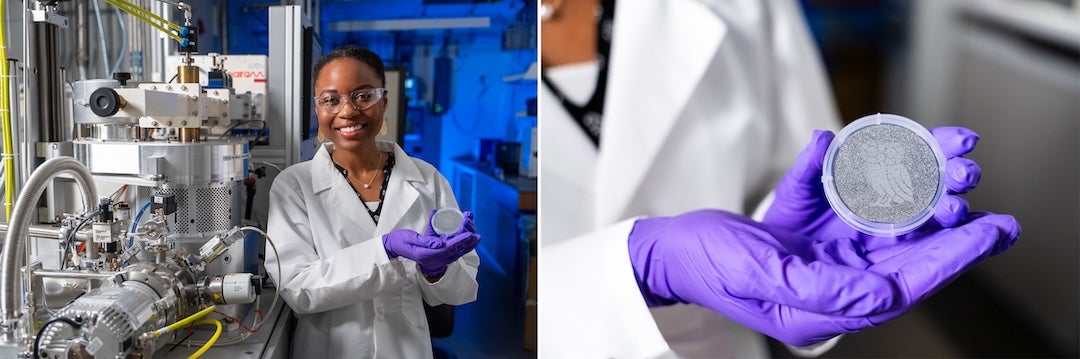
The team also applied the workflow to gallium nitride, another advanced semiconductor used in power electronics and radio-frequency devices, demonstrating that the approach can be adapted across different crystal structures and growth platforms.
The researchers plan to continue refining the methodology and expand the range of materials and defect types it can analyze.
“By making defect evaluation faster, more reproducible and less dependent on manual analysis, this approach provides a practical path toward improving diamond materials for next-generation electronic and quantum devices,” said Pulickel Ajayan, Rice’s Benjamin M. and Mary Greenwood Anderson Professor of Engineering, professor of materials science and nanoengineering, and a co-corresponding author on the study.
The research was supported by the Army Research Office (Cooperative Agreement W911NF-19-2-0269), the National Science Foundation (2236422, 2302696), the Defense Advance Research Projects Agency and the Department of Energy (DE-SC0021230). The content in this press release is solely the responsibility of the authors and does not necessarily represent the official views of funding entities.
- Peer-reviewed paper:
-
High Throughput X-ray Characterization of Defects in Wide-Bandgap Semiconductors | Advanced Materials | DOI: 10.1002/adma.73678
Authors: Tia Gray, Elias Garratt, Xiang Zhang, Shisong Luo, Haolin Zhu, Jishnu Murukeshan, Abhijit Biswas, Mahesh Neupane, Bradford Pate, A. Glen Birdwell, Tony Ivanov, Robert Vajtai, Yuji Zhao and Pulickel Ajayan
https://doi.org/10.1002/adma.73678