
Universities, government agencies and corporate organizations have invested significant resources into increasing participation among groups that have historically been underrepresented in scientific fields. Yet one dimension of diversity is often overlooked: religion.
A recent study from Rice University’s Boniuk Institute for the Study and Advancement of Religious Tolerance titled “Religious Representation in Science: How Scientists in the United States, Mexico and South Africa Respond” explores this aspect of representation. Drawing on 53 in-depth interviews with biologists and physicists at leading universities in the United States, Mexico and South Africa, the researchers examined a question that has received surprisingly little attention: How do scientists respond to the presence of religious people within academic science?
“Most research on diversity in science focuses on demographic categories such as race and gender, while religious identity is rarely considered,” said Elaine Howard Ecklund, Herbert S. Autrey Chair in Social Sciences, director of the Boniuk Institute and one of the authors of the paper.” Although science is a global enterprise, few studies have compared the experiences of religious individuals across different national contexts. The previous research has largely focused on public attitudes toward science or scientists’ views about religion as a set of beliefs, much less about how scientists perceive religious individuals in their own professional environments.”
Religion is more than a collection of beliefs, Ecklund explains. It is also an important social identity that often intersects with nationality, ethnicity, race, culture and gender. Understanding how religious scientists are perceived can therefore provide valuable insights into broader questions of inclusion and belonging within scientific communities.
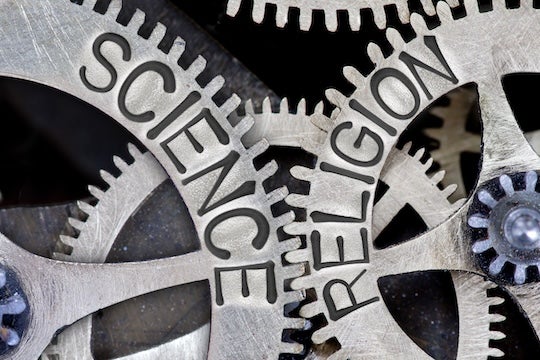
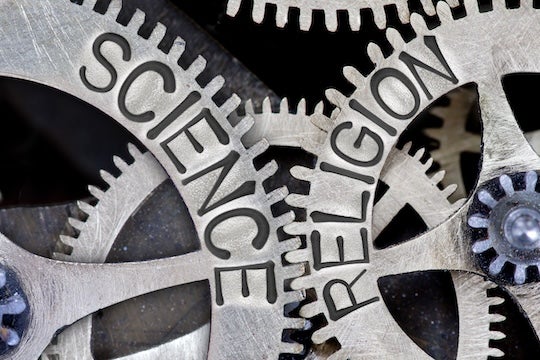
Although religion and science are often portrayed as opposing forces, research suggests the relationship is far more complex than the popular conflict narrative implies. According to the report, previous research has found that the conflict between science and religion is not a universal feature but rather a Western construct. Researchers have described this phenomenon as “soft secularism.” In this view, science is treated as a secular institution by default, even though many scientists themselves may hold religious beliefs. National cultures also influence how religion is expressed within scientific settings. For example, some scientists comfortably integrate spiritual perspectives into their understanding of science, while others work in environments where religion is expected to remain completely private.
Across all three countries studied, most scientists expressed openness toward religious individuals participating in science. Few respondents suggested that religious people should be excluded from scientific careers, and many emphasized that science should remain accessible to everyone regardless of personal beliefs. However, a deeper examination of the interviews revealed a more complicated reality.
While scientists generally supported the inclusion of religious colleagues, they often attached an important condition: Religion should not enter scientific work. Many respondents stated that religious beliefs were acceptable as long as they remained separate from research, scientific reasoning and professional interactions. Religious people were often welcomed in principle, yet religion itself was treated as something that should remain hidden or carefully managed. As a result, religious scientists could find themselves viewed with a degree of suspicion if their beliefs became too visible within professional settings.
Similar patterns emerged across the U.S., Mexico and South Africa despite their different religious histories and cultural contexts. This suggests that expectations surrounding the separation of religion and science may be embedded within academic scientific culture itself, Ecklund said.
The study argues that truly inclusive scientific communities require a broader understanding of diversity — one that recognizes religion as an important dimension of identity and ensures that scientists do not feel pressured to hide aspects of themselves in order to belong. By revealing the subtle identity management that religious scientists navigate, the research shows that representation is not only about who enters STEM fields but also about whether individuals feel genuinely accepted once they are there.