


Nameless Sound musicians performed an original score on Nanibah Chacon’s interactive installation following Danza Azteca Macuilxochitl's activation of...
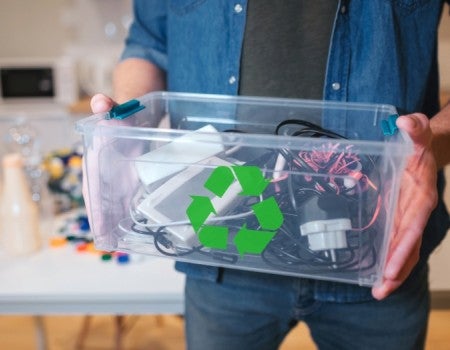
Rice’s James Tour recently published an improved method to recover antimony from this electronic waste stream. ...

Three Rice faculty members from the Department of Earth, Environmental and Planetary Sciences have recently been honored with career awards, showcasin...

The Adventurous Electric Guitar Festival gathered players, composers and scholars to test the instrument’s next act....
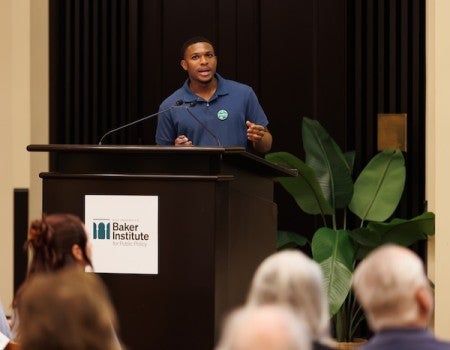
The Science and Technology Policy Program at Rice’s Baker Institute for Public Policy hosted a “science cafe” Oct. 13 to bring research to reality and...
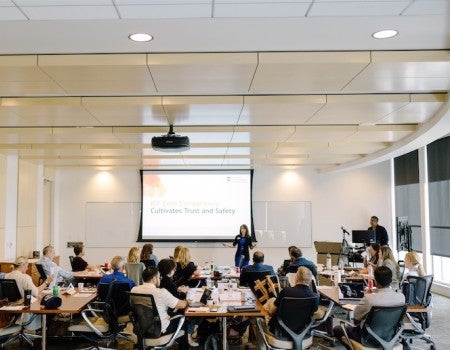
The Doerr Institute for New Leaders at Rice has launched CoachRICE: Team Coaching, a new professional education program designed to help coaches, mana...
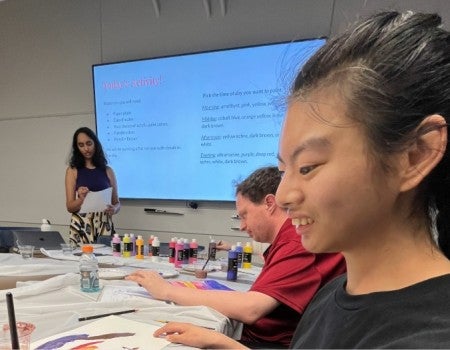
Graduate student Sayuri Jayawardena has started a Rice chapter of Lifelong Learning with Friends. ...
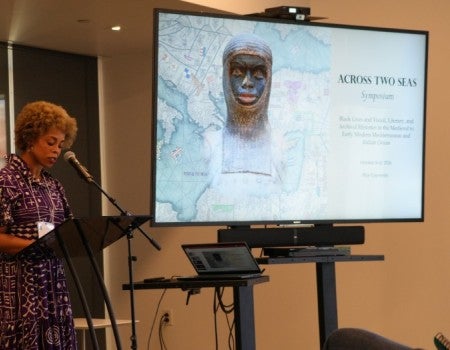
Scholars, curators and filmmaker Daphne Di Cinto gather at Rice to explore Black histories from Renaissance Italy to medieval Africa and Islamic world...
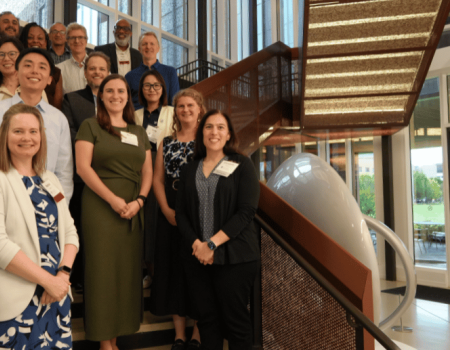
For the sixth fall in a row, Rice welcomed a new group of researchers to STaRT@Rice, giving emerging researchers both the skills and the support to gr...
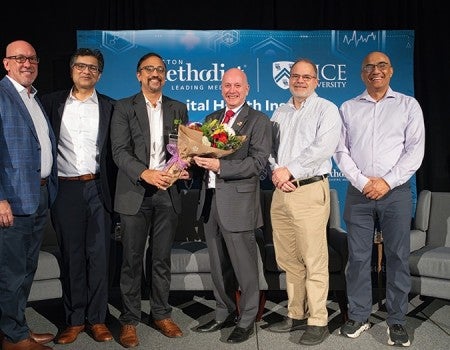
Rice and the Houston Methodist Research Institute have signed a memorandum of understanding with LSE Health at the London School of Economics and Poli...

As the 2026-27 Aleko Endowed Artist, Julia Bullock curated an evening of song, chamber music and poetry celebrating the Harlem Renaissance....

Rice’s Yonglong Xie is one of 20 early-career scientists, mathematicians and engineers to receive a 2026 Packard Fellowship. ...

University message shares important update on COVID-19 testing
We’ve discovered some anomalies with the test results we received this week from one of our three providers.

CPRIT grant establishes Genetic Design and Engineering Center
Rice faculty members led by bioengineer Gang Bao have been awarded a $4 million CPRIT grant to establish the Genetic Design and Engineering Center.
National 2D materials research center wins NSF funding
Rice, Penn State and Boise State have won a federal grant to expand ATOMIC, a national research center that develops atom-thin 2D coatings via university, industry and government partnerships.

Shale oil investments may be protected from nationalization, experts say
Shale oil’s short-cycle production protects foreign investors from the risk of expropriation — government taking private property for public use — providing an opportunity for the increasingly risk-averse global petroleum industry, according to a new report.

Woven nanotube fibers turn heat into power
Carbon nanotubes woven into thread-like fibers and sewn into fabrics become a thermoelectric generator that can turn heat from the sun or other sources into energy.

People, papers and presentations for Aug. 16, 2021
The Baker Institute for Public Policy’s Kelsey Norman, fellow for the Middle East and director of the Women’s Rights, Human Rights and Refugees Program, has been awarded the 2021 Emerging Scholars Policy Prize

‘Truly your class is one of a kind’: Rice’s Class of 2025 matriculates as largest ever
President Leebron challenges new students to prepare for a life of boldness, courage and contribution.
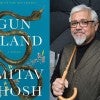
Amitav Ghosh tackles the 'unthinkable' in 2021 Campbell Lecture Series on climate change
The global thinker offers parables for a planet in crisis Sep. 13 and 14. during an event that's free and open to the public.

Class of 2025 welcomed to Rice in classic O-Week spirit
An emotional move-in day greeted students and parents alike.