
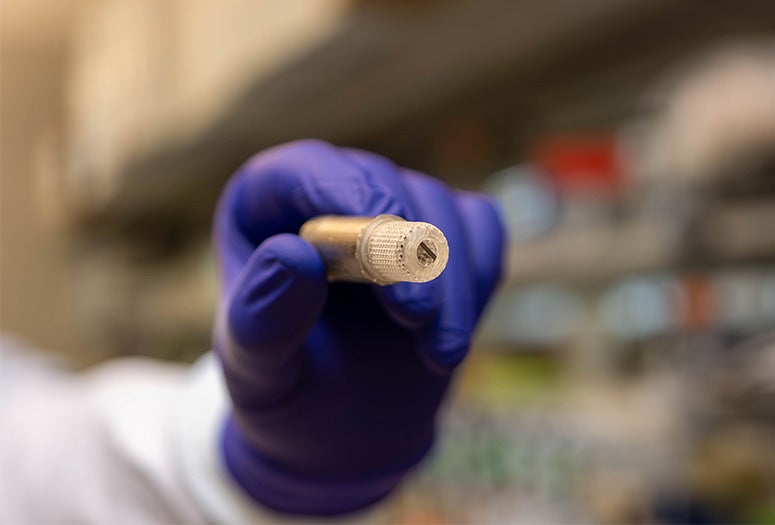
RBL LLC, a pioneering biotech venture creation studio dedicated to rapidly building companies based on breakthrough medical technologies, today announced the launch of Duracyte, a biotechnology company commercializing a pioneering class of implantable “biohybrid pharmacy” devices designed to produce therapeutic proteins continuously inside the human body. Backed by an up to $45 million Advanced Research Projects Agency for Health (ARPA-H) award, Duracyte and its partners aim to replace the burdensome cycles of injections and infusions that millions of patients endure today with a single implantable device that works around the clock.
At the core of Duracyte’s platform is the Hybrid Advanced Molecular Manufacturing Regulator (HAMMR), a rechargeable implantable device capable of sensing biological signals, monitoring tumor environments and dynamically adjusting therapeutic output in real time. HAMMR also incorporates wireless communication capabilities, supporting remote monitoring and personalized therapy. Internally, the device generates its own oxygen supply, enabling the therapeutic cells it houses to survive and function over extended periods, key to its role as a “living pharmacy.”
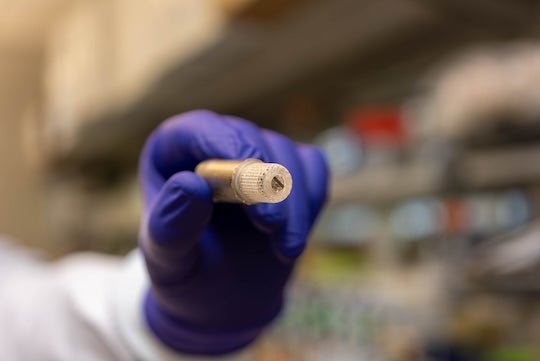
“Duracyte has created a living pharmacy,” said Daniel Anderson, Massachusetts Institute of Technology professor and co-founder of Duracyte. “Biologic medicines such as monoclonal antibodies, cytokines and metabolic regulators already account for a significant share of modern therapeutics, but the way we deliver them today often requires frequent injections or infusions that can be demanding for patients and lead to inconsistent drug levels. Our vision is to enable a continuous, stable therapy by producing these medicines directly inside the body, which could improve treatment consistency, reduce side effects and ultimately transform how biologic therapies are delivered across many diseases.”
Duracyte plans to initiate a Phase 1 clinical trial later in 2026, initially focusing on recurrent ovarian cancer, a disease where patients face limited durable treatment options and a pressing need for more tolerable, sustained biologic delivery. The study will build on existing work with encapsulated cytokine “pharmacy” technology, aiming to rapidly bring this treatment approach from concept to clinical application within a few years.
“By integrating real-time sensing, adaptive drug delivery and an internal oxygen-generation system, HAMMR has the potential to deliver therapies that are more precise, more durable and far more patient-friendly than anything available today,” said Robert Langer, Massachusetts Institute of Technology professor and co-founder of Duracyte. “With RBL’s support and Houston’s world-class clinical and research ecosystem behind us, we are moving these innovations out of the lab and into the clinic, bringing next-generation biologic therapies closer to the patients who need them most.”
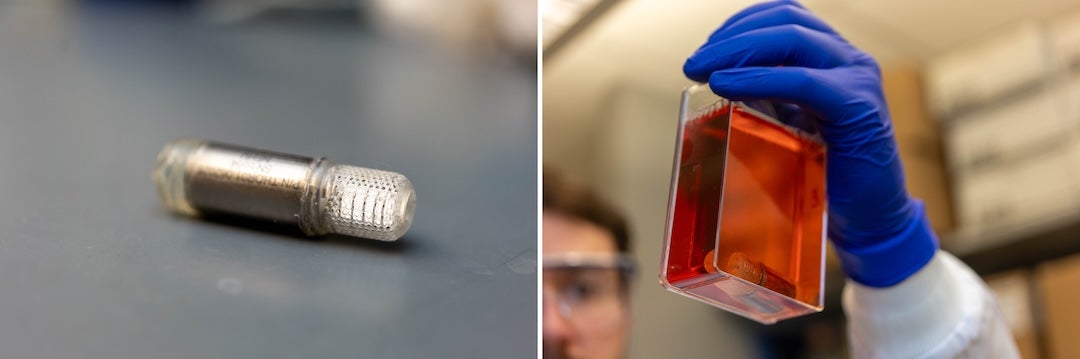
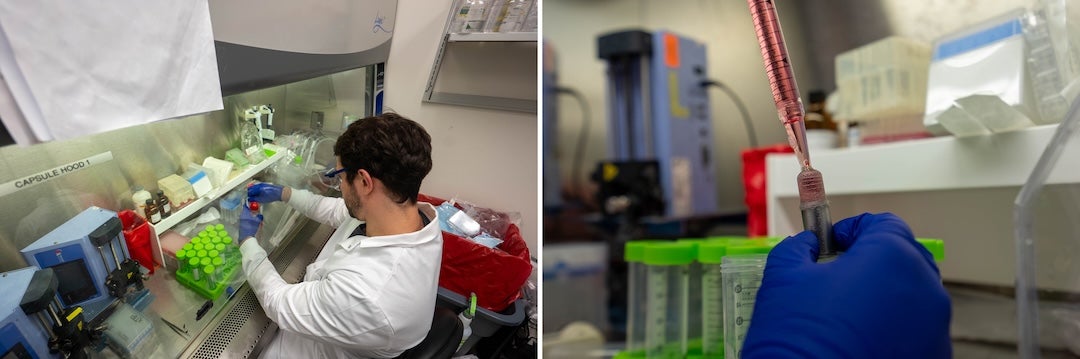
Duracyte’s development is anchored by ARPA-H's THOR (Targeted Hybrid Oncotherapeutic Regulation) project, which supports a multidisciplinary research consortium co-led by Omid Veiseh, professor of bioengineering at Rice University, and drawing on scientific expertise from Rice, The University of Texas MD Anderson Cancer Center, Stanford University, Carnegie Mellon University, Northwestern University and the University of Houston. Industry collaborators include Chicago-based CellTrans. The consortium reflects a nationwide effort to translate implantable biohybrid therapeutic technologies from laboratory research into clinical application.
“What we are building is the culmination of years of progress in cell engineering, biomaterials and implantable device technology,” said Omid Veiseh, professor of bioengineering at Rice, managing partner of RBL and co-founder of Duracyte. “By combining these advances with real-time sensing and adaptive drug delivery, we are working with the support of RBL to create a true ‘living pharmacy’ that can deliver continuous, precisely controlled biologic therapies and fundamentally change how these treatments reach patients.”
Duracyte’s launch also marks another milestone for Houston as a rising force in U.S. biotechnology. Anchored by the Texas Medical Center, the world’s largest medical complex, and supported by elite research universities, deep clinical expertise and a growing network of investors and innovators, the city is fast becoming one of the nation’s most compelling hubs for life sciences.
“Duracyte exemplifies the kind of breakthrough that Houston’s ecosystem is built to produce,” said Paul Wotton, managing partner of RBL LLC and co-founder of Duracyte. “With world-class clinical infrastructure, exceptional engineering talent and initiatives like the Texas Biotech Task Force driving alignment across industry, investment and talent, this region is uniquely positioned to move the most ambitious ideas in medicine from concept to patient, faster than anywhere else.”
Duracyte is the third company launched by RBL LLC, following Sentinel BioTherapeutics, a clinical-stage immunotherapy company developing localized cytokine therapies for solid tumors, and SteerBio, a regenerative medicine company targeting lymphedema. Together, they reflect RBL’s model: rapidly building high-impact biotech companies around breakthrough technologies.
- About Duracyte Inc.
-
Duracyte Inc. is a biotechnology company founded by Omid Veiseh, Paul Wotton, Jonathan Rivnay, Robert Langer, Daniel Anderson and Siddharth Krishnan developing implantable biohybrid devices designed to continuously produce therapeutic proteins inside the human body. The company’s platform integrates engineered cells, biomaterials and sensing technologies to create implantable “living drug factories” capable of delivering biologic medicines in a controlled and sustained manner. By enabling long-term therapeutic production within the body, Duracyte aims to reduce the need for frequent injections or infusions while improving treatment consistency and patient outcomes.
The company’s lead program is advancing toward a Phase 1 clinical trial evaluating its Hybrid Advanced Molecular Manufacturing Regulator (HAMMR) platform for patients with recurrent ovarian cancer.
- About RBL LLC:
-
RBL LLC is a pioneering biotech venture creation studio based in Houston that is dedicated to accelerating the development of breakthrough medical technologies and therapies through company formation. RBL provides entrepreneurs, researchers and innovators with infrastructure, financial support and strategic guidance as well as access to laboratory space and shared resources in the Texas Medical Center Helix Park.
For more information, please visit https://www.rbl-llc.com/.