

Tour scores prestigious Centenary Prize
Rice University chemist James Tour has been named a winner of this year’s Royal Society of Chemistry Centenary Prize.
Tour scores prestigious Centenary Prize
Rice University chemist James Tour has been named a winner of this year’s Royal Society of Chemistry Centenary Prize.

Rice professor attracts grant to study magnetism
The Department of Energy awards a five-year Early Career grant to Rice physicist Ming Yi to explore the nature of magnetism in two-dimensional materials.

Purifying water with a partly coated gold nanoparticle
Rice's Naomi Halas has collaborated with Yale University engineers on the creation of a light-activated nanoparticle for clearing water of pollutants. The research is part of an effort by NEWT, the Rice-based Nanosystems Engineering Research Center for Nanotechnology-Enabled Water Treatment.
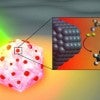
Fluorocarbon bonds are no match for light-powered nanocatalyst
Rice University engineers have created a light-powered catalyst that can break the strong chemical bonds in fluorocarbons, a group of synthetic materials that includes persistent environmental pollutants.
Dark matter search turns up hint of mysterious particle
XENON1T scientists revealed they had detected excess — perhaps cosmic — particles that may be evidence of long-sought axions.
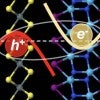
Excitons form superfluid in certain 2D combos
Mixing and matching computational models of 2D materials led scientists at Rice University to the realization that excitons can be manipulated in new and useful ways.
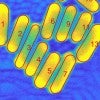
New tool helps nanorods stand out
Rice scientists introduce an open-source method to simplify nanoparticle analysis using scanning electron microscope images.
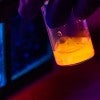
Exotic nanotubes move in less mysterious ways
Rice University researchers capture the first video of boron nitride nanotubes in motion to prove their potential for materials and medical applications.
Rice scientist goes deep to improve environmental tracers
Rice Earth scientist Laurence Yeung earns a prestigious National Science Foundation CAREER Award to improve our understanding of the biosphere’s productivity.
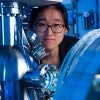
Rice U. physicist Ming Yi wins coveted Moore Foundation grant
Rice physicist Ming Yi won $1.6 million from the Gordon and Betty Moore Foundation for high-risk, high-reward research into quantum materials.

Rice's COVID-19 research fund awards final grants
The Rice University COVID-19 Research Fund Oversight and Review Committee funds nine more faculty teams working to mitigate the effects of the new coronavirus.
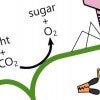
Ocean virus hijacks carbon-storing bacteria
Rice scientists are analyzing the role of ferredoxin proteins produced when viral phages alter electron transfer in ocean-dwelling bacteria that produce oxygen and store carbon.

Quantum Hall effect 'reincarnated' in 3D topological materials
U.S. and German physicists have found surprising evidence of a link between the 2D quantum Hall effect and 3D topological materials that could be used in quantum computing.
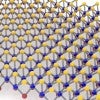
2D sandwich sees molecules with clarity
A 2D platform of molybdenum, sulfur and selenium is adept at detecting biomolecules via surface-enhanced Raman spectroscopy. Its nonmetallic nature helps by curtailing background noise.
COVID-19 research funds back six new initiatives
Grants to Rice faculty will support diagnostic, environmental and social projects.