
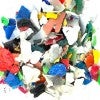
Flash graphene rocks strategy for plastic waste
Rice scientists advance their technique to make graphene from waste with a focus on plastic.
Flash graphene rocks strategy for plastic waste
Rice scientists advance their technique to make graphene from waste with a focus on plastic.
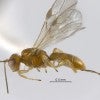
Discovery adds new species to Rice lab's ghoulish insect menagerie
A horrifying insect soap opera with vampires, mummies and infant-eating parasites plays out on oak trees every day.
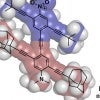
Rice rolls out next-gen nanocars
Rice researchers continue to advance the science of single-molecule machines with a new lineup of nanocars, in anticipation of the next international Nanocar Race in 2022.
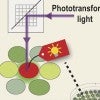
SPOTlight supercharges cell studies
Researchers develop a new method to isolate specific cells, and in the process find a more robust fluorescent protein.
At our cores, we’re all strengthened by ‘dumbbells’
Scientists at Rice’s Center for Theoretical Biological Physics detail the structure of dumbbell-like sequences in DNA during interphase that suggest several unseen aspects of chromosome configuration and function.

A trillion turns of light nets terahertz polarized bytes
Nanophotonics researchers at Rice University, the Polytechnic University of Milan and the Italian Institute of Technology have demonstrated a novel technique for modulating light at terahertz frequencies with plasmonic metasurfaces.

Study: Darwin's theory about coral reef atolls is fatally flawed
Rice marine geologist and oceanographer André Droxler knows Charles Darwin's theory about atoll formation is incorrect, and Droxler and former Rice postdoc Stéphan Jorry are hoping to set the record straight with a comprehensive new paper about the subject.

New Nobel laureate has Rice on resume
Mathematician Sir Roger Penrose is now a Nobel laureate, but once upon a time, he was Rice's Edgar Odell Lovett Professor of Mathematics.
Earth grows fine gems in minutes
Aquamarine, emerald, garnet, zircon and topaz are but a few of the crystalline minerals found mostly in pegmatites, veinlike formations that commonly contain both large crystals and hard-to-find elements like tantalum and niobium. Another common find is lithium, a vital component of electric car batteries.

Gemini South's high-def version of 'A Star is Born'
NASA's James Webb Space Telescope is still more than a year from launching, but the Gemini South telescope in Chile has provided astronomers from Rice University and Dublin City University a glimpse of what the orbiting observatory should deliver.

Karl Ecklund named American Physical Society Fellow
Karl Ecklund, a professor of physics and astronomy, has been named a fellow of the American Physical Society.

Rice mourns geophysicist, former college magister Dale Sawyer
The professor emeritus was esteemed around the world for his scientific leadership in marine geophysics.
Shape matters for light-activated nanocatalysts
Points matter when designing nanoparticles that drive important chemical reactions using the power of light, according research from Rice University's Laboratory for Nanophotonics.
National parks preserve more than species
National parks are safe havens for endangered and threatened species, but an analysis by Rice University data scientists finds parks and protected areas can preserve more than species.

Student demand for environmental studies surges
Rice’s Center for Environmental Studies is responding with new and expanded courses, fall speaker series.