


Quantum leap for speed limit bounds
Nature's speed limits aren't posted on road signs, but Rice University physicists have discovered a new way to deduce them that is better — infinitely better, in some cases — than prior methods.
When geopolitical conflicts disrupt fuel shipments, electricity demand outpaces infrastructure development or critical mineral shortages threaten indu...

The Global Consortium of Entrepreneurship Centers (GCEC), headquartered at the Rice Alliance for Technology and Entrepreneurship, brought leading univ...

Adeline Thompson spent six weeks with her host family in Toulouse through Rice in France and came home seeing herself differently....

As early voting begins, new Rice research sheds light on why some members of one of Houston’s fastest-growing populations say they remain underreprese...
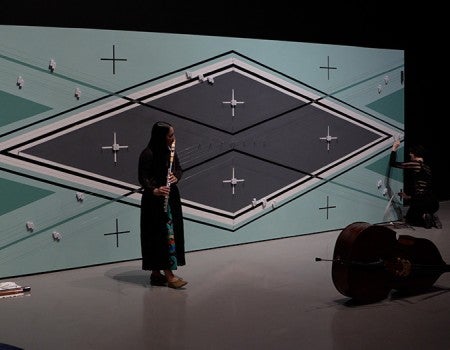
Nameless Sound musicians performed an original score on Nanibah Chacon’s interactive installation following Danza Azteca Macuilxochitl's activation of...
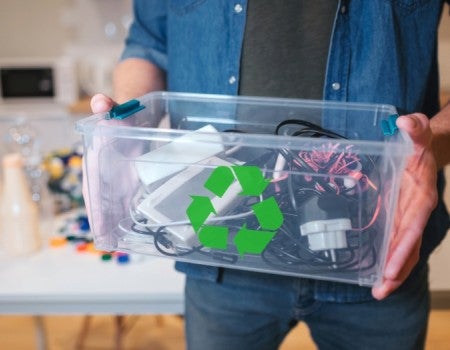
Rice’s James Tour recently published an improved method to recover antimony from this electronic waste stream. ...
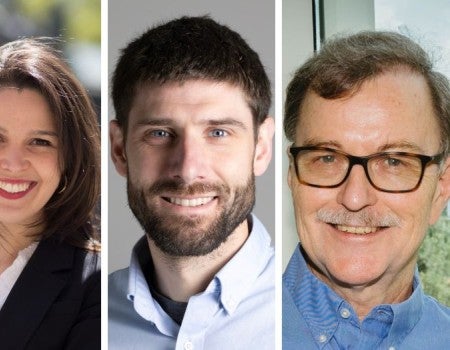
Three Rice faculty members from the Department of Earth, Environmental and Planetary Sciences have recently been honored with career awards, showcasin...

The Adventurous Electric Guitar Festival gathered players, composers and scholars to test the instrument’s next act....
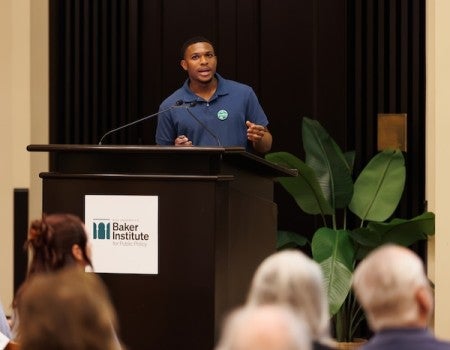
The Science and Technology Policy Program at Rice’s Baker Institute for Public Policy hosted a “science cafe” Oct. 13 to bring research to reality and...
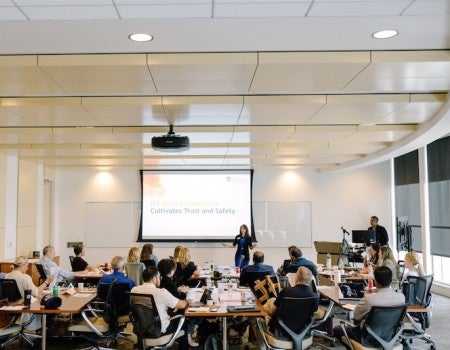
The Doerr Institute for New Leaders at Rice has launched CoachRICE: Team Coaching, a new professional education program designed to help coaches, mana...
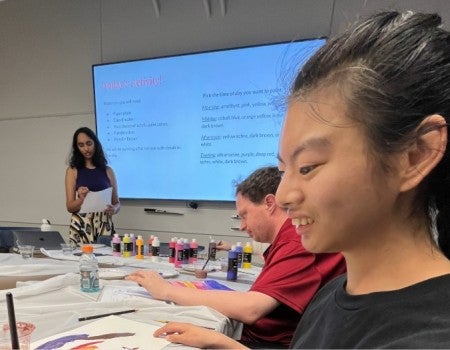
Graduate student Sayuri Jayawardena has started a Rice chapter of Lifelong Learning with Friends. ...
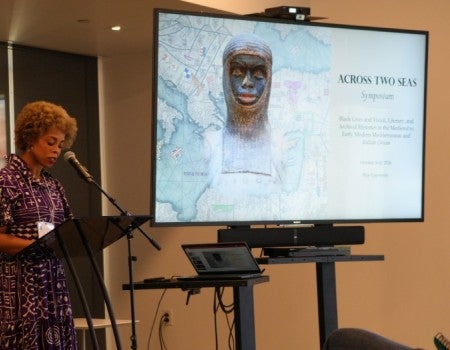
Scholars, curators and filmmaker Daphne Di Cinto gather at Rice to explore Black histories from Renaissance Italy to medieval Africa and Islamic world...
Quantum leap for speed limit bounds
Nature's speed limits aren't posted on road signs, but Rice University physicists have discovered a new way to deduce them that is better — infinitely better, in some cases — than prior methods.

Having a family member locked up takes disproportionate mental toll on African American women
About 44% of African American women in the United States have at least one family member incarcerated, a disproportionate burden that a new study concludes leads to poor mental health.
Ambient light alters refraction in 2D material
Microscopic crystals in tantalum disulfide have a starring role in what could become a hit for 3D displays, virtual reality and even self-driving vehicles.

Pope picks Rice professor for science academy
Rice University physicist José Onuchic has been appointed by Pope Francis to the Pontifical Academy of Sciences.
Largest gift in Rice history establishes The Welch Institute
The Robert A. Welch Foundation announces the largest single gift in the history of Rice University, $100 million, to establish The Welch Institute for world-leading advanced materials research.

'This Place Called Houston': Jim Blackburn hosts webinar on the city’s past, future
Jim Blackburn sees Houston as a perfect reflection of the 20th century, an emerging but disorganized city at the turn of one century that boomed into a diverse economic powerhouse by the next.
Researchers set sights on theory of deep learning
Rice's Richard Baraniuk and Moshe Vardi are part of a multiuniversity team of engineers, computer scientists, mathematicians and statisticians tapped by the Office of Naval Research to develop a principled theory of deep learning.

Rice physicist Ronald Stebbings dies at 91
Ronald Stebbings, a Rice University emeritus professor of space physics and astronomy, former dean of undergraduates and first vice president of student affairs, dies at 91.
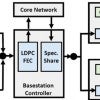
NSF backs first community platform for smarter wireless
Rice University researchers, with National Science Foundation backing, develop a community platform, 3DML, to accelerate machine learning for next-generation wireless networks and mobile applications.

Interviews with those affected by Harvey available on Urban Data Platform
Three years after Hurricane Harvey rained devastation on Houston and surrounding areas, first-hand oral accounts from people affected by the storm are available through Rice University's Urban Data Platform (UDP), part of the Kinder Institute for Urban Research.