

Guidance and support for Rice international community
For members of Rice’s international community, the recent visa cancellations by the U.S. government have created an air of uncertainty. But Rice is helping — and will help even more.
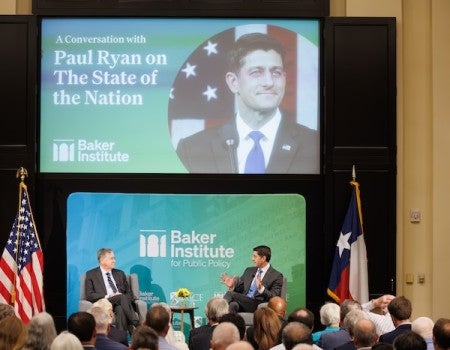
With the 2026 midterm elections approaching, former U.S. House Speaker Paul Ryan joined Rice's Baker Institute for Public Policy for a conversation ab...
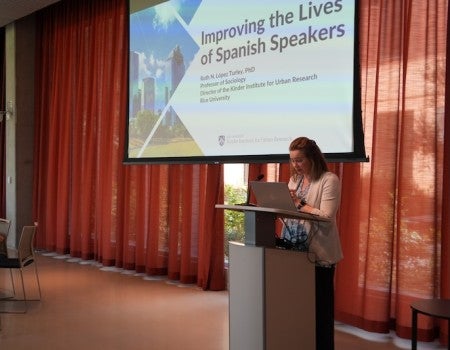
Rice’s Texas-Latin America Social Science Forum on Language and Opportunity brought together scholars from sociology, economics and political science ...
With a May 11, 2027 national deadline for digital accessibility compliance approaching, Rice is accelerating efforts to make its digital environment m...
Rice University’s Ken Kennedy Institute will celebrate its 40th anniversary Nov. 9 with a public event on responsible AI leadership. The daylong progr...
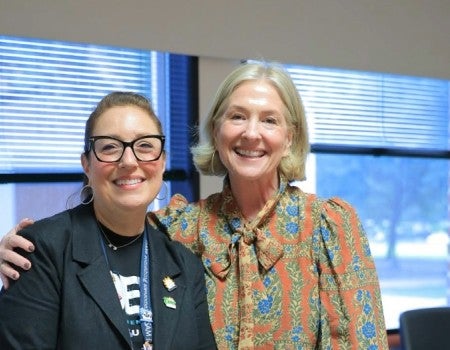
Brené Brown was a featured speaker at the 2026 International Symposium on Academic Makerspaces (ISAM) held Oct. 11-13 at Rice....

The annual Texas ETA Conference, organized by Rice MBA students and hosted by Rice Business, brought together aspiring entrepreneurs, investors, busin...
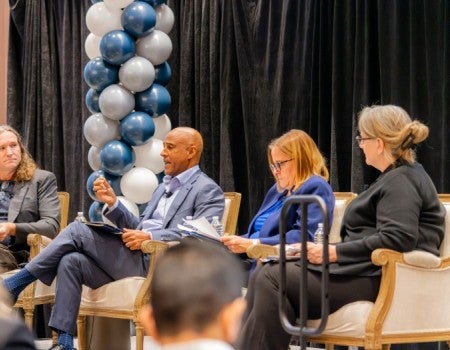
Rice launched AI Week 2026 with a fireside chat focused on how artificial intelligence will shape the university’s future in research, teaching and op...

Rice researchers have developed an ultraporous material capable of pulling several valuable and rare earth elements from complex waste streams, a pote...

Researchers from Rice and Baylor College of Medicine have secured NIH funding to develop a novel, non-DNA-altering CRISPR gene-tuning therapy designed...
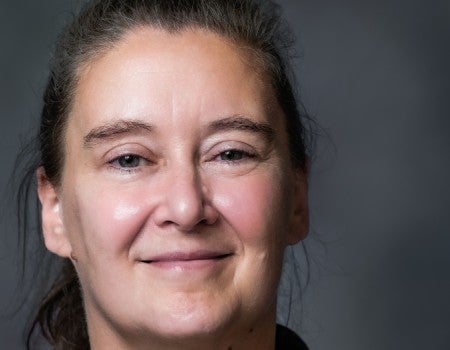
Lisa Basgall, Rice's Emergency Medical Services director, has earned the Chief EMS Officer designation, a professional credential held by fewer than 3...

When geopolitical conflicts disrupt fuel shipments, electricity demand outpaces infrastructure development or critical mineral shortages threaten indu...
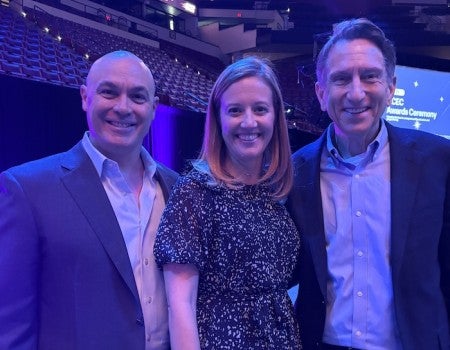
The Global Consortium of Entrepreneurship Centers (GCEC), headquartered at the Rice Alliance for Technology and Entrepreneurship, brought leading univ...
Guidance and support for Rice international community
For members of Rice’s international community, the recent visa cancellations by the U.S. government have created an air of uncertainty. But Rice is helping — and will help even more.

‘Visionary leader’ Rodi Guidero joins external board of Rice's Doerr Institute for New Leaders
Rice’s Doerr Institute for New Leaders has appointed Rodi Guidero, executive director of Breakthrough Energy, to its external board.

Future Owls flock to Rice for Owl Days
Rice welcomed admitted students and their families to campus for Owl Days April 11 and for Owl Days Express April 13. The program is an opportunity for new students to explore the campus and its surrounding area. The Class of 2029 connected with fellow Owls, learned more about what the next four years may look like and experienced Rice’s community, academics and culture of care.

Grief as witness, memory as resistance
Hosted by the School of Humanities, the annual Kazimi Lecture honors the memory of Syed Safdar and Samina Kazimi by inviting artists and scholars whose work deepens understanding of Shi’i Islam.

New Art / New Music connects students and audiences at the Moody
This go-round, student composers responded to “Breath(e): Toward Climate and Social Justice,” filling the galleries with sound and giving audiences a different way to experience both the music and the art.

Rice, HISD partnership is helping Sunrise Centers support students and families
A collaboration between Rice and Houston Independent School District is helping strengthen its Sunrise Centers.

RBL LLC welcomes Devyn Smith to board of directors
RBL LLC announced the appointment of Devyn Smith to its board of directors.

Bob Stein honored with Y. Ping Sun Award for Outstanding Community Engagement
Political science professor Bob Stein recognized with the 2025 Y. Ping Sun Award for Outstanding Community Engagement.
Faculty recognized with George R. Brown Award for Superior Teaching
Nine Rice faculty members received the 2025 George R. Brown Award for Superior Teaching, which honors Rice’s top instructors based on votes from alumni who graduated within the past two, three and five years.

Faculty, staff, students honored for excellence in teaching, mentoring, service
Each year, Rice University honors members of its community who have served students through outstanding teaching, dedication and service.