
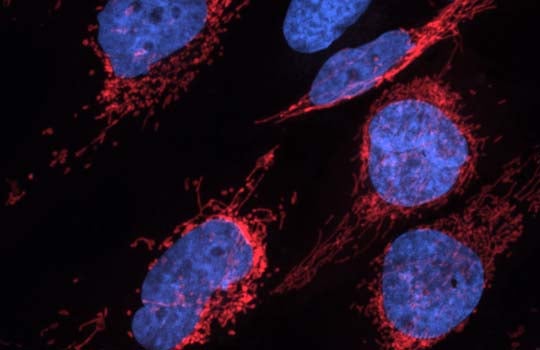
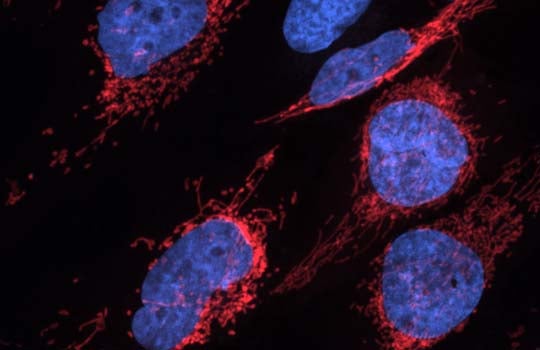
Heart attacks remain a leading cause of heart failure worldwide, largely because damaged heart cells lose their primary energy source: mitochondria, the powerhouses that supply cellular energy. Behind the statistics of heart disease are real families facing long-term care, primarily because the adult heart cannot efficiently repair this metabolic damage.
Rice University’s Isaac Hilton along with Baylor College of Medicine’s Mario Escobar and Ravi Ghanta are developing a novel gene-tuning therapy to tackle this vulnerability.
By helping the heart restore its energy and pumping capacity without editing or damaging DNA, the treatment offers a safer path to cardiac recovery.
“This project brings together our expertise at Rice in precisely controlling gene activity in human cells with the cardiovascular and translational expertise of our colleagues at Baylor,” said Hilton, associate professor of bioengineering. “The Catalyze program provides the support needed to integrate these strengths and move the technology toward patients.”
The National Heart, Lung and Blood Institute’s Catalyze program helps researchers turn promising laboratory discoveries into potential treatments. Expertise and guidance are also provided to help teams address the scientific and practical challenges of bringing new therapies to patients.
For the broader bioengineering community, the work underscores how institutions like Rice and Baylor are advancing applied life sciences, showing how targeted gene-regulation tools can move from early laboratory proof-of-concept into practical delivery strategies.
“The heart always knows how to build new mitochondria. Even after an injury, those instructions are there but aren’t being followed enough,” said Escobar, assistant professor of surgery. “Bringing bioengineering tools together with clinical expertise allows us to encourage that natural process without altering the genetic code.”
For gene therapies, getting the dose right involves more than how much medicine is delivered; it also means controlling how strongly a gene is activated. Adding an extra copy of a gene can help restore a missing function, but driving its activity too high can create new problems. For the heart, the challenge is to boost its energy-producing machinery without pushing it beyond a healthy balance.
CRISPR, a tool that acts like a GPS-guided pair of tiny scissors, allows scientists to pinpoint and fix targeted spots in human DNA. Instead of rewriting an entire genetic code, it lets doctors repair or fine-tune specific genes to help the body heal from challenging circumstances like heart failure.
CRISPR activation, or CRISPRa, takes an even lighter touch. Rather than altering the underlying genetic code, CRISPRa acts like a molecular dimmer switch, nudging specific genes to do more of what they already do naturally.
“The goal is not simply to turn this gene up as high as possible,” Hilton said. “We want to find the level of activation that helps the injured heart recover without pushing this powerful biological program too far.”
This project centers on a key energy-regulating gene, PPARGC1A, which controls how the body makes mitochondria. By dialing up this single gene, the therapy prompts heart cells to naturally build new energy sources, boosting the organ’s recovery efforts.
Early laboratory and animal testing show clear progress. In rat models of heart failure, the treatment boosted mitochondria by 84% and restored cardiac pumping strength by nearly 40%. Tests on human tissue samples outside the body showed an even bigger jump, almost doubling mitochondrial levels.
Beyond the core biology, the team is tackling the next major hurdle: getting gene therapies specifically into damaged heart tissue without affecting the rest of the body.
“How and when a therapy is delivered matters as much as the therapy itself,” said Ghanta, professor and associate chief of cardiothoracic surgery. “A preclinical animal model lets us confirm that the technique we develop is one that can actually be used in the clinic with humans.”
To deliver the therapy safely, researchers are testing two delivery methods — a harmless virus and tiny fat bubbles similar to those in vaccines. They will then evaluate delivery through a simple catheter procedure compared to direct heart injections to see which works best and when to administer it after a heart attack.
“Our results so far give us real confidence in our technology being able to help hearts recover after they are injured,” Escobar said. “The next step is to turn these results into a product that can help patients recover.”
While human clinical trials are still on the horizon, successful early results could establish a new framework for treating heart failure and open doors for addressing other chronic conditions driven by cellular energy loss.
“We want to give the heart a better chance to recover after a heart attack,” Hilton said. “Our early results are encouraging, and this award gives us the support to take the next steps toward that goal.”
This research is supported by the National Heart, Lung and Blood Institute of the National Institutes of Health under award No. R61HL183015. The content is solely the responsibility of the authors and does not necessarily represent the official views of the National Institutes of Health.