
A child’s ability to communicate can shape their success in school. The language a voter speaks can influence how they perceive political candidates. And something as simple as a parent talking with their child can help build skills that open doors later in life.
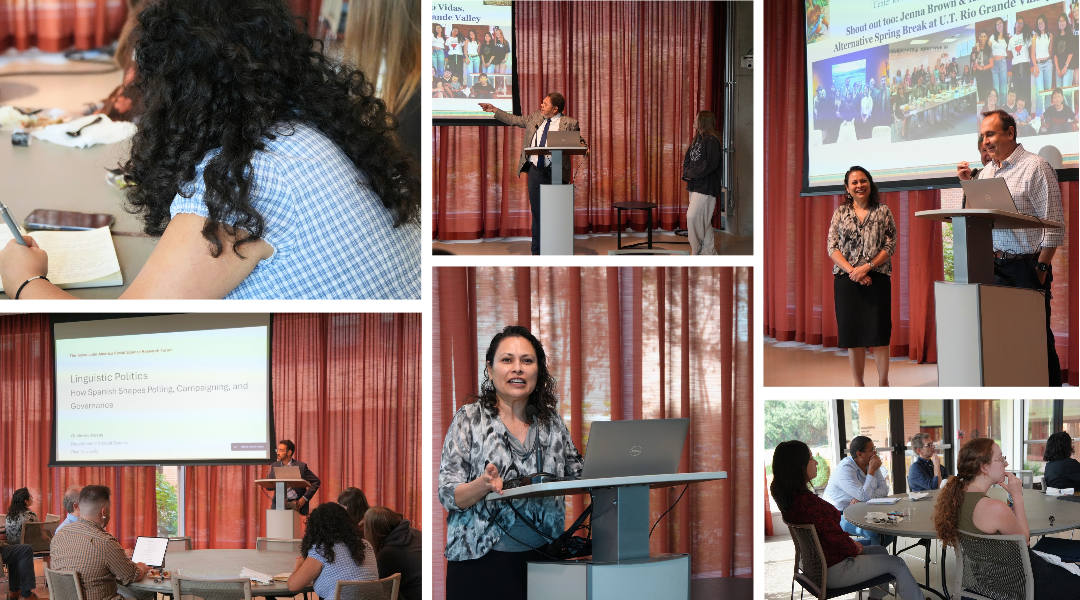
These connections were at the heart of Rice University’s Texas-Latin America Social Science Forum on Language and Opportunity, hosted Oct. 7 by Rice’s Center for Advancing Linguistic Science during National Hispanic Heritage Month.
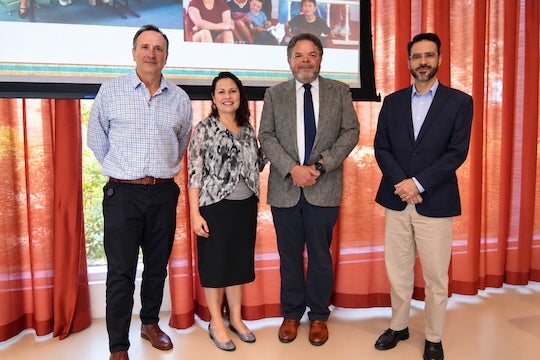
The forum brought together scholars from sociology, economics and political science to explore how language influences opportunities for Latino communities, particularly in Texas, and how research can help identify and address barriers.
Rachel Kimbro, dean of Rice’s School of Social Sciences, welcomed attendees and highlighted the expertise of the participating scholars and their leadership across the university.
For Flávio Cunha, director of the Center for Economic Mobility, the connection between language and opportunity begins long before a child enters a classroom.
“If you can’t communicate, you really have a hard time moving up economically,” Cunha said.
Through partnerships with Texas school districts and community organizations, Cunha and his collaborators have studied how parents can strengthen their children’s language development through everyday interactions, helping prepare them for school.
One intervention he discussed costs approximately $150 per family annually and has shown improvements in parent-child verbal engagement and early language development.
But Cunha sees something particularly interesting about the economics of language.
“If it doesn’t cost us money, why isn’t everyone proficient in every language?” he asked.
Developing language skills, he explained, requires more than financial resources. It takes attention, purpose and practice. Programs that help parents engage more intentionally with their children can strengthen language development while connecting families facing similar challenges.
Those early skills become especially important when children enter school, where the quality of bilingual education can influence academic outcomes.
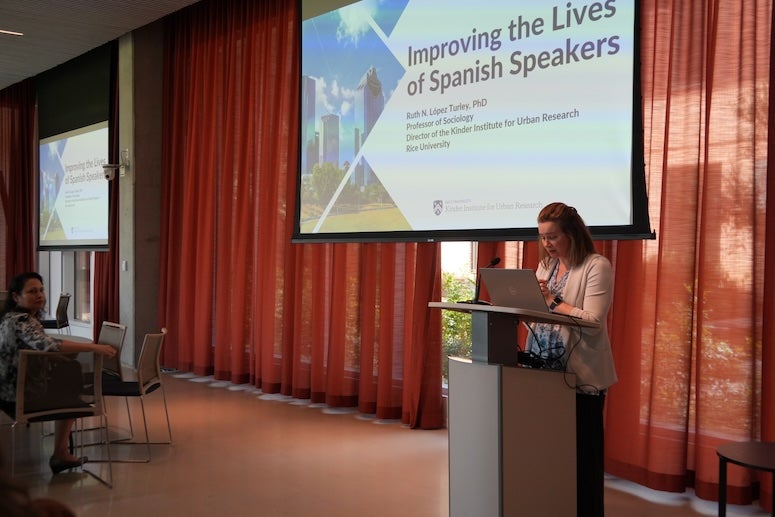
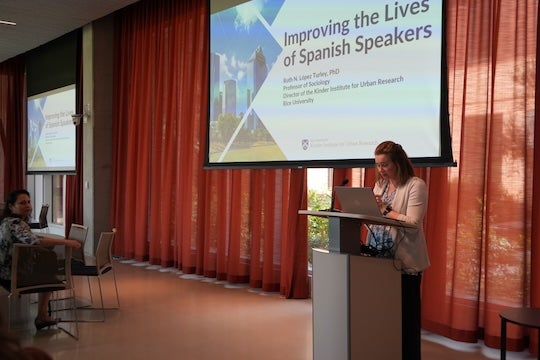
Ruth López Turley, professor of sociology and director of Rice’s Kinder Institute for Urban Research, highlighted findings from the institute’s Houston Education Research Consortium showing significant differences among students learning English.
Multilingual students who become proficient in English within five years often perform well academically, sometimes outperforming native English speakers on certain measures. Those who take longer, known as long-term English learners, face greater challenges, including lower graduation rates and college enrollment.
“By some measures, their educational outcomes are actually better than native English speakers. Let me repeat that,” López Turley said, emphasizing the success of students who develop English proficiency within five years.
The findings challenge assumptions that learning English alongside another language necessarily puts students at an academic disadvantage.
Additional research in Pasadena Independent School District found positive outcomes associated with a shift from transitional bilingual education to one-way dual-language programs, demonstrating how the structure of language instruction can affect student success.
For López Turley, the findings underscore the importance of investing in programs that help multilingual students succeed.
“I can’t think of a better way to invest that money,” she said, discussing public school funding. “Notice, I said invest, not spend, because it’s not just an expenditure — it’s an investment in our students.”
Beyond the classroom, language can also influence how people participate in democracy.
Guillermo Rosas, the Lena Gohlman Fox Professor and chair of political science, drew on existing research examining how language shapes political attitudes and perceptions of representation.
Studies involving Spanish-speaking voters suggest that while reported voting intentions may remain relatively consistent whether surveys are conducted in English or Spanish, responses to questions about political attitudes can differ depending on the language used.
Rosas also highlighted a study co-authored by Rice alumnus Marques Zárate, now at Brown University, examining how Spanish fluency influences voters’ perceptions of political candidates. The research found that Hispanic participants responded more favorably to candidates who spoke Spanish with nativelike fluency, regardless of whether the candidates were Hispanic themselves.
“There is something that appears to be tied to language that matters,” Rosas said.
Exactly why those differences emerge remains an open question. Rosas suggested that collaboration between political scientists and linguists could help uncover how language influences political behavior and perceptions of representation.
That interdisciplinary approach was central to the forum organized by John Baugh, Rice’s Barbara Jordan Distinguished Professor of Linguistics and director of the Center for Advancing Linguistic Science.
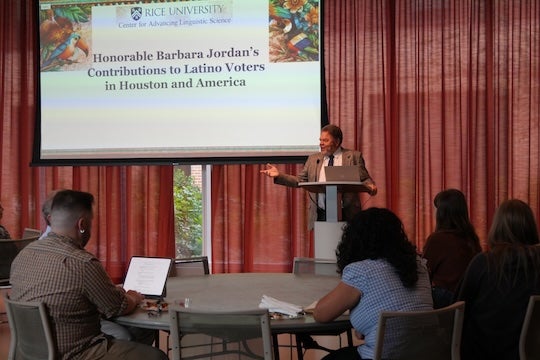
Baugh connected the discussion to the legacy of Barbara Jordan, the pioneering Texas congresswoman who advocated for voting rights and helped expand political participation among Latino communities, including access to bilingual ballots.
He also highlighted Rice students working with community organizations in the Rio Grande Valley as an example of how language skills and cultural understanding can connect academic expertise with community needs.
“They went in, and in the local language, asked people how they could help,” Baugh said.
The forum reflected what Baugh described as Rice’s “social science brain trust” and the potential for scholars across disciplines to build on one another’s expertise.
From early childhood development to political representation, the research illustrates how language can shape access to opportunity — and how understanding those connections can help communities address barriers.