
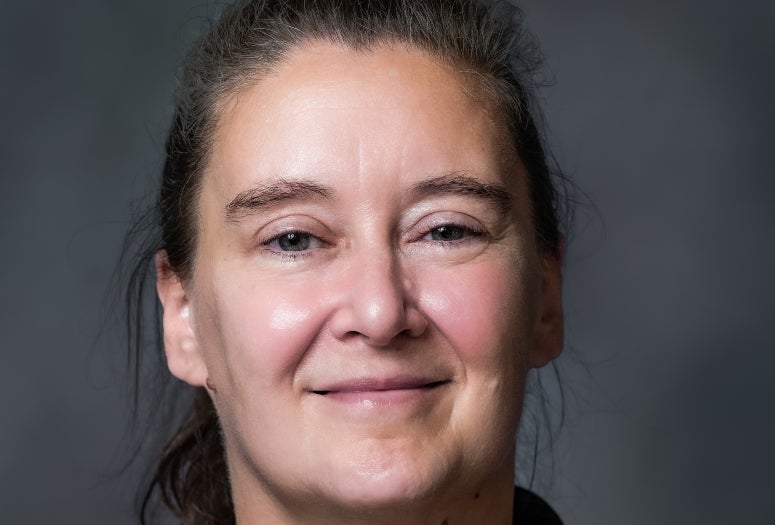
Lisa Basgall has built a career in emergency medical services around patient care, professional development and service to others. Now, the Rice University Emergency Medical Services (REMS) leader has earned the Chief EMS Officer (CEMSO) designation, a professional credential held by fewer than 300 people worldwide.
Awarded through the Center for Public Safety Excellence, the designation recognizes EMS leadership and professional achievement. For Basgall, it represents a personal milestone and an opportunity to strengthen the service REMS provides to the Rice community.
“I wanted to set myself the challenge to see if I could measure up with the other professionals in the EMS world, and I was pleased to be recognized,” Basgall said.
A career shaped by service and learning
Basgall’s path to EMS began in education. After earning her bachelor’s degree in English and secondary education, she taught high school in New York and Philadelphia. While living in the Philadelphia area, she began volunteering with a local emergency services agency, building on her earlier experience as a student athletic trainer.
She earned her emergency medical technician certification while teaching full time and obtained her paramedic certification within three years. She eventually transitioned to full-time EMS work while continuing to contribute to EMS education.
Over more than 15 years with a volunteer agency, Basgall served on its board of directors, worked in EMS finance and held a clinical coordinator role. These experiences provided a foundation in the clinical, administrative and operational responsibilities of emergency response. She joined Rice in 2009, bringing that broad background to the specialized field of collegiate EMS.
Basgall earned her first paramedic certification in 1997, and she continues to emphasize the importance of staying current in a profession that demands ongoing learning. The CEMSO application process allowed her to evaluate her experience across multiple dimensions, including education, credentials, peer recommendations, continuing education and professional involvement.
“It’s important to stay fresh and to stay current,” she said.
Leadership beyond emergency response
For Basgall, EMS leadership extends beyond treating individual patients. It also means helping shape the profession, contributing to policy discussions and developing future leaders.
Her service on the National EMS Advisory Council, where she completed two terms, expanded her professional network and gave her opportunities to participate in broader conversations about the future of EMS.
That experience reinforced her belief that professional growth benefits both individual practitioners and the organizations they serve. At Rice, she said she hopes to model that commitment for REMS students, many of whom will pursue careers in medicine while others enter entirely different fields.
The skills they develop through emergency response — teamwork, communication, composure under pressure and sound decision-making — can benefit them long after graduation.
Strengthening service to Rice
REMS depends on collaboration across campus and throughout the Houston community. Basgall highlighted partnerships with the Rice Police Department, dispatch, emergency management, safety personnel, residential operations, athletics and student activities as essential to effective emergency response.
The organization also supports university events, covering nearly 5,000 hours of special events throughout the year. Beyond campus, REMS maintains clinical agreements with seven ambulance agencies and two hospital systems, providing students with opportunities to gain experience and confidence in emergency care.
Basgall’s professional connections and leadership experience help strengthen these relationships while bringing broader knowledge of EMS practices to Rice.
Her recognition comes as REMS celebrates 30 years of service to the university this fall. Since joining the organization, Basgall has watched students develop clinical skills, learn to work as a team and carry those lessons into careers across medicine and other professions.
Building trust through teamwork
For Basgall, success is measured not only by response times or call volume but also by community trust. She wants Rice community members to feel confident calling REMS, knowing trained responders will arrive ready to help.
That confidence begins with well-prepared students who understand their responsibilities, have the equipment and skills they need and feel connected to the organization’s mission.
Basgall also recognizes the demands of the work. Student responders must balance unpredictable emergency calls and potentially stressful experiences with classes, exams and other commitments. She encourages aspiring EMS leaders to understand the time, dedication and resilience the role requires.
Ultimately, she said she hopes the Rice community recognizes that the people behind the REMS uniform are often classmates and colleagues who have devoted significant time to learning how to help others.
“It’s somebody that took the time to learn these skills and said, ‘Yes, I can help. I want to be part of this group. I want to be part of this team,’” Basgall said.
Basgall’s CEMSO designation celebrates her professional accomplishments while reflecting her broader commitment to preparedness, collaboration and service. For Rice, that leadership helps strengthen not only emergency medical response but also the campus experience and the network of people working together to keep the community safe.