A new Rice study published in the Journal of Geophysical Research: Atmospheres provides a comprehensive evaluation of how AI-based global weather models simulate tropical cyclones.
Energy HPC & AI Conference ties advanced computing to energy innovation — and the next generation
The Ken Kennedy Institute hosted the 19th annual Energy HPC & AI Conference, which brought together nearly 600 leaders and experts from industry, academia, national labs and the information technology sector to engage in critical discussions on high-performance computing and AI-powered integrations that support increasing workload demands across the energy sector.
Granular activated carbon-sorbed PFAS can be used to extract lithium from brine
James Tour and his research team developed a process to use PFAS to extract lithium from high-salinity brine pools in a study recently published in Nature Water.
CRISPR-based technique unlocks healing power of mitochondria for heart failure therapy
Rice researchers and collaborators induced heart cells to increase mitochondria production to optimal levels, opening a path toward a new therapy for heart failure.
Rice selected to lead US Space Force Strategic Technology Institute 4
Rice University has signed an $8.1 million cooperative agreement to lead the United States Space Force University Consortium/Space Strategic Technology Institute 4 (SSTI), called the Center for Advanced Space Sensing Technologies (CASST) at Rice.
Material previously thought to be quantum is actually new, nonquantum state of matter
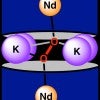
A recent study found that the material cerium magnesium hexalluminate (CeMgAl11O19) was not actually in a quantum spin liquid phase despite evidence suggesting it was.
Former IMF chief economist Rogoff examines future of US dollar in Arnold Lecture Series
Kenneth Rogoff’s talk, to a packed audience at Rice, marked the return of the Doyle Arnold ’70 Distinguished Guest Lecture Series in Economics.
Carbon nanotube fiber ‘textile’ heaters could help industry electrify high-temperature gas heating
A cross-disciplinary team at Rice has developed a new type of electric heating element — one that looks less like a traditional metal coil and more like a high-performance thread.
Neuroscience meets public life at Rice’s De Lange Conference XIV: Brains in Society
Rice will host the Scientia/De Lange Conference XIV: Brains in Society from March 12 to 14.
Rice researcher’s work on lifelong learning earns national recognition
Margaret Beier's research, which examines how motivation, self-efficacy and context shape learning outcomes, led to her election as a 2026 fellow of the American Educational Research Association.
A new $55 million grant from Kinder Foundation will empower Rice’s Kinder Institute for Urban Research for decades to come as it focuses on its bold vision for “prosperity for all” and service to the public, ensuring that everyone can contribute to Houston’s success and share in its opportunities.
A team of researchers led by Rice bioengineer Omid Veiseh has been awarded up to $18.2 million in funding from the Advanced Research Projects Agency for Health to develop a first-of-its-kind regenerative treatment aimed at restoring damaged lymphatic vessels and potentially curing lymphedema, a condition that affects more than 10 million Americans.
Extra ‘set of eyes’ for self-driving cars: Roadside radar sensors could reduce blind spots
EyeDAR, a low-power millimeter-wave radar sensor roughly the size of an orange, could provide radar-equipped self-driving cars with critical inputs about surrounding traffic, extending and enhancing their sensing accuracy.
Rice’s SynthX Center leads up to $18M effort to transform lymphatic imaging
Rice's SynthX Center is leading a new effort to improve how doctors detect and diagnose lymphatic diseases.
Platform to map living brain noninvasively takes next big step
A technology designed to read gene activity in the brain from a simple blood test has now cleared a major translational hurdle.