
“The world may be heading into a rocky period.”
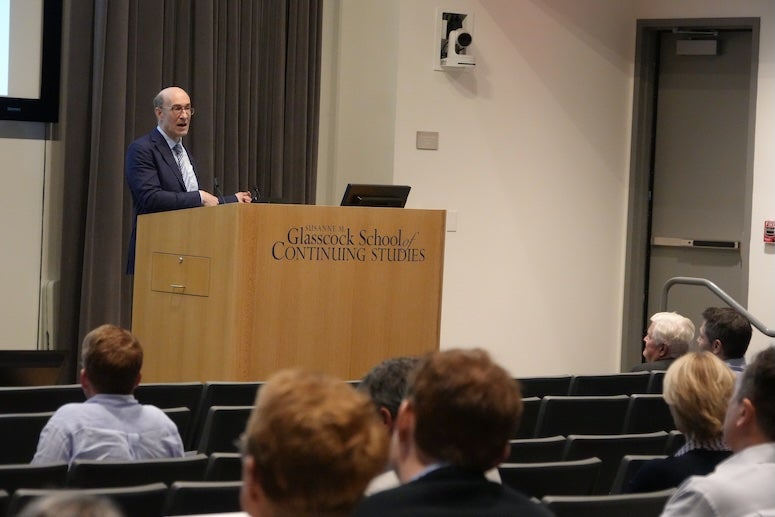
That was the warning economist Kenneth Rogoff delivered to a packed audience at Rice University as he explored the uncertain future of the U.S. dollar and the global financial system.
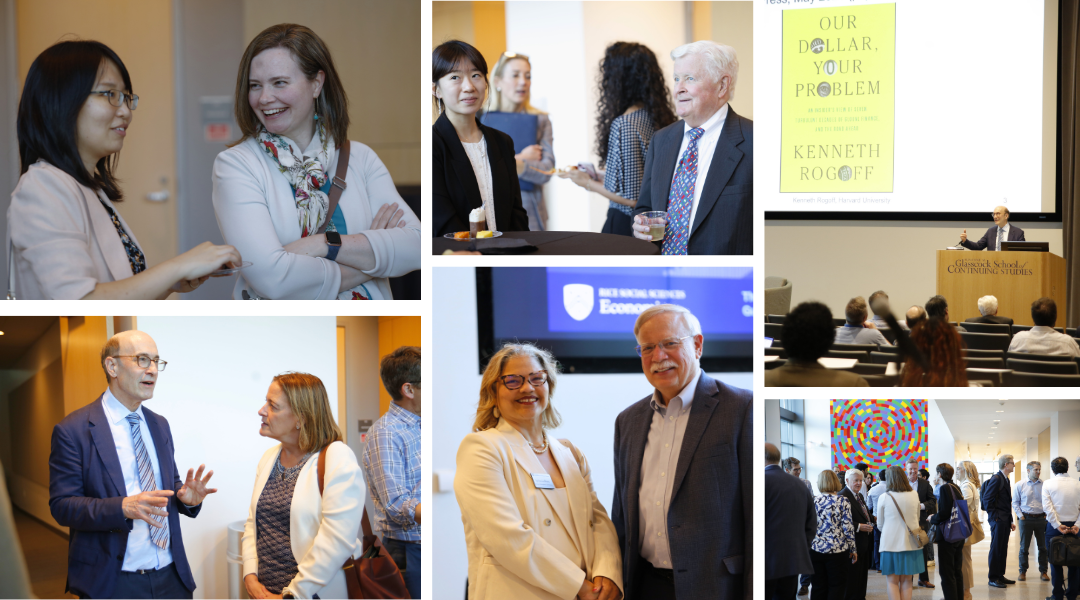
Rogoff’s talk also marked the return of the Doyle Arnold ’70 Distinguished Guest Lecture Series in Economics, as the program resumed its regular schedule of public lectures.
The series, launched in 2015 with the support of Rice trustee emeritus Doyle Arnold ’70, brings prominent economists and public thinkers to campus for conversations accessible to students, faculty and the broader community, often featuring Nobel laureates and other leading scholars.
“When I looked back on my experience as a student, everything inside the walls of the classroom was fabulous,” Arnold said. “But what I later realized was missing was more outside exposure, the chance to hear from major thinkers who might not naturally pass through Houston the way they do places like Harvard or Princeton.”
The lecture series initially hosted two speakers each year before pausing during the COVID-19 pandemic. It is being revived this year by economics department chair Flavio Cunha.
Rogoff, a former chief economist at the International Monetary Fund who earlier in his career served at the Federal Reserve Board, was a natural choice for the series’ return.
“He first came to my attention during the financial crisis,” Arnold said. “His book explaining what had just happened and why was one of the clearest explanations of that crisis.”
Now the Maurits C. Boas Professor of International Economics at Harvard University, Rogoff has spent decades studying global financial systems, sovereign debt and economic crises.
Drawing from his recent book “Our Dollar, Your Problem,” Rogoff traced the rise of the U.S. dollar as the dominant currency in global trade, finance and international transactions.
Following World War II, the U.S. accounted for a large share of global economic output, helping anchor the international financial system. Over time, the dollar became the central currency used in trade, financial markets and cross-border transactions.
“The dollar has been remarkably resilient,” Rogoff said. “But the global monetary system is always evolving.”
That dominance, Rogoff said, reflects not only the size of the U.S. economy but also the financial infrastructure surrounding the dollar.
Because many global payments pass through dollar-based systems, the U.S. holds significant leverage in international finance, including the ability to impose financial sanctions that can shape global economic behavior.
Still, Rogoff cautioned that the system could evolve.
Countries such as China are expanding efforts to settle trade in their own currencies, while new payment systems and financial technologies could gradually reduce reliance on the dollar. Political tensions and shifting global alliances may also influence how the global monetary system develops.
“The world may be moving toward a more multipolar system,” Rogoff said.
He also pointed to domestic economic pressures that could affect the dollar’s long-term standing, including rising U.S. government debt and ongoing debates about central bank independence.
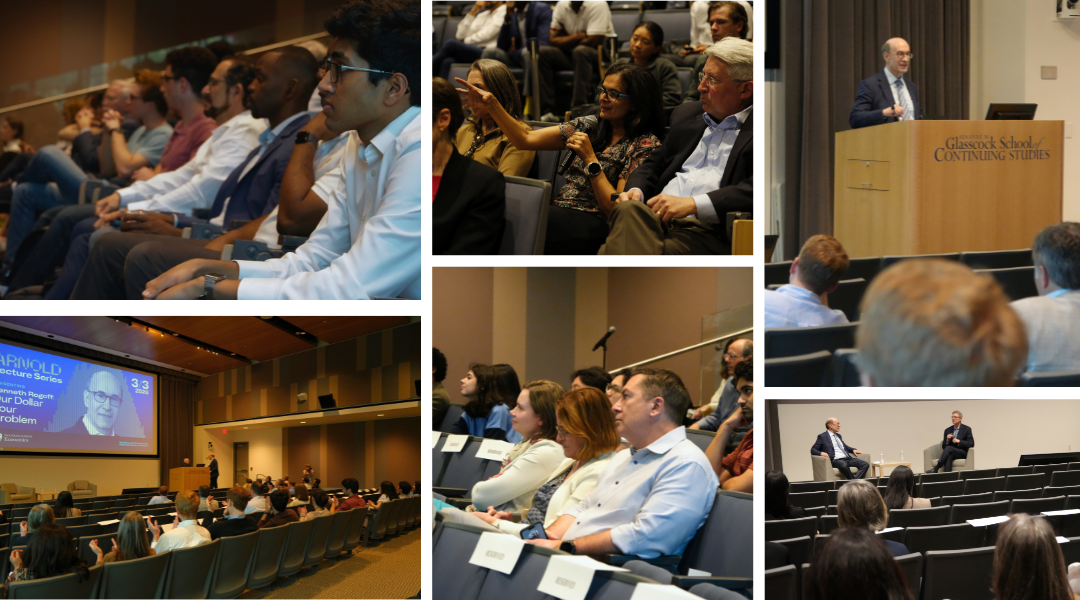
After the lecture, Rogoff joined moderator Marco Bassetto, an economist with the Federal Reserve Bank of Minneapolis who will join the Rice economics department this summer, for a fireside-style discussion and audience Q&A that ranged from cryptocurrency and artificial intelligence to the future of global economic stability.
Asked whether digital currencies could challenge traditional monetary systems, Rogoff said cryptocurrencies may play a role in certain sectors, particularly the global underground economy, but are unlikely to replace the dollar in the formal global economy.
Audience members also asked about AI and its potential impact on productivity and employment.
Economists remain divided, Rogoff said, with some expecting technology to generate new industries and economic growth while others warn automation could reshape labor markets in ways society has not yet fully anticipated.
For many in attendance, the lecture offered a rare opportunity to hear directly from a scholar who has helped shape international economic policy.
One attendee, a scholar originally from New York who now lives in Houston and asked not to be identified by name, said he frequently seeks out public lectures at Rice because they provide thoughtful perspectives on complex issues.
“The world is complicated and moving fast,” he said. “Events like this help you hear from people who really understand the systems behind the headlines.”
Arnold said the lecture series will continue evolving with plans for a mix of individual guest lectures and small conference-style events that bring multiple economists together to discuss major global issues.
“Being down here in Houston, we’re not always on the natural flyway of visiting economists and policymakers,” he said. “This was a way to bring that outside pollination to campus.”