Rice has launched One Giant Leap Ventures Fund I, an early-stage fund built to invest in the university’s most promising spinouts and alumni-founded startups. Structured as an institutional venture fund, it enables participation from equity limited partners as well as philanthropic investors seeking to support Rice startups.
Researchers at Rice, with the support of the Rice Biotech Launch Pad, have developed an implantable “living pharmacy” using engineered protein producers that could one day deliver these medicines continuously for months or years from a single procedure.
The Digital Health Institute, a joint initiative of Rice and Houston Methodist, will convene leaders across domains of expertise to examine the policy and implementation decisions that shape the real-world use of digital health technologies on Oct.15.
Lydia Kavraki and Rebecca Richards-Kortum are the first two faculty members in Rice history to be elected to all three U.S. national academies — the National Academy of Sciences, National Academy of Engineering and National Academy of Medicine.
A project led by the Rice360 Institute for Global Health Technologies aimed at making breast cancer diagnosis faster and more accessible in rural and medically underserved communities across Texas has received support from the Hill Prizes program.
Researchers at Rice, with the support of the Rice Biotech Launch Pad and Northwestern University have developed an implantable cell therapy that may help the body adapt more quickly to jet lag.
Rice's Office of Research has bolstered its commitment to foster collaborations and educational partnerships with health-related institutions of the Texas Medical Center by hiring Becky Hall Frenkel to lead its Educational and Research Initiatives for Collaborative Health office.
A new Rice Brain Institute collaboration is bringing together robotics, neuroscience and clinical expertise to explore a more active approach to stroke rehabilitation.
Rice engineers have developed a new strategy for controlling how therapeutic peptides are released from gelatin-based materials, a step that could make the small but powerful molecules more useful in tissue engineering and drug delivery.
Two Rice research teams have received Phase I awards through the U.S. Department of Energy’s Genesis Mission, a national initiative harnessing artificial intelligence and advanced computing to accelerate scientific discovery.
Rice mechanical engineers and Baylor College of Medicine neurosurgeons have identified simple changes to surgical tools that could reduce strain on the esophagus and potentially lower the risk of swallowing difficulties after neck surgery.
Rice researchers developed a new way to model how the cochlea processes incoming sound using graph signal processing, which could shed light on what happens as hearing deteriorates with age and make possible better assistive technologies for people with hearing loss.
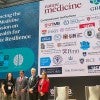
The Brain Health for Economic Resilience Commission, convened in collaboration with Nature Medicine, was announced at the Texas Brain Economy Summit June 9–10.