
Two Rice University research teams have received Phase I awards through the U.S. Department of Energy’s Genesis Mission, a national initiative harnessing artificial intelligence and advanced computing to accelerate scientific discovery.
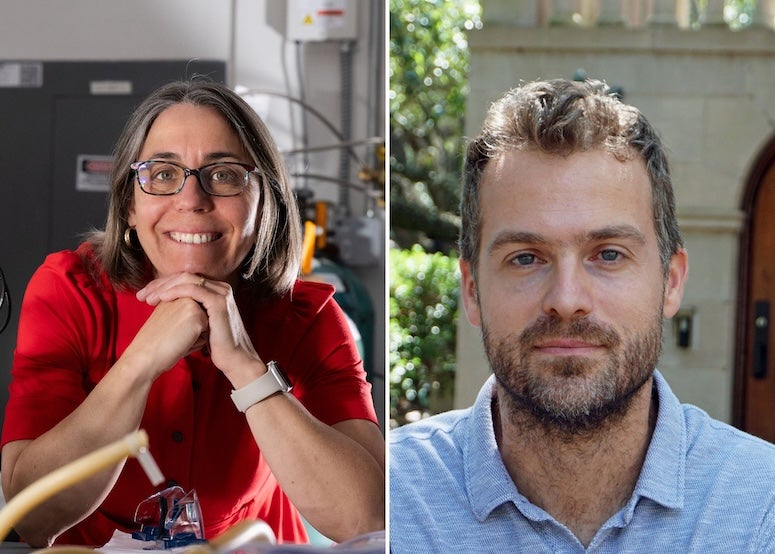
The projects, led by computer scientist Anastasios Kyrillidis and bioscientist Caroline Ajo-Franklin, will explore how AI can overcome fundamental challenges in quantum computing and help engineer microbes to sustainably produce strategically important fuels, chemicals and materials.
“These awards reflect Rice’s ability to bring together deep expertise in artificial intelligence, quantum science, synthetic biology and advanced experimentation to address challenges of national importance,” said Amy Dittmar, the Howard R. Hughes Provost and executive vice president for academic affairs at Rice.
Breaking the quantum optimization bottleneck
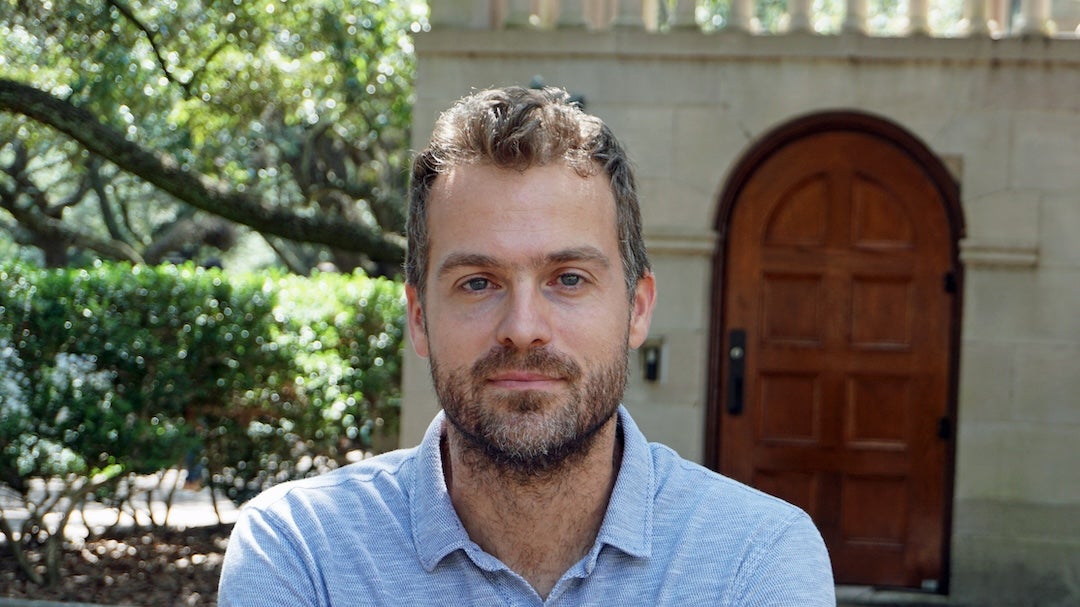
Kyrillidis, the Noah Harding Associate Professor of Computer Science, will lead a project developing AI methods to overcome computational bottlenecks in quantum chemistry and materials research.
Variational quantum algorithms, or VQAs, are considered a promising way to use emerging quantum computers to study complex problems in chemistry and materials science. They could eventually help calculate molecular energy states and predict the properties of quantum materials relevant to energy technologies. Their performance, however, depends on classical optimization methods that determine how the quantum calculations are carried out. Current methods often require extensive manual tuning, struggle with flat and difficult optimization landscapes and become less effective as quantum circuits grow more complex.
Kyrillidis’ team will develop AI tools designed to make that optimization process faster, more reliable and more scalable. The researchers will create reinforcement-learning agents that help construct quantum circuits, neural-network models that predict measurement outcomes and reduce costly hardware evaluations and language model-based agents that learn from previous quantum-computing runs.
“Our goal is to replace fragile, hand-tuned optimization methods with intelligent systems that can learn from quantum computations while still operating within frameworks that provide strong mathematical guarantees,” Kyrillidis said.
The methods will be tested on multiple types of quantum hardware, including trapped-ion and superconducting processors, and compared with rigorous classical approaches. The project will also produce open-source software and publicly available datasets to help the broader research community evaluate AI-enhanced quantum optimization.
Rice co-investigators include Kaden Hazzard and Guido Pagano of physics and astronomy; Leonardo Dueñas-Osorio of civil and environmental engineering; Tirthak Patel and Nai-Hui Chia of computer science; and Shengxi Huang of electrical and computer engineering and materials science and nanoengineering.
Building an AI engine for sustainable biomanufacturing
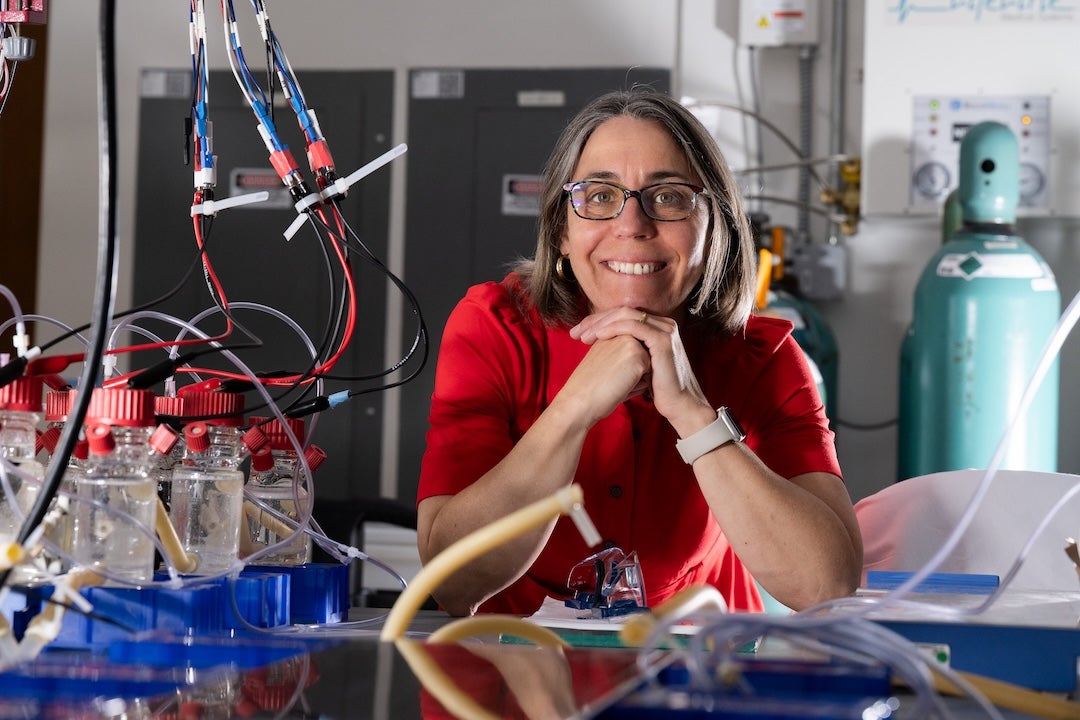
Ajo-Franklin, the Ralph and Dorothy Looney Professor of BioSciences and a Cancer Prevention and Research Institute of Texas Scholar, will lead a project aimed at developing an AI-driven platform to accelerate the microbial production of isoprenoids.
Isoprenoids are a broad class of natural compounds that could provide domestically produced alternatives to petroleum-derived solvents, high energy-density liquid fuels and materials such as polyisoprene rubber. Microbial production of these compounds remains economically challenging, in part because researchers lack high-throughput tools for measuring and improving the biological pathways used to produce them.
The Rice-led team will combine synthetic biology, protein engineering, AI and automated experimentation to address that bottleneck. Researchers will pair engineered biological sensors with terpene-producing enzymes to generate large datasets connecting changes in protein sequences to properties such as ligand binding, DNA recognition, protein stability and enzyme activity.
Those datasets will be used to improve AI models that predict how mutations affect interactions between proteins, DNA and isoprenoid molecules. The predictions will then be tested through high-throughput biological experiments, semi-automated X-ray crystallography and molecular simulations at Argonne National Laboratory as well as metabolomics-based enzyme testing at Lawrence Berkeley National Laboratory.
“This project creates a continuous feedback loop in which AI guides experiments and each experiment generates more detailed data to better hone the AI model,” Ajo-Franklin said. “In addition, it demonstrates the extraordinary star power Rice has recruited in protein engineering and synthetic biology.”
The project brings together a growing group of Rice researchers with complementary expertise in synthetic biology, protein engineering, computational modeling and laboratory automation. The Rice team includes Ross Thyer, assistant professor of chemical and biomolecular engineering, who develops synthetic biology and automated laboratory systems for engineering biological molecules; Cameron Glasscock, assistant professor of biosciences, who creates deep-learning tools for designing interactions between proteins and nucleic acids; and Linna An, assistant professor of biosciences, chemistry and bioengineering and a CPRIT Scholar in cancer research, who develops machine-learning approaches for protein structure and molecular recognition.
“This project reflects the type of large, interdisciplinary research effort the Rice Synthetic Biology Institute was established to support,” said Jeffrey Tabor, professor of bioengineering, biosciences, chemical and biomolecular engineering and director of the institute. “Our faculty are positioned to connect advanced AI with ambitious experimental science, and we are excited to pursue this project with support from the Genesis Mission.”
The Genesis Mission is a historic national initiative led by the U.S. Department of Energy, which is building the world’s most powerful integrated science discovery platform. By uniting government, industry, academia and philanthropy, it is accelerating breakthroughs in energy, scientific discovery and national security through a new platform that combines AI, supercomputing, quantum systems and advanced scientific instruments.
The goal of the Phase I RFA awards is to identify promising pathways toward transformative scientific capabilities and establish a foundation for future investment and scale. Project teams will design and demonstrate research workflows that integrate AI with scientific investigation, while rigorously evaluating whether those approaches can accelerate discovery, improve predictive capabilities, enhance experimentation or generate new scientific insights.