

Student innovators from across the globe gathered at Rice’s BioScience Research Collaborative to tackle some of the world’s most urgent health challenges.
Student innovators from across the globe gathered at Rice’s BioScience Research Collaborative to tackle some of the world’s most urgent health challenges.

Brain-computer interface based on Rice research wins FDA approval for first clinical trial
Motif Neurotech, a company commercializing technology based on research at Rice, has received approval from the FDA to begin the first clinical trial of its therapeutic brain-computer interface for treatment of treatment-resistant depression.

The Rice Biotech Launch Pad will advance the development of a cell-based therapy for Type 1 diabetes supported by an award from Breakthrough T1D.

Global conflicts see increase of health care worker harm
Attacks on health care in conflict zones are occurring at unprecedented levels, according to Safeguarding Health Care in Conflict Coalition and Médecins Sans Frontières (Doctors Without Borders). Rice’s Baker Institute for Public Policy on April X hosted global leaders in the field and frontline medical professionals to discuss the erosion of protections for health care in conflict zones and explore solutions to ensure these critical rules are respected.
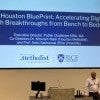
The Houston Methodist Rice Digital Health Institute hosted its inaugural HMRDHI Industry Translation Day, marking a significant milestone in the institute’s mission to accelerate the discovery, development and clinical deployment of digital health innovations.

Rice students showcase bold engineering solutions at annual OEDK event
From lifesaving medical devices to sustainable energy systems and robotics, Rice students packed the Ion with ingenuity April 16 for the Huff OEDK Engineering Design Showcase.

An internal seed funding initiative will support 12 projects exploring brain health research.

Rice doctoral student uses mechanics to map how breastfeeding works in real time
As researchers work to close long-standing gaps in women’s health, a Rice doctoral student is using principles of mechanics to shed light on one of the most fundamental aspects of early motherhood: breastfeeding.

Rice highlights ‘transformative’ cancer innovation, venture pipeline during CPRIT visit
Rice foregrounded its cancer research portfolio during a visit from Cancer Prevention and Research Institute of Texas senior officials.

RBL LLC launches Duracyte, advancing living pharmacy platform in Houston’s growing biotech hub
RBL LLC, a pioneering biotech venture creation studio dedicated to rapidly building companies based on breakthrough medical technologies, today announced the launch of Duracyte, a biotechnology company commercializing a pioneering class of implantable “biohybrid pharmacy” devices designed to produce therapeutic proteins continuously inside the human body.

The Center for Innovation and Translation of Point-of-Care Technologies for Expanded Cancer Care Access, a Rice-led collaboration of partners from three continents and based in the Texas Medical Center, has announced its second round of subawardees.

Senior Spotlight 2026: For this aspiring physician, computer science is ‘empowering’ asset
Rice senior Pankti Mehta is channeling her drive to improve how people access and experience health care by combining computer science with hands-on clinical insight.
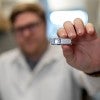
Solving the oxygen problem in cell-based drug delivery
Rice researchers and collaborators have now successfully integrated solutions to several persistent challenges to implantable drug factories into a single device.

Scalable platform sheds light on how cancer spreads
A new platform makes it easier to study metastasis and sheds light on how cancer clusters survive in the bloodstream when spreading from a primary tumor to other parts of the body.

Rice students design realistic training model to improve uterine cancer biopsy access worldwide
For an interdisciplinary team of Rice undergraduates, improving global women’s health started with a pressing question: What does it take to make an essential cancer diagnostic procedure available worldwide?