

Biologists construct a ‘periodic table’ for cell nuclei
A team of biologists studying the tree of life has unveiled a new classification system for cell nuclei, and discovered a method for transmuting one type of cell nucleus into another.
Biologists construct a ‘periodic table’ for cell nuclei
A team of biologists studying the tree of life has unveiled a new classification system for cell nuclei, and discovered a method for transmuting one type of cell nucleus into another.
Cancer ‘guardian’ breaks bad with one switch
A mutation that replaces a single amino acid in a potent tumor-suppressing protein makes it prone to nucleating amyloid fibrils implicated in many cancers as well as neurological diseases.
Study could explain tuberculosis bacteria paradox
Tuberculosis bacteria have evolved to remember stressful encounters and react quickly to future stress, according to a study by computational bioengineers at Rice University and infectious disease experts at Rutgers New Jersey Medical School.
Study shows why anesthetic stops cell’s walkers in their tracks
Researchers detail the mechanism that allows propofol, a common anesthetic, to halt the movement of kinesin proteins that deliver cargoes to the far reaches of cells.
Understanding frustration could lead to better drugs
Atom-scale models of proteins that incorporate ligands, like drug molecules, show a strong correlation between minimally frustrated binding sites and drug specificity. Such models could lead to better-designed drugs with fewer side effects.
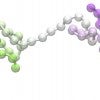
At our cores, we’re all strengthened by ‘dumbbells’
Scientists at Rice’s Center for Theoretical Biological Physics detail the structure of dumbbell-like sequences in DNA during interphase that suggest several unseen aspects of chromosome configuration and function.

Pope picks Rice professor for science academy
Rice University physicist José Onuchic has been appointed by Pope Francis to the Pontifical Academy of Sciences.
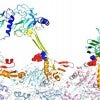
Protein ‘chameleon’ colors long-term memory
Researchers model the binding structures of actin and associated proteins they believe are responsible for the formation of longterm memory.

NSF renews Rice biological physics center
$12.9 million in funding backs Center for Theoretical Biological Physics research into mysteries at the intersection of biology and physics.
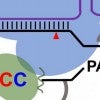
‘Bystander’ Cs meet their match in gene-editing technique
Biomolecular engineers at Rice have developed new tools to increase the accuracy of CRISPR single-base editing to treat genetic diseases.

AMD gives supercomputer to Rice for COVID-19 research
AMD is donating a petaflop-scale supercomputer to Rice University to speed progress on pandemic-related research.

Hidden symmetry found in chemical kinetic equations
Rice University researchers have discovered a hidden symmetry in the chemical kinetic equations scientists have long used to model and study many of the chemical processes essential for life.
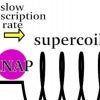
Cells’ springy coils pump bursts of RNA
Models by Rice chemists calculate the chemical and mechanical energies involved in “bursty” RNA production in cells.
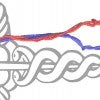
Snake-like proteins can wrangle DNA
Theoretical simulations at Rice University suggest structural maintenance of chromosome proteins coil not only around each other but also around the strands of DNA they help manipulate. These strands are formed into loops that regulate transcription and other cellular processes.