Up to 5 million Ukranians could ultimately flee their home country — and even more could be displaced within the country — if the Russian invasion continues, according to an expert from Rice University’s Baker Institute for Public Policy.
As Russia faces sanctions for invading Ukraine, experts from Rice University’s Baker Institute for Public Policy are available to discuss the potential impact of cutting off Russian gas supplies to European countries and what the conflict means for global oil prices.
Last February’s severe winter storm caused sustained peaks in demand for electricity across Texas, triggering tremendous stress on the state’s power grid and widespread outages lasting days. Now a new report from Rice University’s Baker Institute for Public Policy examines why the winter storm caused this deadly electricity supply crisis and how it could have been avoided.
Investments in oil and gas have decreased in favor of alternative energy in recent years, but with alternative energy technologies still able to supply only a small fraction of useable energy, rushing the transition would be a costly mistake, according to a new report from Rice University’s Baker Institute for Public Policy.
As the anniversary of the Jan. 6 attack on the U.S. Capitol approaches, Rice political scientists Mark Jones and Paul Brace are available to discuss how the insurrection has impacted American politics.
What happened to electrical power in Texas during last February's freeze? A new time-lapse video of electricity generation created by experts at Rice University’s Baker Institute for Public Policy offers an hour-by-hour picture of power plant and customer outages across the state during the devastating storm.
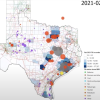
A new, interactive energy map for the United States has just been released by Rice University's Baker Institute for Public Policy, providing an open-source visualization of the country’s energy infrastructure and demography designed to highlight the intersection of energy, environment, policy and society.
NASA’s Johnson Space Center has renamed its Rocket Park after Apollo-era engineer and former center director George W.S. Abbey, a senior fellow in space policy at Rice’s Baker Institute for Public Policy.
Oil’s role in the global energy transitions will be the focus of an upcoming virtual and in-person event from Rice University’s Baker Institute for Public Policy.
Is it legal — or even appropriate — for governments to tax digital advertisers on the user data collected from consumers? That’s one of the many questions public policy makers must grapple with as they look for new ways to collect taxes from the digital economy, according to a new policy brief from Rice University’s Baker Institute for Public Policy.
As a growing number of hospitals face unprecedented financial challenges due to the COVID-19 pandemic, there is concern that they might become acquisition targets by private equity firms. New research from Duke University and Rice University’s Baker Institute for Public Policy indicates those hospitals are significantly more likely to offer services that maximize profit and cut those that don't.
The funding model for Texas K-12 education relies in part on the state’s energy sector – specifically its fossil fuel industry – raising questions about the impact on the state budget from the shift toward low-carbon and renewable energy. New research from Rice University’s Baker Institute for Public Policy forecasts the size of the projected funding shortfall through 2050 and proposes a series of policy solutions to address what the authors describe as a “manageable deficit.”
The 13th annual Rice Energy Finance Summit (REFS) will be held in a dual-delivery format Nov. 12. The conference will explore current issues for energy operators, investors and financial services as they plan for overcoming challenges in meeting global energy demands.