Fears of overpopulation and shrinking resources have been prevalent for the past century, but across much of the world today birth rates are falling, populations are aging and countries are starting to address what fewer people in the next generation means for the long term.
Bipartisan solutions to strengthen electoral credibility in advance of the upcoming U.S. midterm elections will be the topic of The Carter Center and the Baker Institute for Public Policy at Rice's Sept. 14 webinar
Baker Institute experts, writing in the Houston Chronicle, warn delayed state report could hinder maternal health policy and leave critical deaths from 2022-23 unexamined
Population decline has quietly emerged as one of the defining demographic shifts of the 21st century, and many countries are now confronting shrinking populations and the economic, social and infrastructure challenges that accompany the shifts.
The third annual energy conference, hosted by the Center for Energy Studies at Rice’s Baker Institute for Public Policy in partnership with the University of Oklahoma’s Energy Institute, brought together academic, industry and policy perspectives to examine the challenges facing the nation’s energy system and the infrastructure needed to support future economic growth.
As rescue efforts continue following catastrophic flooding along the Nepal-Tibet border, Rice University experts are available to discuss the climate science behind changing glaciers and the cultural consequences of their loss.
Professor Dame Angela McLean, the U.K. government’s chief science adviser, discussed the role of science advice in government during an armchair discussion at Rice University’s Baker Institute for Public Policy, hosted by the Science and Technology Policy Program as part of its Civic Scientist Lecture Series.
The Baker Institute’s fall 2026 calendar will bring prominent policymakers, scientists, business leaders and scholars to Houston this fall for a series of public conversations on energy and grid resilience, artificial intelligence and health, global affairs, demographics, science policy and the future of Texas.
Global energy use reached an unprecedented milestone in 2025, highlighting both advances in clean energy and the continued dominance of fossil fuels, according to the 75th annual Statistical Review of World Energy. Experts at Rice University’s Baker Institute for Public Policy hosted a conversation the Review’s producer, the Energy Institute, July 29 to provide context and discuss the projected future of energy consumption.
The Claudio X. González Center for the United States and Mexico at Rice’s Baker Institute for Public Policy convened leading trade experts to examine the implications of the U.S. decision not to renew the U.S.-Mexico-Canada Agreement (USMCA) on July 1, and what the prolonged negotiations could mean for North American businesses.
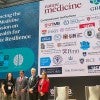
The Brain Health for Economic Resilience Commission, convened in collaboration with Nature Medicine, was announced at the Texas Brain Economy Summit June 9–10.
Rice’s Baker Institute for Public Policy welcomed dignitaries from the United States, Cyprus, Greece and Israel on June 11 to mark the launch of the Eastern Mediterranean Energy Center (EMEC), a new initiative focused on advancing energy security, regional stability and international collaboration.
A new health policy research brief from the Baker Institute for Public Policy at Rice is drawing attention to the sweeping pace of health care policy changes implemented during the first year of President Donald Trump’s second administration.