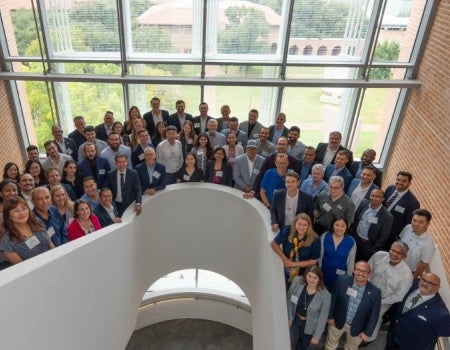
More than 120 utility leaders, researchers, government officials, entrepreneurs, corporate water teams, engineers and investors gathered at Rice for t...
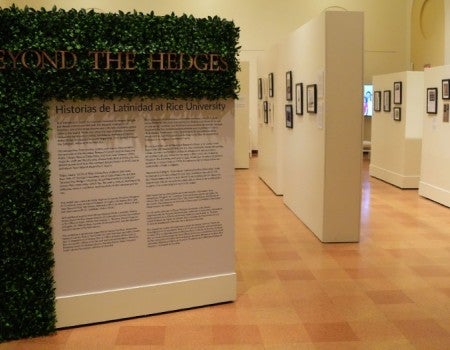
Anne Chao, co-founder and program manager of the Houston Asian American Archive and an adjunct lecturer in Rice's School of Humanities and Arts, share...
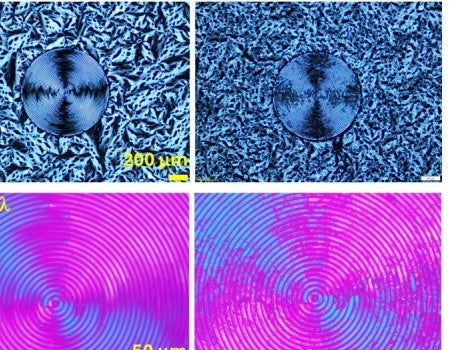
Rice researchers have shown that an organic semiconductor can transform from a liquid crystal into a solid crystal through a rapid, highly coordinated...
Following a hard-fought home loss to Western Michigan, the Rice football team hits the road for a Sept. 26 matchup with Fresno State that renews a riv...
The Friends of Fondren Library at Rice hosted New York Times bestselling author and Houston native Katherine Center at its annual membership celebrati...
Three experts from Rice will attend Brain Week at the United Nations General Assembly Sept. 21-25 to join an international conversation that reaches w...
Twenty-five years after the 9/11 attacks, Rice’s Shepherd School of Music honored the anniversary the way it has every year since 2002: by pausing to ...
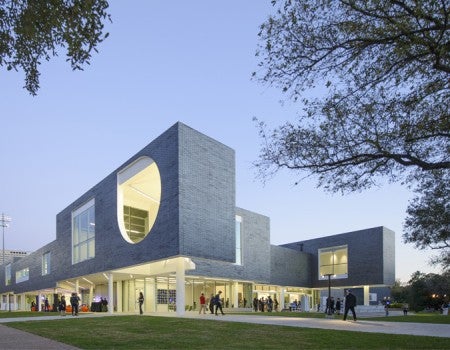
The Moody Center for the Arts at Rice presents ”Radiant Geometries: Vectors of Knowledge from the Indigenous Americas” this fall, bringing together co...
David Satterfield, director of Rice University’s Baker Institute for Public Policy, sat down with Ruth Simmons, the President’s Distinguished Fellow and former president of Brown University, Smith College and Prairie View A&M University, for a reflective conversation on the mounting pressures reshaping American higher education.
In a time of escalating climate risks, crumbling infrastructure and ballooning industrial demand, understanding how water and energy intertwine has never been more urgent. That was the resounding message from experts who convened May 19 in Washington, D.C., for “The Intersection of Water and Energy, 2025-2030,” a forum hosted by Rice and Arizona State University.
Rice’s student-led Rice Wind Energy team soared to new heights this year, clinching second place overall at the U.S. Department of Energy’s 2025 Collegiate Wind Competition.
Nearly 1,000 people gathered to celebrate the 15th anniversary of Rice’s Kinder Institute for Urban Research and the release of its 2025 Kinder Houston Area Survey.
The Rice Alliance for Technology and Entrepreneurship has announced the 12 startups chosen for Class 5 of its Clean Energy Accelerator, a program designed to propel early stage ventures advancing the global energy transition. These companies from both the Houston-region and across the U.S. and Canada are addressing carbon management, energy storage, materials, energy efficiency, wind and hydrogen.
Rice Athletics announced that it will partner with Independent Sports and Entertainment to identify a potential naming rights partner for Rice Stadium, the iconic home of Rice Football and countless other major sporting and entertainment events over the past eight decades.
The Rice men's track and field team will have a strong group representing the Owls at the NCAA West Preliminary starting Wednesday, May 28, with six athletes qualifying for the meet.
The Severe Storm Prediction, Education and Evacuation from Disasters Center at Rice, in collaboration with a team of experts, has developed the Galveston Bay Park Plan, an in-bay barrier and park system designed to provide enhanced storm surge protection and navigation and environmental benefits for the highly vulnerable west side of Galveston Bay.