Rice University’s charter reserved the school for Houston’s white residents. Latinx students crossed the Sallyport anyway, and by the late 1920s they were graduating. No one had ever assembled that record, but two Rice juniors spent the summer making this history known.
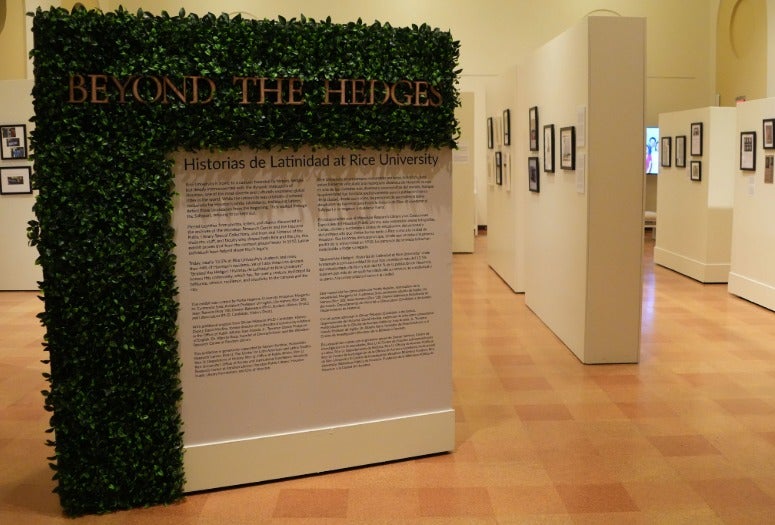
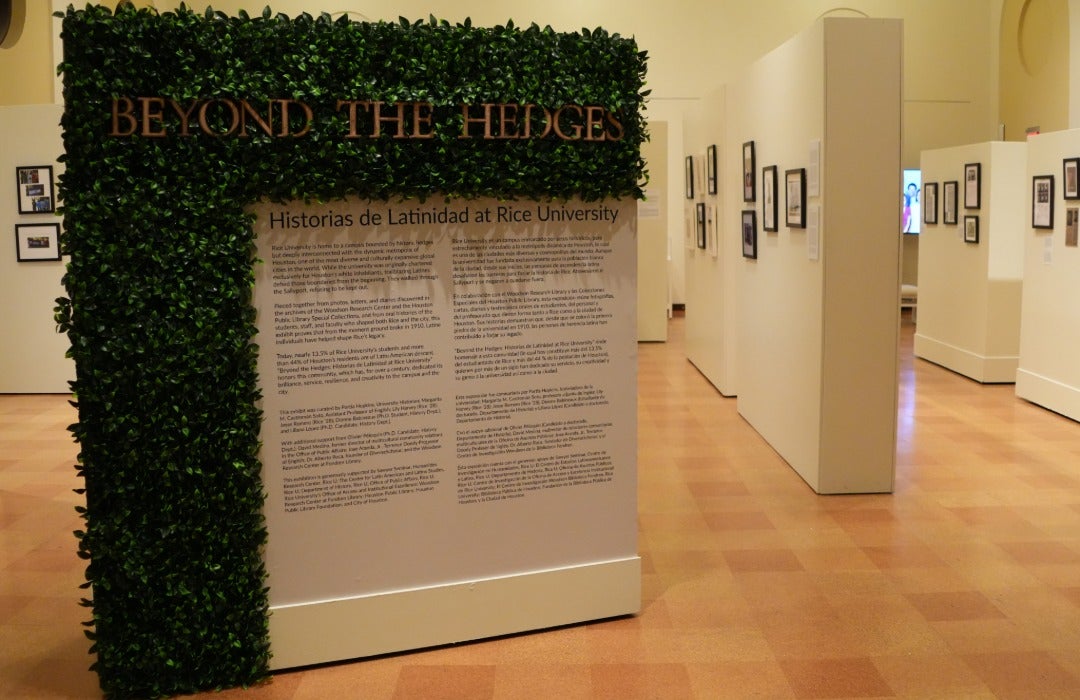
Their research anchors “Beyond the Hedges: Historias de Latinidad at Rice University,” which opened Sept. 18 at the Houston Public Library’s Julia Ideson Building and runs through Dec. 31. Jesse Romero and Lily Harvey worked through Rice’s Summer Undergraduate Research Fellow and Carlson Undergraduate Summer Research Fellowship alongside university historian Portia Hopkins and Margarita Castromán Soto, the Allison Sarofim Assistant Professor for Distinguished Teaching in English and creative writing.
“The first Latinx alumni who graduated from Rice did so in the 1920s,” Romero said. “If you compare that to the first Black graduate, that’s about a 50-year difference. I was shocked by that.”
The Latinx material Romero and Harvey worked from stretches from the university’s founding to the present and sat scattered across the Woodson Research Center, Houston Public Library special collections and online repositories.
“As a historian, I know that history doesn’t preserve itself — it survives because someone chooses to carry it forward,” Hopkins said. “Rice’s Latinx history deserves to be researched, documented and told by the students who will inherit it because when students lead that work, they’re not just uncovering the past — they’re claiming their place in it.”
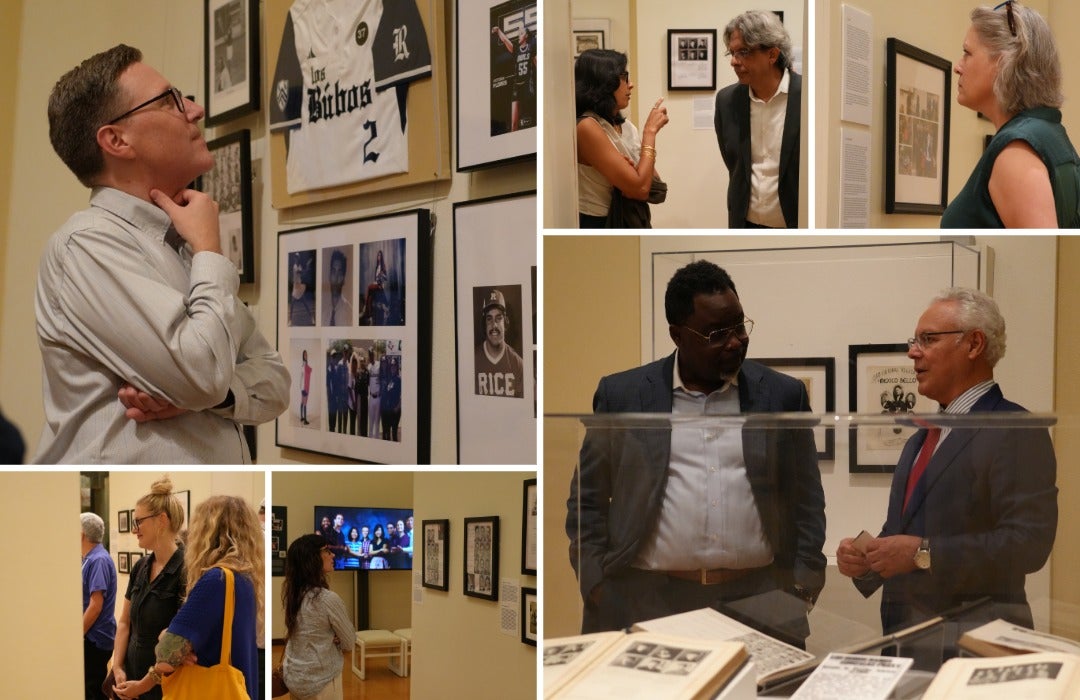
The project grew out of the Task Force on Slavery, Segregation and Racial Injustice recommendation that institutional history work extend to the experiences of Hispanic students, faculty and staff. Romero took that mandate to the phone as often as the archive box, combing LinkedIn for the descendants of the university’s earliest Latinx graduates and cold-calling them.
“He didn’t hesitate to track down the descendants of some of the first Latine alumni to learn more of their story than what we had at the Woodson archives,” Castromán Soto said.
Harvey pulled a different thread and found that Alberto Roca, a former postdoctoral fellow and biochemist, had gathered much of this history years earlier while advising the Hispanic Association for Cultural Enrichment at Rice. His work had been sitting dormant in the archive.
“Despite not having any connection and despite the fact that it wasn’t really helping him advance his career, it was just something he did because he noticed the gap,” Romero said. “He did it out of his own interest.”
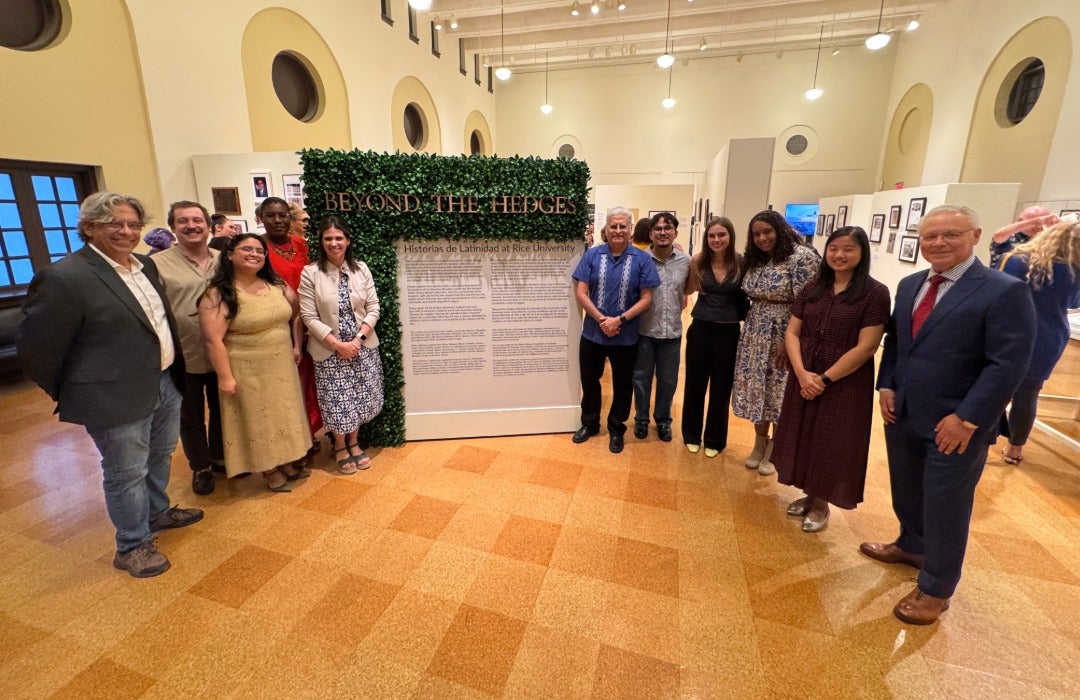
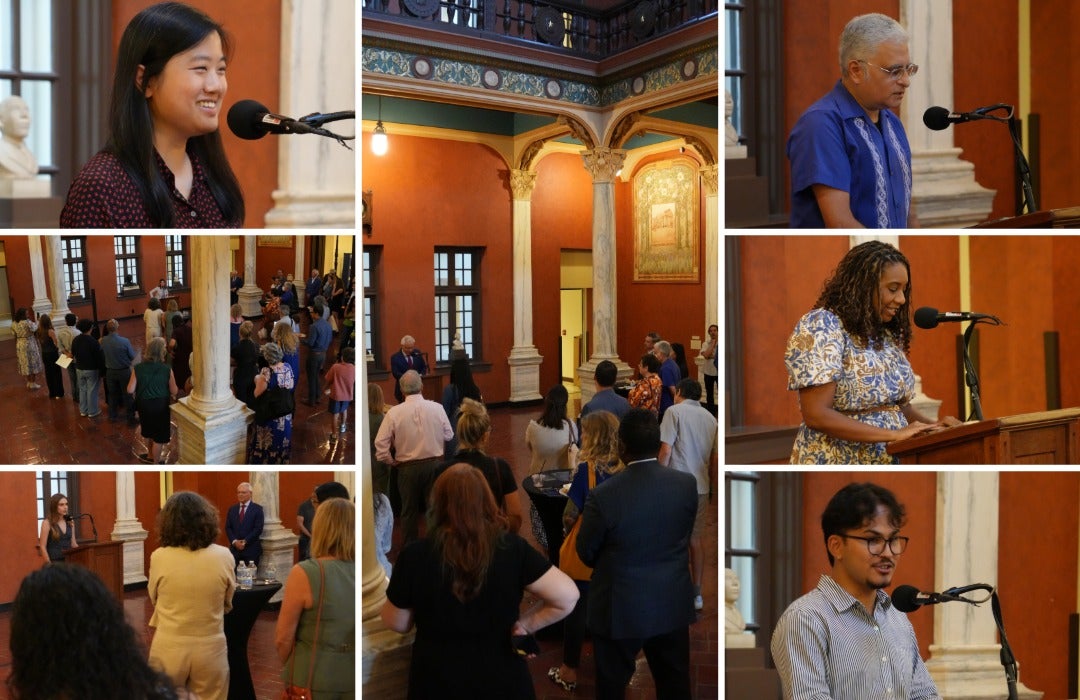
Romero came to Rice from Rocksprings, a Texas Hill Country town of roughly 800 people where his graduating class numbered 22. He enrolled as an engineering major and switched it after taking Castromán Soto’s Intro to Latinx Literature course his freshman year. He now studies English with a concentration in culture and social change and is working on a second major in cognitive sciences and a minor in Latin American and Latinx studies.
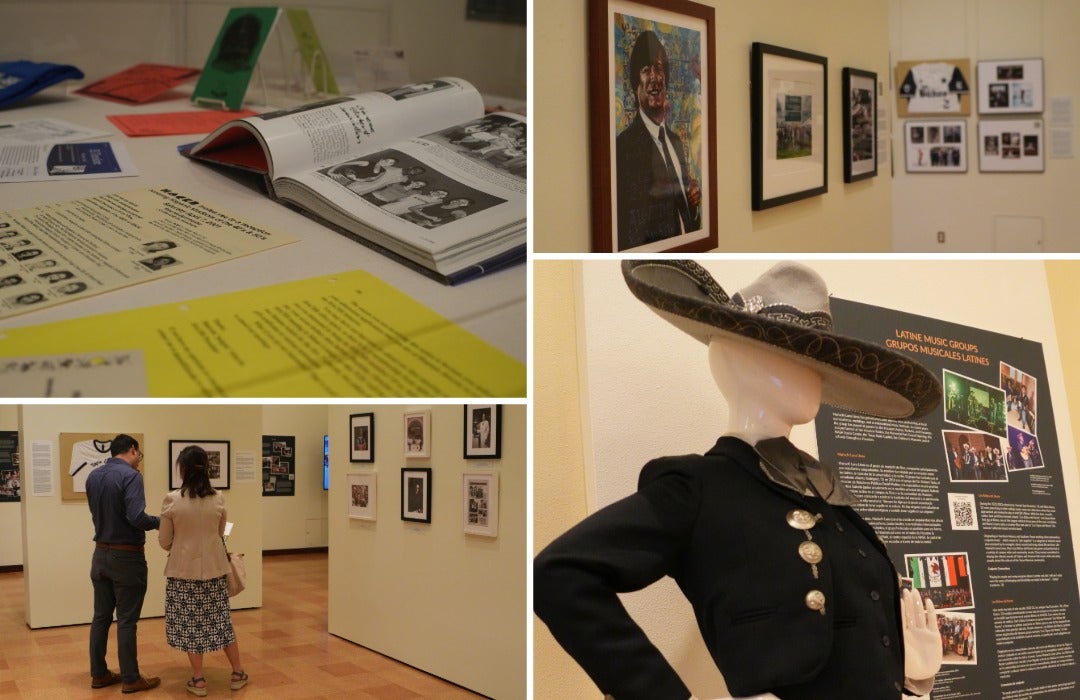
Doctoral students Dionne Babineaux and Liliana Lopez laid out the gallery, condensed pages of student research into exhibit text and translated it into Spanish. The cases hold archival documents, video recovered from online repositories and costumes from Rice’s mariachi group Luna Llena.
“This shouldn’t be the end,” Romero said. “It should be a continuous effort by the institution because we’ve been here since the first documentation and our presence is still here.”
The team is now organizing the summer’s research into a digital exhibit where students can add their own memories. Latinx students account for nearly 13.5% of Rice undergraduates today. In the city outside the hedges, the figure is more than 44%.
“In order to make sure that students like myself can really call this place home, we need to have the full history of Rice University displayed,” Romero said. “We need to support these affinity groups and support humanities research. I know we are a STEM-focused institution, but the humanities are just as important.”