
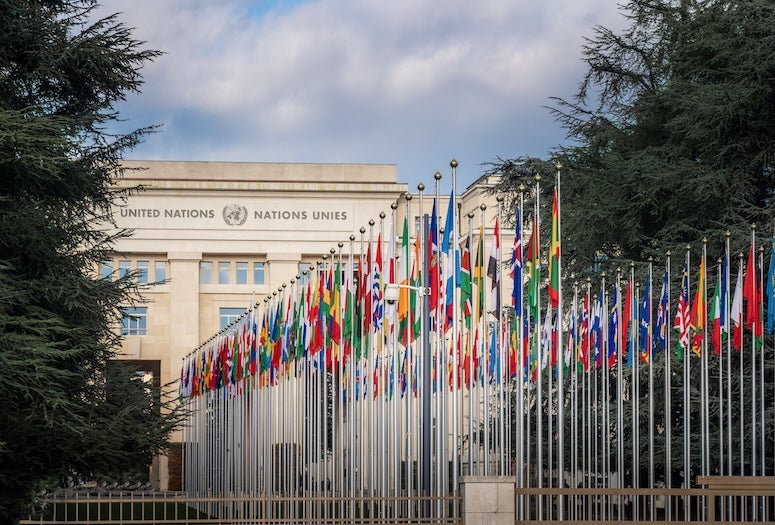
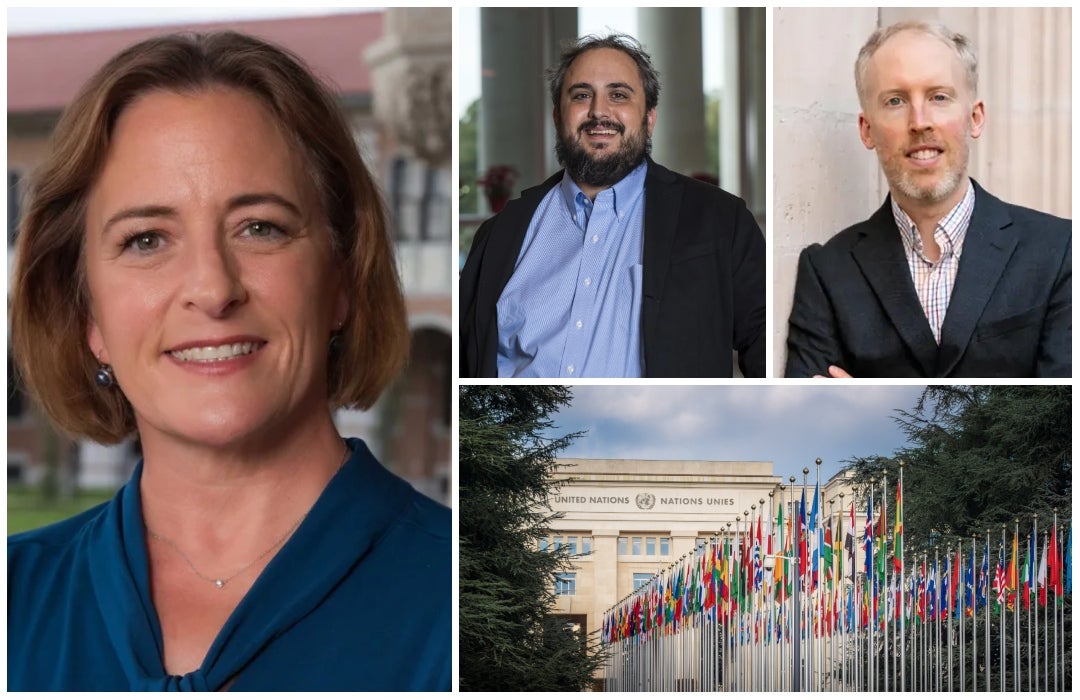
What does the future of artificial intelligence have to do with the human brain? Three experts from Rice University will attend Brain Week at the United Nations General Assembly Sept. 21-25 to join an international conversation that reaches well beyond neuroscience and medicine.
One of the central ideas emerging from Brain Week is that the AI revolution will ultimately be a challenge of human capability. As AI becomes part of more areas of everyday life, the question is not simply how powerful the technology can become but how we ensure it strengthens rather than weakens the cognitive abilities that make human creativity, judgment and agency possible.
Provost Amy Dittmar will lead the conversation as part of a panel focused on “The New Wealth of Nations: Brain Economy Leadership in Action.” Brains are shaped throughout our lives by a combination of biological, social and environmental factors. Education, air quality, climate, workplaces, urban planning and digital environments can all influence brain health.
For Dittmar, that means the brain economy may be a global idea, but ultimately, it has to become real where people actually live and work: in cities, universities, workplaces and communities.
“These are the places where children develop, people build skills, researchers collaborate, innovations are tested and institutions can see whether new approaches are making a difference,” she said.
Rice has partnered with University of Texas Medical Branch and Memorial Hermann Health System for Project Metis, a groundbreaking initiative led by the Center for Houston’s Future to position the Houston-Galveston region as the global leader in brain health and the emerging brain economy. The initiative is chaired and supported by three pillars of the region, each with unique expertise and depth in brain health, including the newly launched Rice Brain Institute, UTMB’s Moody Brain Health Institute and Memorial Hermann’s comprehensive neurology care spanning stroke, neurotrauma, brain health and more.
During the UN’s Brain Week, Project Metis is releasing a Launch Book with Accenture for other place-based initiatives. Rice is also the host of the Global Brain Economy Initiative, which is the global coordination and leadership hub for brain economy science, policy, finance and public-private activities — powering more than 15 events during brain week.
It is also where some of the biggest challenges facing the brain are playing out. AI is rapidly changing how people work and learn. But the AI conversation cannot focus only on increasingly powerful technologies, Dittmar argues. It also has to consider the human capabilities needed to use those technologies well: judgment, creativity, adaptability and the ability to continue learning.
“Healthy, adaptable brains enable people to learn, work, innovate, care for others and participate in their communities,” said Harris Eyre, executive director of the Global Brain Economy Initiative and the Harry Z. Yan and Weiman Gao Senior Fellow in Brain Health and Society at Rice’s Office of Innovation. “Conversely, poor neurological and mental health, inadequate education, cognitive decline and environments that undermine attention and agency impose enormous economic and social costs.”
That makes brain health an increasingly important part of the AI conversation. Cognitive health, resilience and the ability to think independently could prove just as important to the long-term impact of AI as advances in computing power or the construction of new data centers.
At the same time, neuroscience itself is entering an exciting period of discovery. Advances in biomarkers, precision medicine, neurotechnology and disease-modifying treatments are opening new possibilities for understanding and treating brain disorders. The challenge now is turning scientific breakthroughs into improvements that people can actually access. That means sustained investment not only in research but also in translating discoveries into practice and preparing health systems to use them effectively.
The conversation also raises a question that is especially relevant to universities: Exactly how much of the future wealth of nations will depend on the health, skills, resilience, creativity and adaptability of human brains? Rice’s increasingly global approach to research and education has led to the creation of the interdisciplinary Brain Institute. It brings together more than 65 researchers across engineering, neuroscience, psychological sciences, ethics and policy, reflecting the idea that brain health cannot be addressed by neuroscience alone.
“By connecting disciplines and global partnerships, Rice is working to link scientific discovery with the societal and economic outcomes that matter in people’s everyday lives,” said Simon Fischer-Baum, director of the brain and society initiative at the Rice Brain Institute “The human brain is a critical piece of infrastructure that contributes to the economic resilience of nations.”
The stakes are particularly high as populations around the world grow older. Brain disorders become more common with age, placing increasing pressure on individuals, families, health systems and economies. Dementia alone affects an estimated 57 million people worldwide with nearly 10 million new cases each year.
Rather than simply preparing to absorb those growing costs, Brain Week emphasizes the importance of prevention, early detection and healthy longevity. Research highlighted by the McKinsey Health Institute, co-authored by Eyre, estimates that scaling cost-effective brain health interventions could avert 267 million years of healthy life lost globally by 2050.
For Dittmar, the larger opportunity is to turn that global conversation into action and to learn from the places already doing it. Universities, cities, workplaces and communities can serve as testing grounds for new approaches to brain health and human capability, with lessons that can ultimately inform policy and practice far beyond their own boundaries.
That may be the most important shift in the brain economy conversation: moving from asking what the world should do to identifying what communities can do now — and how those local efforts can help shape the future of the global economy.