
‘Super trees’ may help save Houston … and beyond
Rice statisticians are part of a study sharing strategies to identify “super trees” for urban areas that help mitigate pollution, flooding and heat.
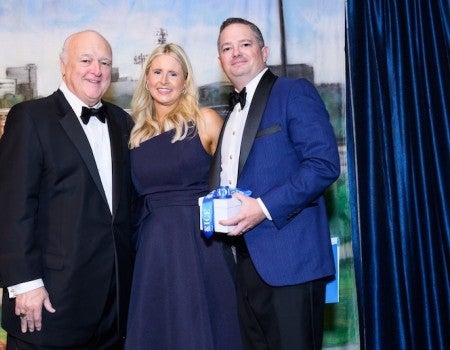
Rice Athletics celebrated longtime supporters and champions of its student-athletes Sept. 30 at the 21st An Evening for Rice’s Honour gala at River Oa...
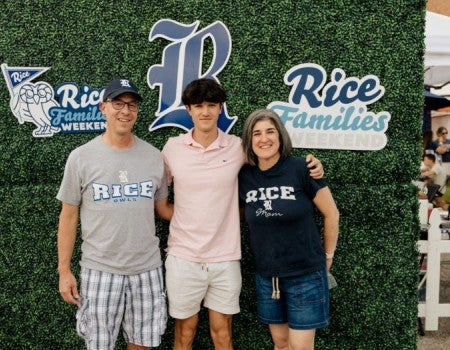
Rice parents, siblings, grandparents and other family members joined their Owls for meals, performances, conversations, campus activities and athletic...

Houston’s population boom masks other trends that have been unfolding for more than two decades: Women here are having fewer children and having them ...

Rice and First Community Credit Union have signed a 20-year football stadium naming rights and campus collaboration agreement as announced Thursday by...
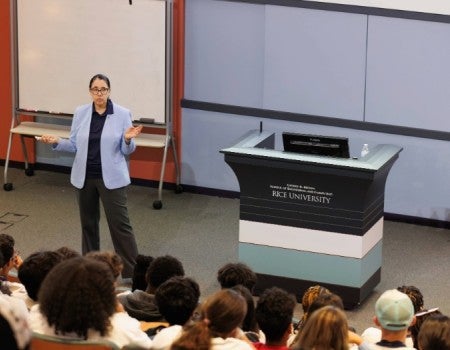
Rice’s George R. Brown School of Engineering and Computing has named Karen Lozano as the director of the Tapia Center for Empowerment through STEM Edu...
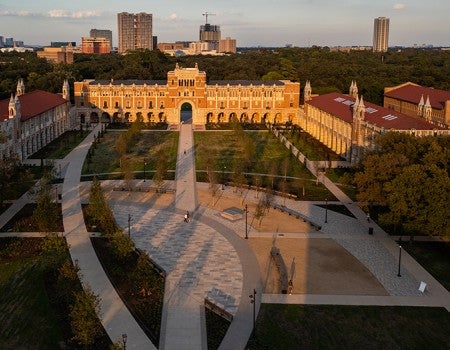
Rice continues its upward momentum in global higher education, rising two spots to No. 101 worldwide in the 2027 Times Higher Education World Universi...
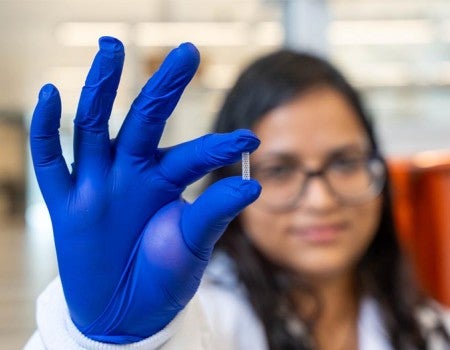
Researchers at Rice, with the support of the Rice Biotech Launch Pad, have developed an implantable “living pharmacy” using engineered protein produce...
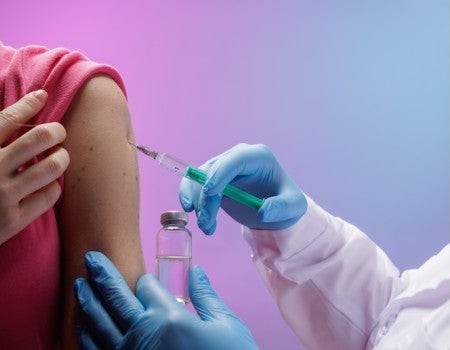
New research explores how perceptions of immunity can shape vaccine decisions and how personalized feedback may help people better understand their pr...
‘Super trees’ may help save Houston … and beyond
Rice statisticians are part of a study sharing strategies to identify “super trees” for urban areas that help mitigate pollution, flooding and heat.
12 questions for Nichole Ayers, Rice’s newest astronaut
Rice alumna and fighter pilot Nichole Ayers joins NASA's astronaut corps.
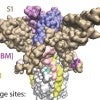
Omicron mutations may help SARS-CoV-2 evade antibodies
Software under development at Rice University and its partners reveals mutations in the omicron variant of SARS-CoV-2 that may help it evade antibodies, including those from vaccinations.

Ruth López Turley named next director of Rice's Kinder Institute for Urban Research
HOUSTON – (Dec. 1, 2021) – Ruth López Turley, a prolific education researcher, professor of sociology and director of Rice University's Houston Education Research Consortium (HERC), has been selected as the next director of the university's Kinder Institute for Urban Research after current director Bill Fulton steps down June 30, 2022.
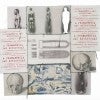
‘Bound Away’ conference bringing new research on slave voyages
Art exhibitions at Moody, MFAH will contextualize research presented Dec. 3-4

Ultrathin solar cells get a boost
Rice University engineers boost the efficiency while retaining the toughness of solar cells made of two-dimensional perovskites.

‘Double House’ wins city honors for Rice Architecture students
Two Rice Architecture students win a City of Houston competition to design an accessory dwelling unit with plans freely available to the public.

Rice issues update to COVID-19 vaccination policy for employees
Vice President for Administration Kevin Kirby, chair of the Rice's Crisis Management Advisory Committee, sent a message regarding the updated COVID-19 vaccination policy for employees in a Nov. 19 email to the university community.

Spring Big Questions courses consider what makes a terrorist and what makes a classic
New classes from Humanities professors explore essential issues of our time

Rice’s new arts building will be Sarofim Hall, designed by internationally acclaimed firm
Architecture team led by Rice alumnus will create new gateway to campus