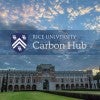
Carbon Hub, Rice University's zero-emissions research initiative, has awarded seed grants for seven projects that will rapidly advance its vision for transforming the oil and gas sector into a leading provider of both clean hydrogen energy and solid carbon products that can be used in place of materials with large carbon footprints.
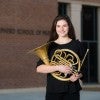
Graduate student in horn performance Lauren Anker will represent Rice's Shepherd School of Music as part of American Public Media’s “Performance Today” Young Artists in Residence series. Her segments will be posted online March 25.
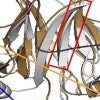
A mutation that replaces a single amino acid in a potent tumor-suppressing protein makes it prone to nucleating amyloid fibrils implicated in many cancers as well as neurological diseases.
Rice University computational astroparticle physicist Christopher Tunnell is getting help in his search for the nature of the universe through a National Science Foundation (NSF) CAREER Award.
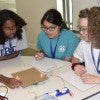
HOUSTON – (March 5, 2021) – Even a small effort up front can boost the abilities and confidence of girls as they anticipate taking challenging science courses.
In one of the first studies of its kind, an analysis of camera-trap data from 15 wildlife preserves in tropical rainforests revealed a previously unknown relationship between the biodiversity of mammals and the forests in which they live.
Rice University physicists have discovered a way to trap the world's coldest plasma in a magnetic bottle, a technological achievement that could advance research into clean energy, space weather and astrophysics.
In a twist befitting the strange nature of quantum mechanics, physicists have discovered the Hall effect — a characteristic change in the way electricity is conducted in the presence of a magnetic field — in a nonmagnetic quantum material to which no magnetic field was applied.
A Rice computer science lab challenges -- and beats -- deep learning in a test to see if a new bioinformatics approach effectively tracks the lab of origin of a synthetic genetic sequence.