
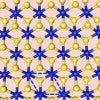
Rice ‘flashes’ new 2D materials.
Rice scientists extend their technique to produce graphene in a flash to tailor the properties of 2D dichalcogenides, quickly turning them into metastable metallics for electronic and optical applications.
Rice ‘flashes’ new 2D materials.
Rice scientists extend their technique to produce graphene in a flash to tailor the properties of 2D dichalcogenides, quickly turning them into metastable metallics for electronic and optical applications.

Fermi space telescope offers 'best look ever' at giant flare
Intense light from the April 2020 eruption of a neutron star in a nearby galaxy has given astronomers their first clear look at a type of gamma-ray burst known as a magnetar giant flare.

Rice chemist, alums named to Forbes 30 Under 30
Rice University chemist Julian West and four alumni have been named to the 10th annual Forbes 30 Under 30.
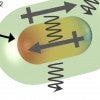
‘Soft’ nanoparticles give plasmons new potential
Bigger is not always better, but here’s something that starts small and gets better as it gets bigger.
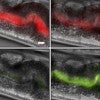
Light flips genetic switch in bacteria inside transparent worms
Researchers from Rice University and Baylor College of Medicine have shown that colored light can both activate and deactivate genes of gut bacteria in the intestines of worms. The research shows how optogenetic technology can be used to investigate the health impacts of gut bacteria.