A new Rice study offers one of the first national measures of a viewpoint called “racial realism” and considers how it fits into the broader spectrum of perspectives Black Americans hold about race relations.
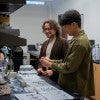
Rep. Brian Babin (R-Woodville), chairman of the House Committee on Science, Space and Technology, visited Rice March 20 with a delegation of congressional staff to tour research facilities and learn about areas of focus across the university.
For more than a decade, Rice’s Frederi Viens has been studying Lake Chad, a vast freshwater lake in west-central Africa that borders Nigeria, Niger, Chad and Cameroon.
A delegation of researchers from Rice’s WaTER Institute traveled to Argentina’s Neuquén province this month to help address a pressing question facing one of the world’s fastest-growing energy regions: how to balance rapid oil and gas development with long-term environmental sustainability.
Rice continues to strengthen its position as a leader in innovation, rising to No. 66 in the 2025 Top 100 U.S. Universities List for utility patents, released by the National Academy of Inventors. The university moved up two spots from last year , with 29 patents issued during the 2025 calendar year.
Rice researchers and collaborators have now successfully integrated solutions to several persistent challenges to implantable drug factories into a single device.
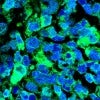
A new platform makes it easier to study metastasis and sheds light on how cancer clusters survive in the bloodstream when spreading from a primary tumor to other parts of the body.
Five Rice professors, Pernilla Wittung-Stafshede, Volker Rudolf, Edward Knightly, Marcia O’Malley and Ed Billups, have been elected as fellows of the American Association for the Advancement of Science.
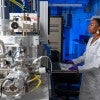
A 15-minute plasma pretreatment helped recover lithium, cobalt, nickel and graphite from spent lithium-ion batteries, pointing to a lower-chemical, lower-energy approach to recycling.
IDE Technologies, a world leader in desalination and advanced water treatment solutions, and Rice’s WaTER Institute, a multidisciplinary center advancing innovative water treatment technologies, energy transitions and resilient infrastructure, are proud to announce their strategic collaboration.
Rice professor Zachary Ball recently published a paper describing a new way to target a common but understudied posttranslational modification called pyroglutamate.
Rice University professor Bidong Zhang has received a grant to develop next-generation lunar radiometric dating techniques that will acquire more accurate ages for lunar samples.