


Rice University and Baylor College of Medicine (BCM) have renewed their joint Superfund Research Program with a nearly $15 million, five-year grant from the National Institute of Environmental Health Sciences to advance detection, health research and cleanup technologies for a class of hazardous pollutants known as polycyclic aromatic hydrocarbons.
Led by BCM, the program brings together engineers, chemists, toxicologists and physicians to better understand how these persistent environmental contaminants affect human health and to develop new ways to detect and remove them from the environment.
Polycyclic aromatic hydrocarbons, or PAHs, are widespread pollutants commonly associated with oil spills, creosote sites and industrial activities. Classified by the Environmental Protection Agency as potential carcinogens, PAHs have also been linked to increased risks of preterm birth and other adverse health outcomes.
“PAHs are everywhere in the environment, but they are especially concerning in places with a long history of industrial activity,” said Pedro Alvarez, the George R. Brown Professor of Civil and Environmental Engineering at Rice and director of the Rice WaTER Institute. “Our goal is not only to understand how these pollutants behave and affect human health but also to develop practical technologies that can remove them safely and efficiently.”
The researchers, who have already demonstrated proof of concept for new cleanup strategies and detection tools, are focusing on improving the sensitivity of detection methods, understanding how exposure affects human health and advancing technologies that can restore contaminated soil.
One of the Rice-led projects focuses on developing new ways to detect PAHs at extremely low concentrations in environmental and biological samples. Led by Naomi Halas, University Professor and the Stanley C. Moore Professor of Electrical and Computer Engineering at Rice, her team is integrating surface-enhanced Raman and infrared spectroscopies with machine learning to identify chemical signatures of pollutants in complex samples. These detection methods could allow scientists and environmental agencies to measure pollutant levels on site, enabling faster responses and better environmental monitoring.
Researchers at Baylor College of Medicine led by Bhagavatula Moorthy, a professor of pediatrics and neonatology and the Superfund Research Center’s director and principal investigator, are investigating how exposure to PAHs during pregnancy and early life may contribute to health problems such as preterm birth, chronic lung disease and neurocognitive deficits.
Studies in the greater Houston area have shown correlations between higher exposure to pollutants and adverse health outcomes in communities located near hazardous waste sites. Houston and Harris County contain numerous federally designated Superfund sites, making the region an important setting for understanding the health impacts of environmental contamination.
“Communities in these areas experience disproportionate exposure to contaminants such as PAHs associated with hazardous waste sites and industrial activity,” Moorthy said. “Our research focuses on how exposure during pregnancy and early life may contribute to adverse outcomes such as preterm birth and chronic lung disease with the goal of helping protect vulnerable populations and improve community health.”
A second Rice-led project focuses on developing a more sustainable way to clean up soils contaminated with PAHs.
Traditional thermal treatments can destroy pollutants but often require extremely high temperatures and energy use, which increases cost and can degrade the soil itself. Rice researchers are instead using a process known as pyrolysis, which breaks down contaminants through thermal decomposition in an oxygen-free environment.
“Our goal is to develop a remediation technology that is faster, more reliable and less expensive while preserving — and even improving — soil quality,” Alvarez said.
The team discovered that naturally occurring metals such as iron and copper present in clay minerals can act as catalysts that accelerate the breakdown of PAHs during pyrolysis.
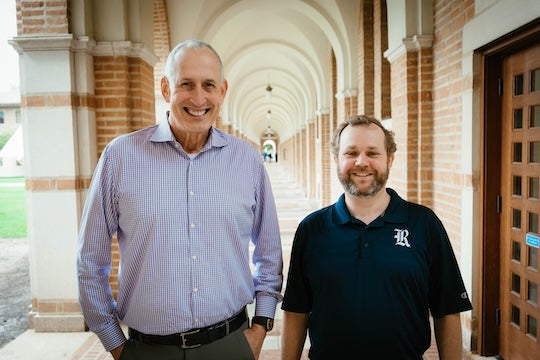
“These metals facilitate charge transfer from the aromatic rings in PAHs, which destabilizes the molecules and allows them to degrade at lower temperatures,” Alvarez said. “Instead of leaving toxic residues behind, the molecules polymerize into an inert char that can actually improve soil fertility.”
By lowering the temperature and shortening treatment times, the catalytic process significantly reduces the energy required for remediation.
“This means the technology could treat larger volumes of contaminated soil at lower cost,” Alvarez said. “In effect, we’re turning contaminated soil from a liability into a resource that can support ecosystem restoration.”
The first phase of the project demonstrated that catalytic pyrolysis could outperform conventional incineration methods while restoring soil fertility. The renewed grant will allow researchers to advance the technology further.
“We’ve moved from demonstrating the concept to understanding the fundamental mechanisms,” said Thomas Senftle, the William Marsh Rice Trustee Associate Professor in Chemical and Biomolecular Engineering at Rice. “Now that we know how the catalysts work at the molecular level, we can optimize the materials and design more effective treatment systems.”
Using advanced molecular modeling and density-functional theory calculations, Senftle and the team are studying how PAH molecules interact with catalytic clay surfaces and how those interactions influence chemical bond breaking during treatment.
“That molecular-scale insight allows us to design catalysts that make the degradation process faster and more energy-efficient,” Senftle said.
The researchers are also building small-scale reactors to test the process with real contaminated soils that contain mixtures of pollutants rather than individual compounds.
Beyond PAHs, the team said the technology could eventually help address other contaminants of emerging concern, including PFAS, commonly known as “forever chemicals.”
Notably, this work highlights the impact of collaboration between academic and clinical researchers.
“This project shows what can happen when engineers, chemists and medical researchers work closely together,” Alvarez said. “At Rice we can walk across the street to Baylor College of Medicine and collaborate directly with toxicologists and clinicians. That kind of multidisciplinary partnership is essential for tackling complex environmental health challenges.”
With contaminated sites around the world, from industrial regions to areas impacted by historical oil spills, the researchers say improved remediation technologies could have far-reaching global benefits.
“There is no single solution that works everywhere,” Alvarez said. “But for locations with high concentrations of pollutants where communities are at risk, technologies like this could provide a faster and more sustainable path to cleanup.”