
The first pastoralists in eastern Africa didn’t suddenly switch to a diet centered only on cows, sheep and goats. Instead, they kept eating a wide mix of foods — fish, wild animals and plants — alongside livestock for at least 1,000 years.
That’s the key finding from new University of British Columbia-led research, with Rice University as a key contributor, published in the journal Proceedings of the National Academy of Sciences. It challenges a long‑held idea that once people begin producing their own food, they quickly narrow down what they eat.
“These early herders didn’t put all their eggs in one basket,” said geochemist Kendra Chritz, lead author and assistant professor at the University of British Columbia’s Department of Earth, Ocean and Atmospheric Sciences. “They were keeping livestock, but they were also still fishing and hunting and gathering. Their diets were incredibly varied.”
Mary Prendergast, associate professor of anthropology at Rice and a co-author on the study, said the findings offer a rare glimpse into how slowly dietary habits changed over time.

“Archaeologists often say ‘you are what you eat’ because the chemistry of bones and teeth can give us a direct window onto what a person was eating in the past,” Prendergast said. “What sticks with me is how conservative diets were in the past. Even after people had access to new foods like beef or milk from cattle, they maintained a diverse diet including wild game and fish. The shift to a fully livestock-centered diet occurred much later.”
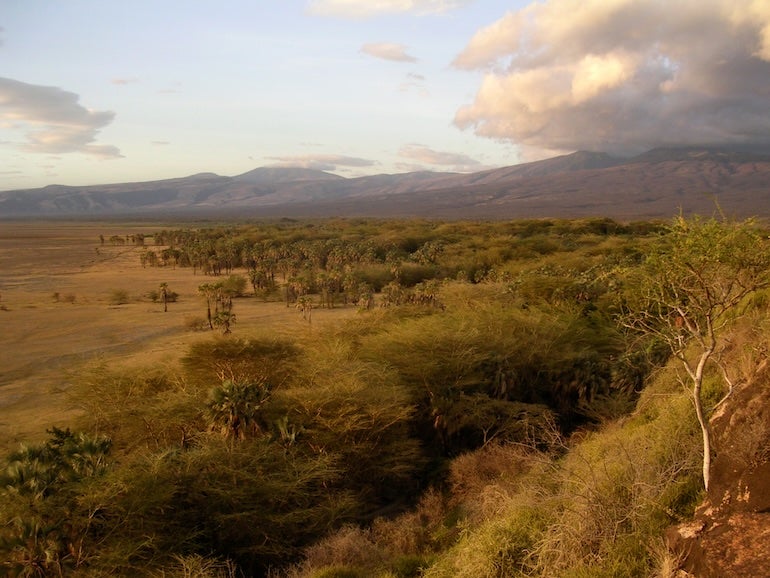
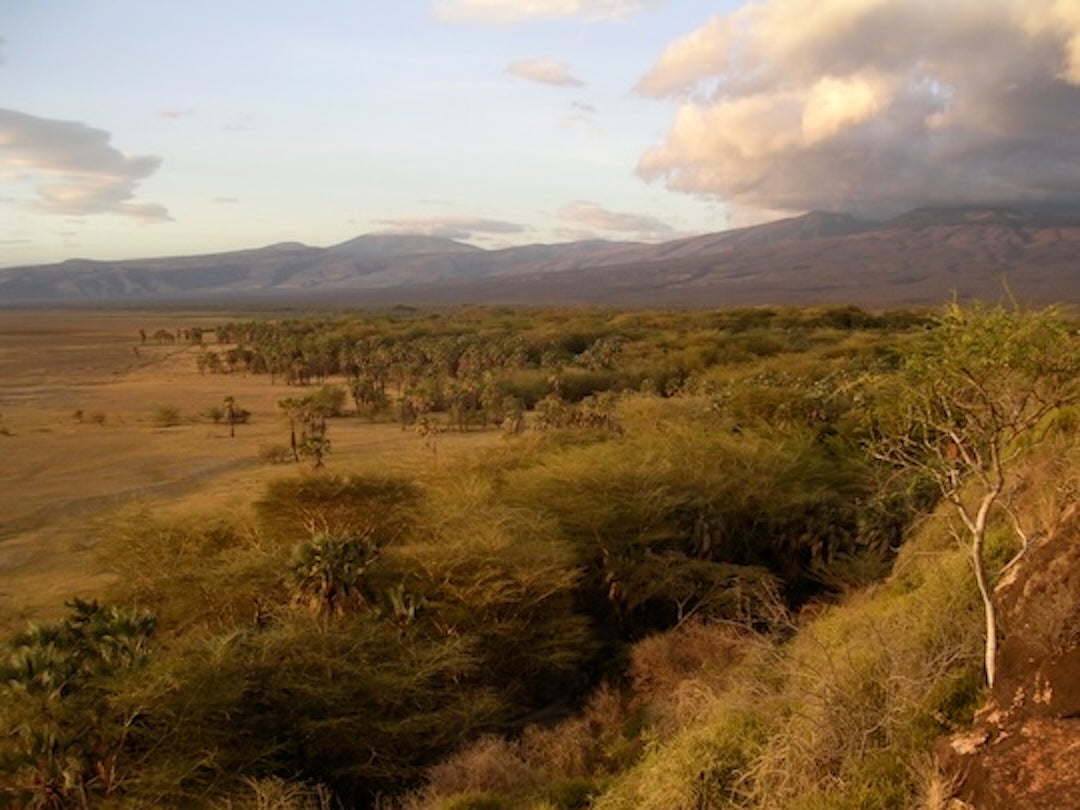
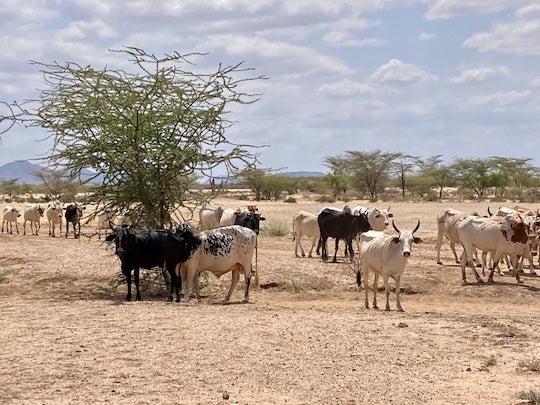
Instead, early herders around Lake Turkana in what is now northern Kenya, hedged their bets. Even with domesticated animals at hand, they still fished the lake, hunted wild game and gathered plant-based foods.
This matters because food choices shape health, culture and survival. For most of human history, people lived in environments that changed fast. Understanding how our ancestors coped can shed light on how we can adapt to climate stress today. It also reminds us that human diets were never one-size-fits-all. Variety was the norm, not the exception.
To figure this out, the team analyzed chemical clues locked in ancient human teeth. These clues come from stable isotopes — natural markers in teeth that reflect what a person ate while the tooth was forming. In simple terms, teeth keep a long-term record of diet, like a fossilized food diary.
The researchers studied remains from more than 100 people who lived between about 9,500 and 200 years ago in Kenya and Tanzania. They compared fishers and foragers, early herders and later herders who lived after livestock had become central to daily life.
The biggest surprise came from the earliest herders, who lived around 5,000 years ago. Their tooth records showed huge variation from person to person. Some ate foods linked to grass-eating animals such as cattle. Others relied much more on fish or wild animals. Many did both.
“This level of diversity looks a lot like what we see among hunter-gatherers,” Chritz said.
“The isotopic record is fascinating because it can reveal individual to individual variation, even among fisher foragers who lived at a single site,” said study co-author Elisabeth Hildebrand, an associate professor of anthropology at Stony Brook University, who has co-directed excavations at several sites on the west side of Lake Turkana. “This kind of information goes beyond what one can discern from the animal bones left at a site after human consumption.”
Previous populations of fisher-foragers who lived in the region during a moist climate interval known as the African Humid Period also showed striking dietary variation.
“It’s clear that fisher-foragers followed dietary strategies that were situationally specific, or even personalized,” Hildebrand said. “And the first pastoralists maintained this very individualized approach, even as they began constructing communal cemeteries that involved large social networks connecting hundreds of people.”
The research team also looked at residues left behind in ancient ceramic cooking pots. These fatty traces — basically food stains locked into clay — reveal what people cooked long ago. Some pots from early herders contained fats from animals but only rarely showed signs of dairy foods like milk. That suggests livestock were important but not the mainstay of meals.
“Ceramic residue data are an incredible archive — we can see not only what people were cooking but also the general types of plants, for example, that animals were eating,” explained co-author Katherine Grillo, an associate professor of anthropology at the University of Florida. “Now that we have isotopic data from ancient human teeth as well, we have a remarkably holistic body of evidence for both ancient environmental changes and the complicated cultural decisions people were making, perhaps in response, about food.”
The arrival of herding around Lake Turkana coincided with major environmental upheaval. The region was drying fast, causing lake levels to drop. Grasslands were slow to spread. Relying only on domesticated animals as a food source in that unstable setting may have been risky.
“Livestock are valuable, but they’re also vulnerable,” Chritz said. “If rainfall is unpredictable and pasture is scarce, having multiple food options can make the difference between getting by and going hungry.”
Only later — more than a thousand years after herding began — did diets narrow. Herders in southern Kenya and northern Tanzania eventually relied much more heavily on livestock products. Their tooth records show less variation, suggesting more specialized diets linked to more stable environments.
“This research is a testament to what becomes possible when Kenyan institutions are genuine partners in global science — not just sites of data collection but active contributors to knowledge production,” said Emmanuel Ndiema, co-author on the study and head of Earth sciences at the National Museums of Kenya. “The findings illuminate the ingenuity and resilience of the people who shaped this landscape thousands of years ago, and we are proud that Kenya’s heritage is at the center of this story.”
*This press release was adapted for Rice News from content provided by the University of British Columbia.