

Rice’s Tringides wins prestigious Pew Biomedical Scholar award
Christina Tringides is the recipient of the highly prestigious Pew Biomedical Scholar award.
Rice’s Tringides wins prestigious Pew Biomedical Scholar award
Christina Tringides is the recipient of the highly prestigious Pew Biomedical Scholar award.
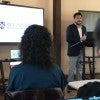
AI crashed a Paris wine tasting and that was the point
The ‘Human Flourishing in the Age of AI’ conference tackles how AI is quietly reshaping what it means to live a fully human life.

Over the course of seven days, Rice’s presidential delegation crossed two countries and held meetings with many prominent universities, research institutions and government leaders.

Rice’s Kinder Institute’s 2026 State of Housing in Harris County and Houston, now in its seventh year, will be released June 16.

Converting matte surfaces into virtual screens enhances machine vision
Rice researchers and collaborators developed a computational imaging method that uses a laser and a high-speed camera to capture complex scenes in three dimensions with exceptional speed and accuracy.

Rice computer scientists race ahead in pathogen-detection DARPA challenge
As part of the Defense Advanced Research Projects Agency’s Bio-attribution Challenge, a team of Rice University computer scientists is building a computational tool to screen environmental DNA samples for pathogens.

Rice hosts global water leaders to discuss technologies for a resilient future
Rice’s WaTER Institute hosted the 20th International Water Association Leading Edge Conference on Water and Wastewater Technologies, which brought together more than 270 industry professionals and academic researchers from 27 countries to campus.

Should hitters change their swing based on the count? Rice study weighs in
A newly published study co-authored by Scott Powers, analyzed newly released Major League Baseball swing-tracking data to examine one of baseball’s most debated questions: Should hitters change their swing with two strikes?

Rapid changes in federal health policy result in uninsured Americans, Baker Institute report shows
A new health policy research brief from the Baker Institute for Public Policy at Rice is drawing attention to the sweeping pace of health care policy changes implemented during the first year of President Donald Trump’s second administration.
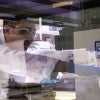
New CPRIT awards expand Rice cancer research efforts
New funding from CPRIT will help Rice advance cancer research on several fronts, from strengthening a core genetic engineering facility that serves researchers across Texas to supporting new studies in cancer immunotherapy, next-generation radiation therapy and ovarian cancer.

Houston was first: Rice historian uncovers origins of Juneteenth celebrations
Caleb McDaniel traces the origins of Juneteenth to a June 19, 1866, procession through Houston led by two Black ministers.

New era for robot autonomy: Rice lab delivers tutorial at international robotics conference
Rice researchers from the Kavraki lab presented a keynote tutorial at the 2026 IEEE International Conference on Robotics and Automation in Vienna showcasing upgrades to the lab's Open Motion Planning Library.

The heated history of the Houston meteorite
Rice researchers' analysis uncovers the history of the Houston meteorite.

Rice researchers recently published a paper in Science Advances showing that the nitrogen and phosphorus composition of iron meteorites are different from the composition found in later asteroids known as chondrites.
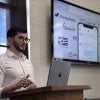
From Houston to Paris: Rice researcher investigates AI’s growing role in fact-checking
Rice doctoral student Agustin Prinetti will spend the fall semester in Paris studying how people use AI chatbots to fact-check political content and navigate misinformation.