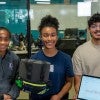
For those suffering from rib flaring associated with congenital deformations of the chest wall that cause it to jut out or cave in, a team of Rice University engineering students has come up with a potential solution.
A wearable electrical-stimulation and vibration-therapy system designed by Rice University engineering students might be just what the doctor ordered for people experiencing foot pain and balance loss due to diabetic neuropathy.
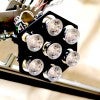
A team of Rice University engineering students designed a tunable lighting system that would allow surgeons to better illuminate their working area without having to handle equipment or wear headlamps.
Rice statisticians Katherine Ensor and Loren Hopkins and civil and environmental engineer Lauren Stadler are co-authors of a commentary in Nature Medicine that issues an urgent call to scale up wastewater monitoring to detect early signs of disease.
Rice University’s Rice360 Institute for Global Health Technologies and Oshman Engineering Design Kitchen (OEDK) this summer merged two internship programs and brought together 17 students over the course of seven weeks to employ inventive engineering design methods tackling health technology challenges.
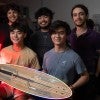
Inventing a hands-free electric longboard was a passion project for the graduating Rice seniors on Team “Breadboard,” all avid longboarders and skateboarders. But rolling out of this year’s George R. Brown Engineering Design Showcase with the top prize was a welcome reward for all the long nights and bumps in the road the team worked through along the way.
An award-winning team of Rice University engineering students that includes three Rice football players has reverse engineered a robotic drug-smuggling semi-submersible to help the U.S. Coast Guard fight foreign drug cartels.
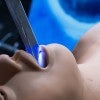
Rice University engineering students develop a simplified, wireless video laryngoscope to help clinicians intubate patients before procedures or in an emergency.
A student-designed implantable pump to help relieve pressure on the brains of patients with normal pressure hydrocephalus or idiopathic intracranial hypertension has won the top prize in this year’s Brown School of Engineering Design Showcase.