

Rice lab advances water-splitting catalysts
Rice University engineers have developed a stable water-splitting catalyst for clean hydrogen generation that could potentially replace expensive iridium catalysts.
Rice lab advances water-splitting catalysts
Rice University engineers have developed a stable water-splitting catalyst for clean hydrogen generation that could potentially replace expensive iridium catalysts.
Engineers explore the source of dreams and thoughts
Rice neuroengineers created a 3D electrode array that can identify up to 1 million potential synapses in the brain.

NSF backs bid to speed environmental tests for viruses
The NSF backs Rice University efforts to speed the analysis of wastewater for coronaviruses from hours to seconds.

Halas, Nordlander honored in Rome
Italian President Sergio Mattarella presented Rice’s Naomi Halas and Peter Nordlander the 2022 Eni Energy Transition Award in an Oct. 3 ceremony in Rome's Quirinal Palace.

Wong named fellow of American Institute of Chemical Engineers
The Department of Chemical and Biomolecular Engineering’s Michael Wong has been elected a fellow of the American Institute of Chemical Engineers.
Fluidic circuits add analog options for controlling soft robots
Soft robotics researchers from Rice and Harvard have created a nonelectronic control system that uses air to process information.
RNA-editing tool a fast, sensitive test for COVID-19
Researchers at Rice University and the University of Connecticut modify a gene editing tool to serve as a highly sensitive diagnostic test for the presence of the SARS-CoV-2 virus.

Wehmeyer team receives $1.5 million NSF grant
A team of researchers headed by Geoff Wehmeyer, assistant professor of mechanical engineering at Rice, has received a $1.5 million grant from the National Science Foundation’s Partnerships for International Research and Education (PIRE) program to support work on large-scale materials made from oriented carbon nanotubes.
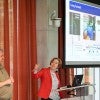
On Sept. 15, Rice’s School of Social Sciences hosted the semester’s first “Research Relay,” providing an informal setting to allow faculty to learn about each other’s research, promote informal discussions and stimulate collaborations.

Solvent study solves solar cell durability puzzle
Rice engineers simplify the manufacture of high-efficiency perovskite solar cells.

COVID-19 amplified hardship for many Harvey victims
A study shows the economic and mental health consequences on victims of Hurricane Harvey and COVID-19 were cumulative.

Rice rises to No. 15 in US News rankings
Rice has risen to No. 15 among the nation’s top universities ranked in the latest edition of U.S. News & World Report’s “Best Colleges” guidebook.
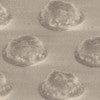
Optical rule was made to be broken
Engineers at Rice University find a way to identify nanophotonic materials with the potential to improve screens for virtual reality and 3D displays along with optical technologies in general.

Rice mourns longtime engineering professor Marc Robert
Marc Robert, a professor in Rice's Department of Chemical and Biomolecular Engineering for 38 years, died Sept. 2 at age 72.

NSF awards $15 million to Rice, partners to create southwest hub
The founding partners of the National Science Foundation Southwest I-Corps Node, co-established by Rice University, have been awarded a $15 million grant to form a hub that will expand the partnership to five additional universities.